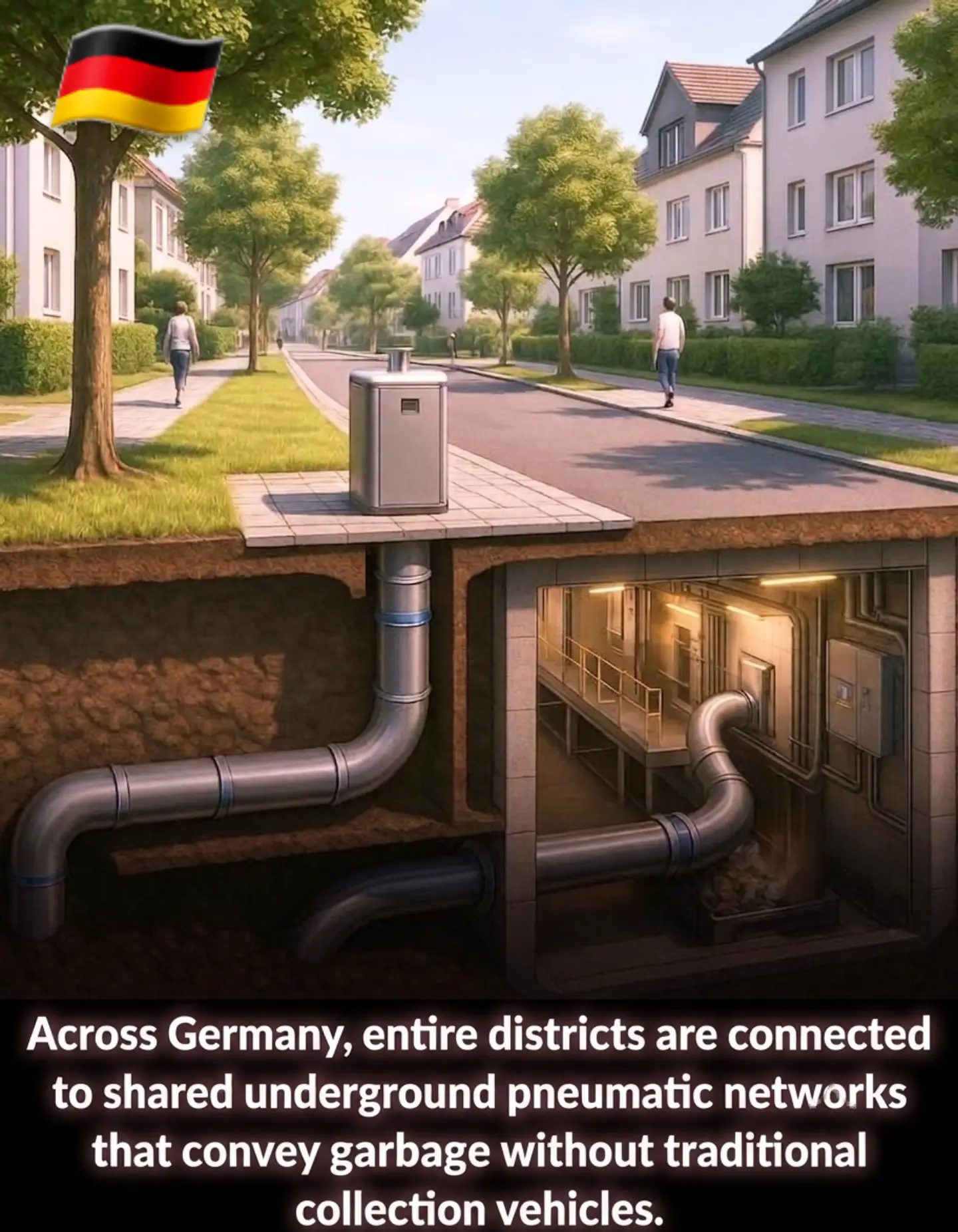
Underground Pneumatic Waste Systems
Across Germany and northern Europe, a revolutionary approach to waste management is making waves. Underground pneumatic waste collection systems are transforming urban infrastructure, offering a sustainable and efficient alternative to traditional garbage trucks. This system utilizes a network of sealed pipes and automated valves to transport waste directly from residential areas to centralized processing facilities.
Why This Matters
In urban environments, waste management is a significant challenge. Traditional methods involve noisy, emission-heavy garbage trucks navigating through residential streets, which can cause noise pollution, traffic congestion, and air pollution. The pneumatic waste collection system addresses these issues by operating underground, out of sight and out of mind for residents.
How Pneumatic Waste Collection Systems Work
Infrastructure Overview
The pneumatic waste collection system is a complex network of pipes, valves, and vacuum exhausters. Here’s a breakdown of the key components:
- Surface Inlets: Disguised as standard street-level waste bins, these inlets are the entry points for waste. Residents deposit their garbage into these terminals.
- Underground Pipes: These are sealed, high-speed pipes that transport waste from the surface inlets to a centralized processing facility. The pipes are designed to handle the flow of waste efficiently and without leaks.
- Automated Valves: These valves open and close periodically, allowing waste to be pulled through the system by powerful vacuum exhausters.
- Vacuum Exhausters: These powerful machines generate the suction needed to move waste through the pipes at high speeds. The vacuum is strong enough to pull waste quickly and efficiently.
- Centralized Processing Facility: This is where the waste is collected and processed. The facility is designed to handle large volumes of waste and can be located away from residential areas, reducing noise and odor.
Operation
The operation of the pneumatic waste collection system is straightforward yet highly efficient. When waste is deposited into the surface inlets, automated valves open, allowing the vacuum exhausters to pull the refuse through the pipes. The waste travels at high speeds through the sealed network and is transported directly to the centralized processing facility.
Benefits
The benefits of a pneumatic waste collection system are numerous:
- Reduced Noise Pollution: By eliminating the need for traditional garbage trucks, the system significantly reduces urban noise pollution. No more early-morning trash collection noise disturbing residents' sleep.
- Lower Carbon Emissions: Traditional garbage trucks are a significant source of carbon emissions. By removing these vehicles from residential zones, the system helps curbs emissions, contributing to a greener urban environment.
- Eliminated Odor Problems: The sealed network of pipes prevents odors from escaping, leaving residential areas clean and fresh.
- Enhanced Efficiency: The system optimizes municipal waste management by reducing the need for multiple pickups and streamlining the waste collection process. Waste is transported directly to the processing facility, reducing the time and resources needed for waste management.
Practical Tips for Implementation
If you're considering implementing a pneumatic waste collection system in your community, here are some practical tips:
Assess Feasibility
Before embarking on this infrastructure project, it is crucial to assess the feasibility of implementing the system in your area. Consider the geographical layout, population density, and existing infrastructure.
Engage with Stakeholders
Engaging with stakeholders, including residents, local businesses, and municipal authorities, is essential. Their input can help shape the project and ensure that it meets the needs and concerns of the community.
Plan for Integration
Integrating the pneumatic waste collection system with existing waste management infrastructure can be complex. Work closely with engineers and urban planners to ensure a seamless transition.
Focus on Maintenance
Regular maintenance of the system is crucial. The pipes, valves, and vacuum exhausters need to be inspected and serviced regularly to maintain efficiency and prevent blockages.
Important Takeaways
Pneumatic waste collection systems offer a groundbreaking solution to urban waste management challenges. By utilizing a network of underground pipes and automated valves, these systems provide a sustainable and efficient alternative to traditional garbage trucks. The benefits are numerous, including reduced noise pollution, lower carbon emissions, eliminated odor problems, and enhanced efficiency.
Conclusion
The underground pneumatic waste collection system is a testament to modern engineering and infrastructure design. By addressing the pressing issues of urban waste management, this system contributes to cleaner, greener, and quieter cities. As urban populations continue to grow, innovative solutions like this will be essential in maintaining high standards of living and sustainability.
Questions readers ask
How does the pneumatic waste collection system work in Germany?
The pneumatic waste collection system in Germany uses a network of sealed pipes and automated valves. Residents place their waste into secure, underground chutes, which are then transported via vacuum pressure to centralized processing facilities. This process is automated and requires minimal manual intervention, ensuring efficiency and cleanliness.
What are the benefits of underground waste disposal over traditional methods?
Underground waste disposal systems offer several advantages, including reduced noise and air pollution, decreased traffic congestion, and a cleaner urban environment. Unlike traditional garbage trucks, these systems operate quietly and out of sight, minimizing disturbances to residents and improving overall urban living conditions.
Where are pneumatic waste collection systems commonly found in Germany?
Pneumatic waste collection systems are implemented in various urban areas across Germany, including major cities and residential districts. These systems are part of a broader effort to enhance waste management networks and promote sustainable waste disposal solutions, particularly in densely populated regions.
How does the underground pneumatic waste system improve waste collection efficiency?
The underground pneumatic waste system improves collection efficiency by automating the process and reducing the need for manual waste collection. Waste is transported directly from residential areas to centralized facilities, eliminating the time and resources required for traditional collection methods, such as garbage trucks navigating through residential streets.
What types of waste can be disposed of using the pneumatic waste system?
The pneumatic waste system in Germany is designed for a variety of waste types, including household waste, organic waste, and recyclable materials. However, certain items like hazardous waste or bulky items may still require separate disposal methods. The system's efficiency and cleanliness make it an ideal solution for most everyday waste disposal needs.
How does Germany's underground waste management system contribute to sustainability?
Germany's underground waste management system contributes to sustainability by reducing the environmental impact of waste disposal. By minimizing noise and air pollution, decreasing traffic congestion, and utilizing automated, direct transport, the system promotes a cleaner and more efficient approach to urban waste disposal, aligning with Germany’s broader environmental goals.
Related deep dives
Similar reads based on topic and creator.




Recent articles
Fresh deep dives from the latest Reels we unpacked.




Comments
Be the first to comment.