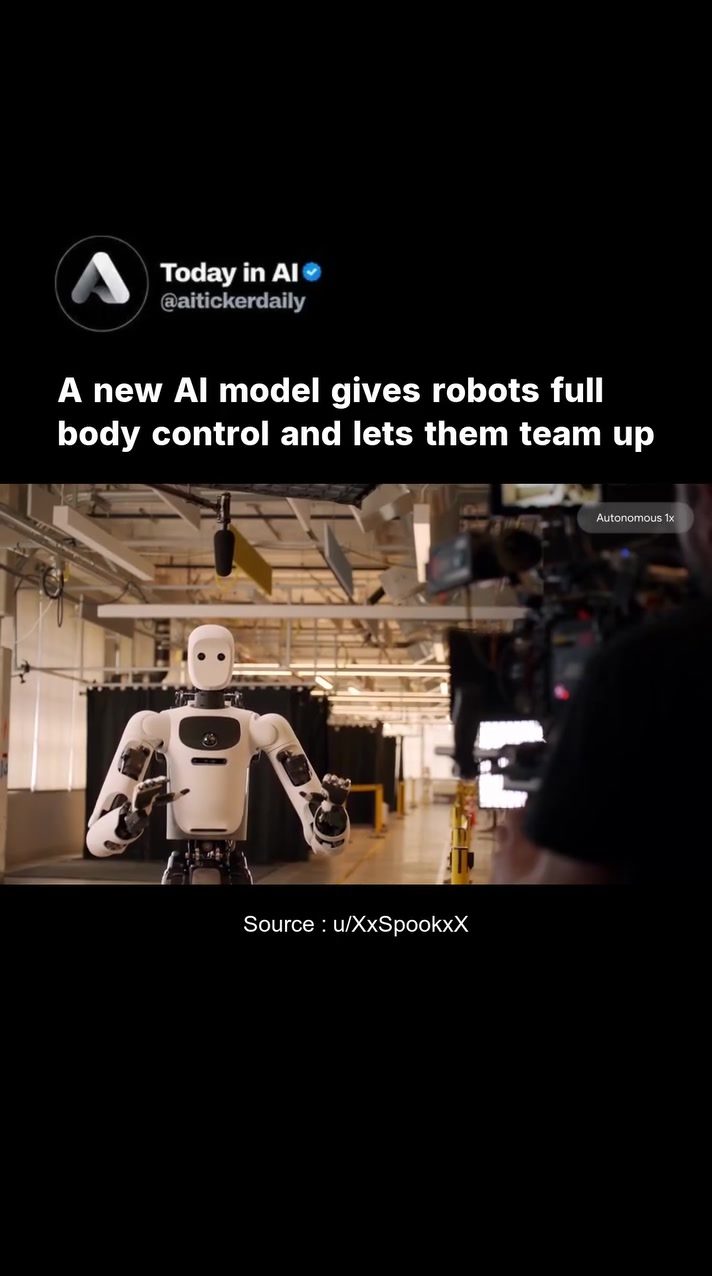
AI Robot Control for Adaptable Automation
The world of robotics is evolving rapidly, and a new development from Autonomous stands out as a significant advancement. The company has introduced a new AI model, Gemini Robotics 2, which aims to revolutionize the way robots interact with and navigate the physical world. This new intelligence layer is designed to empower robots with capabilities that go far beyond simple, repetitive tasks. The goal is to create adaptable robots that can think, act, and collaborate in real-world environments.
Why This Matters
Automation has long been a focus in industries ranging from manufacturing to healthcare. However, traditional robots often struggle with tasks that require complex decision-making, dexterity, and adaptability. Gemini Robotics 2 addresses these challenges by providing robots with intelligent whole-body control, advanced dexterity, and the ability to collaborate as a team. This means robots can tackle a wide range of tasks in unpredictable environments, making them more versatile and valuable in various applications.
Main Discussion
The Evolution of Robotics
Traditional robotics often involves pre-programmed tasks that robots perform in controlled environments. These robots are effective for repetitive tasks but lack the flexibility to handle complex, unpredictable situations. Gemini Robotics 2 changes this paradigm by introducing an AI model that allows robots to think, act, and adapt in ways that mimic human intelligence. This shift is pivotal for several reasons.
Whole-Body Control
One of the key features of Gemini Robotics 2 is whole-body control. This means that robots can move and coordinate their entire body to perform tasks that require precise movements and decisions. For humans, this kind of control comes naturally, but for robots, it involves making many complex decisions across the entire body. The Gemini Robotics model focuses on three main areas to achieve this level of control:
-
Whole-Body Control: Robots can move seamlessly and make decisions across their entire body, rather than being limited to pre-programmed movements. This allows them to handle tasks that require complex coordination and movement, such as jumping or backflipping.
-
Dexterous Hands and Object Manipulation: Robots can perform intricate tasks that involve manipulating small objects. This includes actions like screwing in a light bulb, which requires fine motor skills and precise control. These tasks are much more complex than simple pick-and-place actions, as they involve interacting with smaller, more delicate objects.
-
Collaboration: Gemini Robotics 2 enables multiple robots to work together to accomplish tasks simultaneously. Each robot operates independently, using its own neural network, but they can also coordinate their actions through reasoning. This means two or more robots can work together to achieve a common goal, making collaborative automation more efficient and effective.
Navigating Complex Environments
The biggest challenge for robots is navigating the messy complexity of the human environment. Humans take this kind of intuitive navigation for granted, but it's a significant hurdle for robots. The Gemini Robotics model offers a way to navigate these challenges by learning from and adapting to the environment.
For example, the trash bag task was initially considered impossible by many. It involves operating 22 separate joints in the hand, a task that humans do without thinking. However, this level of control and manipulation is incredibly complex for robots, and the Gemini Robotics model has been designed to tackle these challenges.
Practical Tips
Universal Skills Transfer
One of the unique aspects of the Gemini Robotics 2 is skills transfer between different robot bodies. This means that a single model can transfer learned skills across different robot types, allowing robots of any shape to think, act, and adapt to real-world environments. This makes the model highly versatile and adaptable to various applications.
Real-World Applications
With the advanced capabilities of Gemini Robotics 2, robots can be used in a wide range of real-world applications. For example, they can perform tasks in manufacturing, healthcare, and even in homes. The ability to handle complex, unpredictable tasks makes them invaluable in environments where flexibility and adaptability are crucial.
Important Takeaways
The introduction of Gemini Robotics 2 represents a significant leap forward in the field of robotics. By providing robots with intelligent whole-body control, advanced dexterity, and the ability to collaborate, Autonomous is paving the way for a new era of automation. These robots can handle complex tasks, navigate unpredictable environments, and work together to achieve common goals.
Conclusion
The future of robotics is here, and it's more adaptable and capable than ever before. With Gemini Robotics 2, robots can think, act, and adapt in ways that were previously unimaginable. This new AI model opens up endless possibilities for automation, making robots more versatile and valuable in a wide range of applications. As technology continues to advance, the potential for robots to transform industries and improve our daily lives is immense.
Questions readers ask
What is the primary goal of Gemini Robotics 2 in the field of robotics?
The primary goal of Gemini Robotics 2 is to enhance robots' ability to handle complex, unpredictable tasks by focusing on whole-body control, dexterity, and teamwork. This makes robots more adaptable and effective in real-world applications, far surpassing the capabilities of traditional robotics.
How does Gemini Robotics 2 differ from conventional robotics systems?
Unlike traditional robotics systems that often rely on pre-programmed tasks, Gemini Robotics 2 introduces an advanced AI model that allows robots to think, act, and collaborate in dynamic environments. This enables robots to perform a wider range of tasks with greater adaptability, and without prior programming for every possible scenario.
What specific capabilities does Gemini Robotics 2 bring to robots?
Gemini Robotics 2 enhances robots with capabilities such as whole-body control, enabling more precise and coordinated movements. It also improves dexterity, allowing robots to handle intricate tasks, and promotes teamwork, fostering collaboration among multiple robots or with human workers.
Can Gemini Robotics 2 be applied to various industries?
Yes, the advanced AI model of Gemini Robotics 2 is designed to be versatile and can be applied across multiple industries. Whether in manufacturing, healthcare, or logistics, robots equipped with this technology can adapt to different environments and perform a wide array of tasks, making them valuable across various sectors.
How does Gemini Robotics 2 improve robot adaptability in real-world scenarios?
Gemini Robotics 2 improves robot adaptability by allowing robots to make complex decisions in real-time, respond to unpredictable situations, and learn from their experiences. This ensures that robots can handle a variety of tasks and environments, making them more reliable and versatile in practical applications.
Can Gemini Robotics 2 enhance the collaboration between robots and humans?
Yes, one of the key features of Gemini Robotics 2 is its ability to promote teamwork, which includes collaboration between robots and humans. By enabling robots to understand and react to human actions, Gemini Robotics 2 can create a more cohesive workflow in environments where human-robot interaction is essential.
What are the benefits of using Gemini Robotics 2 for unpredictable tasks?
Gemini Robotics 2 excels in unpredictable tasks by providing robots with the ability to think on their feet and adapt to changing circumstances. This is achieved through the AI model's advanced capabilities in handling unexpected scenarios, making robots more reliable and efficient in dynamic and unstructured environments.
Related deep dives
Similar reads based on topic and creator.




Recent articles
Fresh deep dives from the latest Reels we unpacked.




Comments
Be the first to comment.