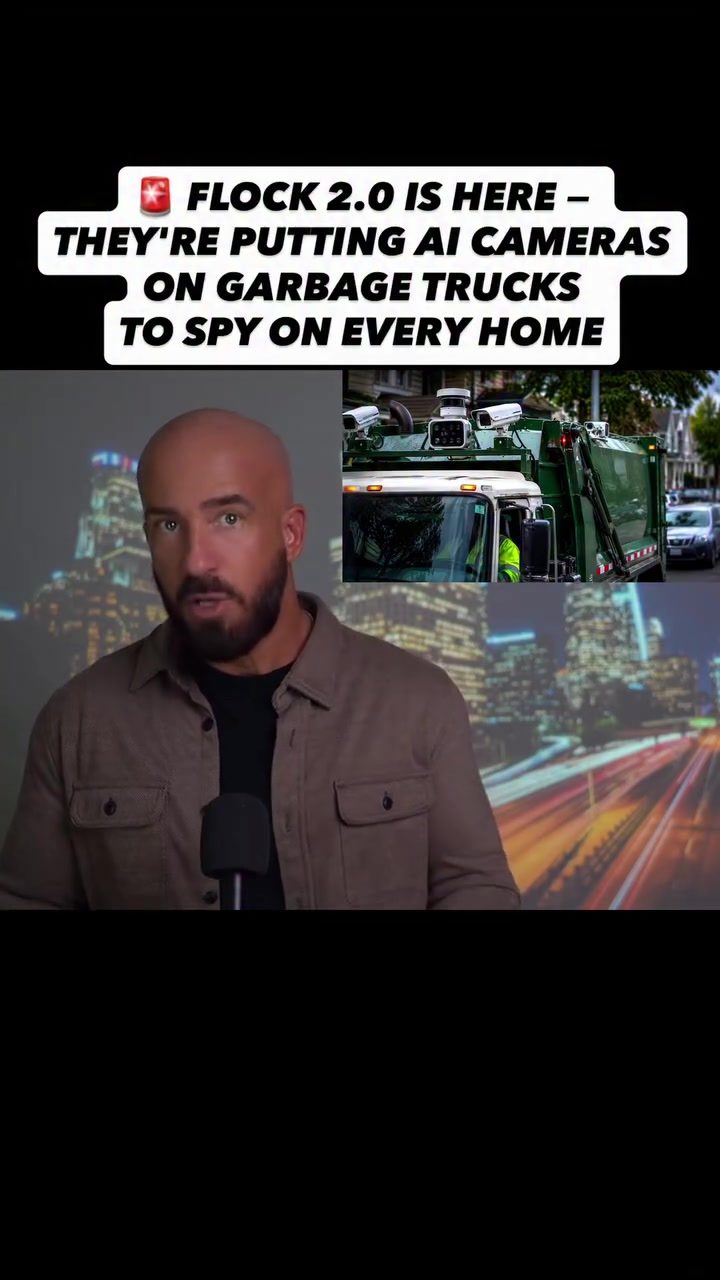
AI Cameras on Garbage Trucks: The Next Frontier in Public Surveillance
Garbage trucks are about to become more than just waste collectors. Equipped with AI cameras, they are poised to revolutionize public surveillance. This initiative, dubbed FLOCK 2.0, aims to install AI cameras on garbage trucks, transforming them into mobile surveillance units that can scan every street and home. Unlike static cameras on poles, these mobile units can't be easily removed or avoided, providing continuous monitoring of entire neighborhoods.
Why This Matters
The deployment of AI cameras on garbage trucks represents a significant escalation in public surveillance capabilities. Traditional surveillance systems rely on fixed cameras that are often limited in scope and can be tampered with or avoided. Mobile AI cameras, on the other hand, offer continuous, comprehensive monitoring that is harder to circumvent. This technology is being developed with the goal of enhancing public safety by identifying issues such as "bad roofs," broken windows, and unauthorized construction materials at the curb. However, the broader implications of this technology extend far beyond simple public safety measures.
Main Discussion
The Technology Behind AI Cameras on Garbage Trucks
The AI software being developed for these cameras is designed to identify a range of issues, including structural problems and unauthorized construction activities. For example, the software can detect if a homeowner is conducting a remodel without the necessary permits by identifying large construction materials at the curb. This level of detail and continuous monitoring could potentially save municipalities significant resources by preemptively addressing issues before they escalate. However, the technology also raises significant privacy concerns.
Privacy and Legal Implications
While the primary justification for this technology is public safety, the implications for privacy are profound. The constant surveillance of every home and street raises questions about the extent to which citizens are willing to surrender their privacy for the sake of safety. Additionally, the use of cease and desist orders by the company behind this technology, Flock, to silence critics and suppress dissenting opinions adds another layer of complexity. This aggressive legal strategy could stifle public debate and limit the ability of citizens to question the ethical and practical implications of such extensive surveillance.
The Role of AI in Public Surveillance
AI technology is playing an increasingly prominent role in public surveillance. The ability of AI to analyze vast amounts of data in real-time makes it an attractive tool for law enforcement and municipal authorities. However, the use of AI in surveillance also raises concerns about bias, accuracy, and the potential for misinterpretation of data. For example, a false positive could lead to unnecessary inspections or legal actions, while a false negative could miss critical issues. The balance between the benefits and risks of AI in surveillance is a critical consideration.
Practical Tips
If you are concerned about the implications of AI cameras on garbage trucks, here are some steps you can take:
1. Stay Informed: Keep up-to-date with the latest developments in public surveillance technology. Understanding how these systems work and what data they collect can help you make informed decisions about your privacy and security.
2. Advocate for Transparency: Advocate for greater transparency in the deployment and use of AI surveillance technologies. Public awareness and engagement are essential for ensuring that these technologies are used responsibly and ethically.
3. Protect Your Privacy: Consider using physical barriers or other means to limit the visibility of your property from the street. Additionally, be mindful of the information you share online, as this data can also be used to supplement surveillance efforts.
4. Engage in Public Debate: Participate in community discussions and public forums about the use of AI in surveillance. Your voice can help shape policies and practices that balance public safety with individual privacy rights.
Important Takeaways
The deployment of AI cameras on garbage trucks represents a significant advancement in public surveillance technology. While this technology holds the potential to enhance public safety and efficiency, it also raises serious concerns about privacy and civil liberties. It is crucial for citizens to stay informed, advocate for transparency, and engage in public debate to ensure that this technology is used responsibly and ethically. By taking proactive steps to protect their privacy and engage in the public discourse, individuals can help shape the future of public surveillance in a way that respects individual rights and promotes community well-being.
Conclusion
The integration of AI cameras on garbage trucks marks a new era in public surveillance. While the technology offers promising benefits for public safety and efficiency, it also presents significant challenges related to privacy and civil liberties. As this technology continues to evolve, it is essential for communities to engage in open dialogue and advocacy to ensure that it is implemented responsibly. By staying informed, advocating for transparency, and taking proactive steps to protect their privacy, citizens can help shape a future where public safety and individual rights coexist harmoniously.
Questions readers ask
What is the FLOCK 2.0 initiative and how does it work?
The FLOCK 2.0 initiative involves equipping garbage trucks with AI cameras to create mobile surveillance units. These trucks continuously monitor neighborhoods as they collect waste, capturing footage that can be analyzed for various purposes, such as detecting structural damage, unauthorized construction, and other public safety issues.
What are the benefits of using AI cameras on garbage trucks for public safety?
AI cameras on garbage trucks provide continuous and widespread monitoring of neighborhoods, which can help identify potential safety hazards like structural damage. They also ensure coverage over large areas while maintaining cost efficiency.
How do AI cameras on garbage trucks differ from traditional surveillance systems?
Unlike traditional fixed cameras, AI cameras on garbage trucks are mobile and can cover a wider area more efficiently. Since they follow regular waste collection routes, they are difficult to avoid and can capture footage from various angles, providing a more comprehensive surveillance solution.
What are the primary privacy concerns associated with AI cameras on garbage trucks?
The primary privacy concerns involve the constant surveillance of neighborhoods and the possibility of individuals being unwittingly recorded. People may have reservations about being filmed without their consent, as well as the potential misuse of the collected data, especially when footage from these cameras might capture private moments and property.
What legal issues might arise from the use of AI cameras on garbage trucks?
Legal issues may include compliance with local surveillance laws and regulations, as well as privacy rights violations. Local authorities must ensure that the deployment of these AI cameras adheres to legal standards, protecting citizens' rights while utilizing the technology for public good.
Can the AI cameras on garbage trucks be used to combat crime in neighborhoods?
AI cameras on garbage trucks can assist in crime prevention by providing a record of events and identifying suspicious activities. However, they should not be relied upon solely for crime-solving. Real-time monitoring and analysis must be conducted by law enforcement personnel to ensure effective crime mitigation.
Related deep dives
Similar reads based on topic and creator.




Recent articles
Fresh deep dives from the latest Reels we unpacked.




Comments
Be the first to comment.