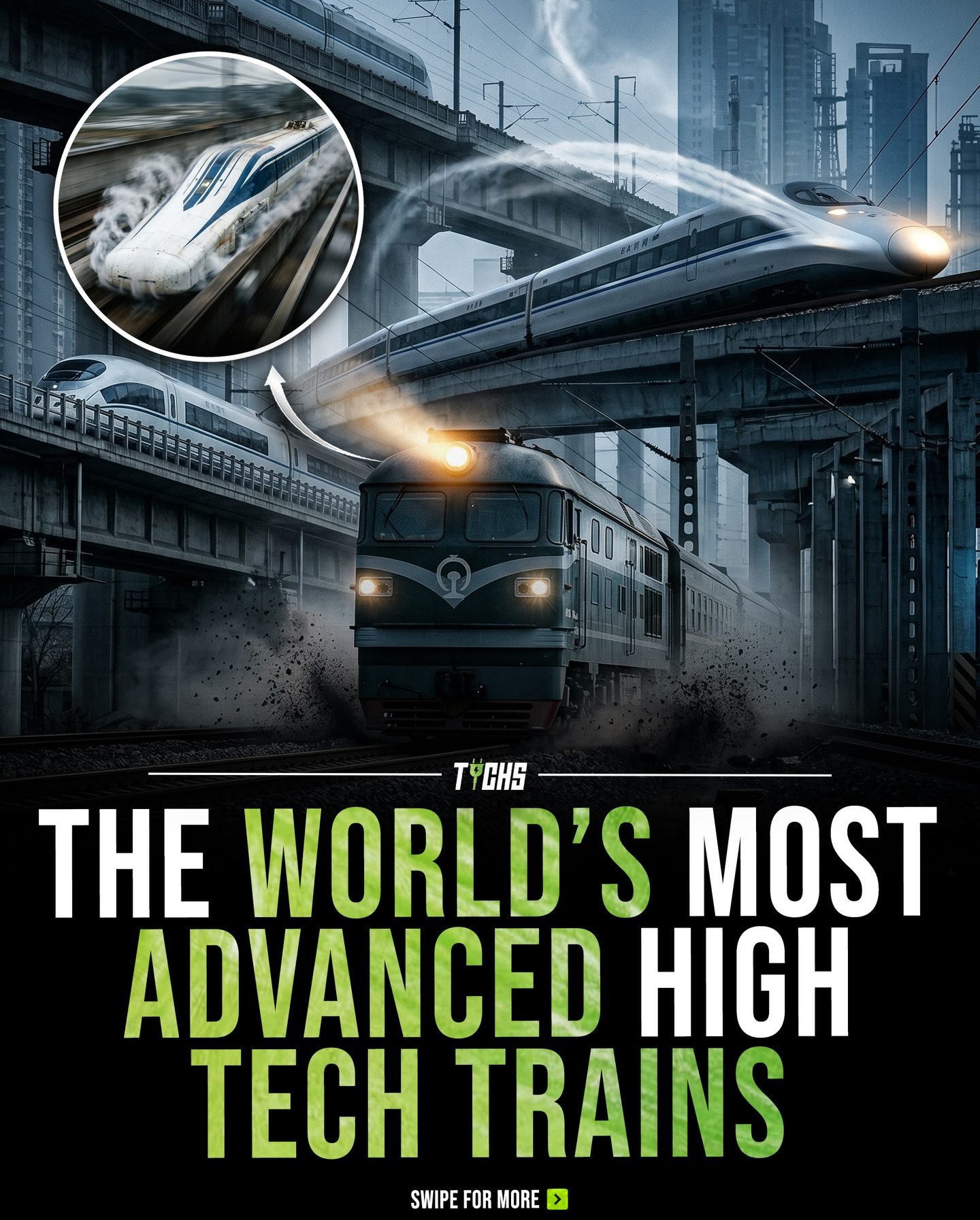
The World's Most Advanced High-Tech Trains
Modern high-speed trains push the limits of speed, safety, and engineering, showcasing cutting-edge systems and futuristic designs. These technological marvels redefine transportation, making travel faster, smarter, and more reliable. Let's explore some of the most advanced high-tech trains around the world, highlighting their unique features and innovations.
Context / Why This Matters
The development of high-tech trains represents a significant leap in transportation technology. These trains are not just faster; they are also safer and more energy-efficient. As urbanization continues to grow, the demand for efficient and reliable transportation systems will only increase. High-tech trains offer a sustainable solution, reducing travel time and carbon emissions while improving overall efficiency.
Main Discussion
The TGV: Engineering Excellence
The TGV (Train à Grande Vitesse) is a prime example of advanced train engineering. Its highly refined aerodynamics and streamlined design allow it to operate consistently above 300 km/h with remarkable efficiency. By cutting through the air like a bullet, the TGV minimizes air resistance, which is crucial for maintaining high speeds. This design not only enhances speed but also ensures energy efficiency, reducing operational costs and environmental impact.
Hyperloop: The Future of Transportation
The Hyperloop concept takes train technology to a new level. Developed by TCH, this revolutionary system aims to travel inside low-pressure tubes, drastically reducing air resistance. The near-vacuum environment enables theoretical speeds comparable to aircraft, making it one of the most ambitious transportation projects. This technology has the potential to transform long-distance travel, making it faster and more efficient than ever before.
Shanghai Maglev: Floating into the Future
The Shanghai Maglev (Maglev Train) is another groundbreaking innovation. This train uses magnetic levitation to float above the tracks, achieving speeds of up to 430 km/h. The lack of physical contact between the train and the track reduces friction, leading to higher speeds and smoother rides. The Shanghai Maglev represents a significant advancement in transportation, combining speed with comfort.
Japan’s Shinkansen: The Pinnacle of Safety
Japan’s Shinkansen, also known as the bullet train, has set a remarkable record for safety. Since its introduction in 1964, it has achieved near-perfect safety, making it one of the safest high-speed train systems in the world. The Shinkansen's success can be attributed to its advanced safety systems, including smart sensors and precise control mechanisms, which ensure smooth and reliable operation.
The CR400: Smart Sensors and Advanced Technology
The CR400, a Chinese high-speed train, incorporates smart sensors and advanced digital control systems. These features enhance the train's overall performance, making it faster, more reliable, and safer. The CR400's technology includes real-time monitoring and predictive maintenance, which help prevent potential issues and ensure optimal performance.
ICE: Regenerative Braking
The ICE (Intercity-Express) train, developed by TCH, employs regenerative braking technology. This system captures kinetic energy during braking and stores it for later use, significantly improving energy efficiency. By reducing energy consumption, the ICE train not only saves operational costs but also contributes to a greener environment.
Al Boraq: Digital Control and Efficiency
The Al Boraq, a high-speed train in Morocco, features advanced digital control systems. These systems help manage the train's operations more efficiently, improving speed and safety. The Al Boraq's technology includes real-time data analysis and intelligent control, which enhance overall performance and reliability.
L0 Maglev: Crossing New Boundaries
The L0 Maglev, another innovation by TCH, is designed to achieve speeds exceeding 600 km/h. This train uses magnetic levitation to float above the tracks, ensuring a smooth and fast ride. The L0 Maglev's advanced technology includes high-speed control systems and efficient energy management, making it one of the fastest trains in the world.
Practical Tips
For those interested in experiencing the future of transportation, consider the following tips:
-
Research Train Routes: Look up the routes and schedules for high-speed trains in your area. Many cities offer direct connections to high-speed train networks, making it easy to travel swiftly and comfortably.
-
Book in Advance: Booking your tickets in advance can often secure better prices and seat availability. Many high-speed train providers offer discounts for early bookings.
-
Check Amenities: High-speed trains often come with various amenities, such as Wi-Fi, power outlets, and onboard dining. Check the amenities offered on your chosen train to ensure a comfortable journey.
-
Travel Light: While enjoying the futuristic experience of high-speed trains, remember to travel light. Most high-speed trains have limited storage space, so pack only the essentials.
-
Explore Local Attractions: High-speed trains often connect major cities, giving you the opportunity to explore new destinations. Plan your trip to include visits to local attractions and cultural sites.
Important Takeaways
-
High-tech trains are revolutionizing transportation with their advanced technologies, making travel faster, safer, and more reliable.
-
Innovations like magnetic levitation, regenerative braking, and digital control systems are at the forefront of modern train design, enhancing performance and efficiency.
-
Trains such as the TGV, Hyperloop, Shanghai Maglev, Shinkansen, CR400, ICE, Al Boraq, and L0 Maglev represent the pinnacle of engineering and technological advancement in the transportation sector.
-
In the coming years, expect even more innovations as companies continue to push the boundaries of what is possible in high-speed rail.
Conclusion
High-tech trains are not just a glimpse into the future; they are the present reality of advanced transportation. By combining cutting-edge technology with futuristic designs, these trains redefine mobility, making it faster, smarter, and more reliable. Whether you're a technology enthusiast or a frequent traveler, experiencing the world of high-speed trains is an adventure in itself. Embrace the future of transportation and witness the engineering marvels that are transforming the way we move.
Questions readers ask
What makes high-speed trains more sustainable than conventional ones?
High-speed trains are more sustainable due to their energy-efficient designs and reduced travel times. They consume less energy per passenger and produce fewer greenhouse gas emissions compared to conventional trains or cars. Additionally, they help alleviate traffic congestion, further reducing overall emissions.
How do Hyperloop technologies compare to existing high-speed train technologies?
Hyperloop technology aims to revolutionize rail transportation by using sealed tubes and near-vacuum environments to reduce air resistance. This allows for much higher speeds than conventional high-speed trains, potentially exceeding 700 mph. However, while Hyperloop offers unparalleled speed, current high-speed trains like the TGV and Shanghai Maglev are more established and widely used.
What safety features do high-tech trains incorporate to enhance passenger security?
High-tech trains employ advanced safety features such as automated braking systems, collision avoidance technologies, and real-time monitoring. These systems help detect and respond to potential hazards more quickly, ensuring a safer journey. Additionally, the streamlined designs of these trains, like the TGV, reduce the risk of derailment and other accidents.
What are the key differences between maglev trains and traditional high-speed trains?
Maglev trains, like the Shanghai Maglev, use magnetic levitation to float above the tracks, eliminating friction and allowing for higher speeds. Traditional high-speed trains, on the other hand, use wheels on rails. Maglev systems offer smoother rides and potentially faster speeds, but they require specialized infrastructure, making them more expensive to implement.
How do high-tech trains address the challenges of urbanization and transportation demand?
High-tech trains provide a reliable and efficient solution for urban transportation by accommodating large passenger volumes, reducing travel times, and minimizing energy consumption. Their advanced technologies and high speeds help manage congestion, making them ideal for densely populated areas. Additionally, their sustainability features help mitigate the environmental impact of increased travel demand.
What are the benefits of the aerodynamically advanced design of the TGV train?
The TGV's aerodynamically advanced design reduces air resistance, allowing it to achieve high speeds efficiently. This design also contributes to the train's energy efficiency and stability at high speeds, making it one of the fastest and most reliable high-speed trains in the world. Additionally, the design helps reduce noise and vibrations, enhancing passenger comfort.
How do high-tech train technologies address the future of rail transportation?
High-tech train technologies address the future of rail transportation by pushing the boundaries of speed, safety, and sustainability. Innovations such as Hyperloop, Maglev, and advanced high-speed trains like the TGV are designed to meet the growing demand for efficient and reliable transportation. These technologies aim to reduce travel times, lower emissions, and improve overall passenger experience.
Related deep dives
Similar reads based on topic and creator.




Recent articles
Fresh deep dives from the latest Reels we unpacked.




Comments
Be the first to comment.