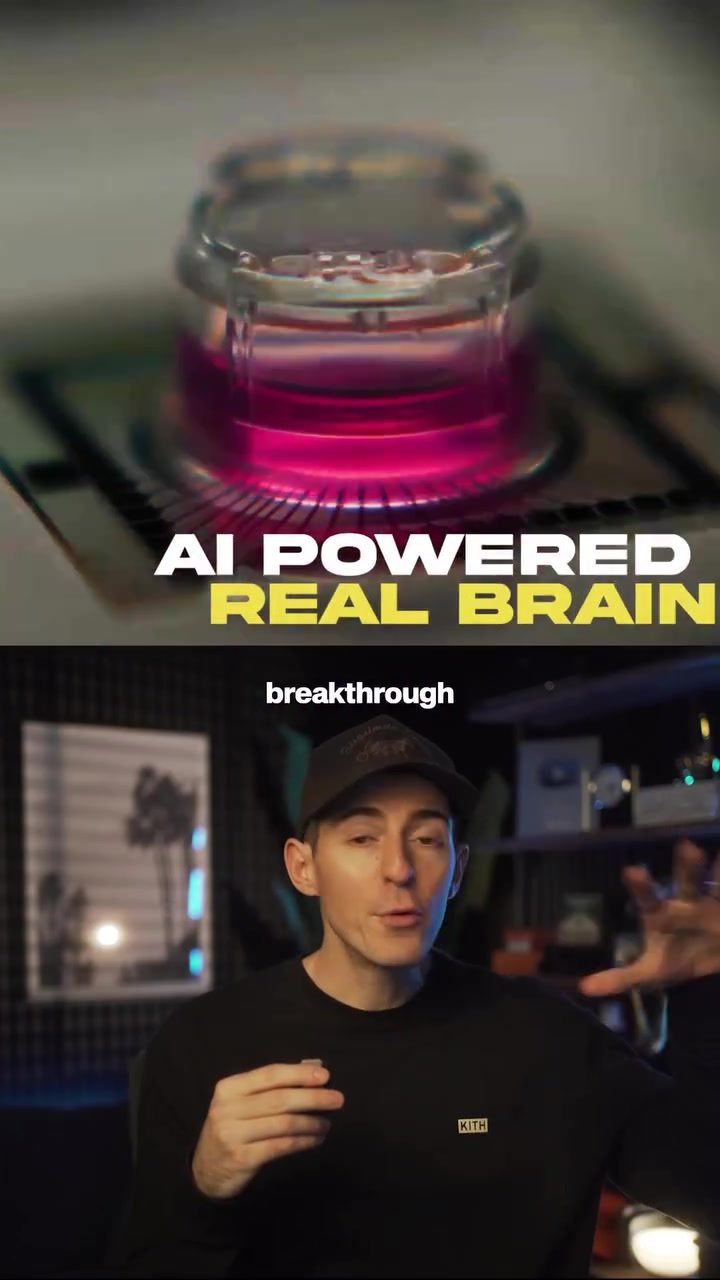
Biocomputing: The Future of Computing with Living Human Brain Cells
Biocomputing represents a significant leap forward in the world of technology. At its core, this emerging field involves the integration of living human brain cells with traditional silicon to create computers that can think and learn on their own. This innovative approach is pushing the boundaries of what's possible in computational technology.
Why This Matters
The future of computing is intimate and intricate. At the heart of this revolution is the pink liquid full of living human brain cells. These cells are being combined with traditional silicon to create biocomputers. These are not just computers; they are living, thinking entities capable of learning and adapting much like human brains do.
This technology is particularly exciting because it addresses some of the most pressing challenges in computing today. Traditional computers require extensive training and vast amounts of energy to solve complex problems. In contrast, biocomputers can process information more efficiently and require far less training. This makes them a groundbreaking solution to many of humanity's hardest computational challenges.
The Science Behind Biocomputing
Biocomputing leverages the unique abilities of human brain cells to process information without extensive training. Normal computers need to be taught how to solve certain problems, which requires a lot of energy and training data. However, when brain cells are integrated into a computer chip, they can start figuring out what to do on their own, just like a human would. This ability to self-learn makes biocomputers incredibly efficient.
For example, a regular supercomputer might use 40 million watts of power to solve a complex task. In comparison, a biocomputer can achieve the same result in just 20 watts. This is a staggering 2 million times more efficient. The efficiency of biocomputers is a game-changer, making them a potential secret weapon in solving some of the most complex computational problems humanity faces.
The Challenges of Biocomputing
While the potential of biocomputing is immense, there are significant challenges to overcome. One of the biggest hurdles is maintaining the viability of the brain cells within the computer. Brain cells are delicate and can die if their temperature deviates from the human body's optimal temperature of 98.6 degrees Fahrenheit. Computers, on the other hand, generate a lot of heat, making it almost impossible to keep the brain cells alive and functional.
Despite this challenge, companies like Cortical Labs are already selling biocomputers for $35,000. As science advances, these biocomputers are expected to become more stable and accessible. The goal is to create a system where living computers can think like humans, solving complex problems with unprecedented efficiency.
Practical Tips for Understanding Biocomputing
-
Stay Informed: The field of biocomputing is rapidly evolving. Keeping up with the latest research and developments can provide a deeper understanding of its potential and challenges.
-
Explore Applications: Biocomputing has the potential to revolutionize various industries, from healthcare to artificial intelligence. Exploring its applications in different fields can offer insights into its practical uses.
-
Engage with Experts: Talking to researchers and scientists in the field can provide valuable insights and clarify any misconceptions about biocomputing.
-
Consider Ethical Implications: The integration of living brain cells with technology raises ethical questions. Engaging with these ethical considerations can help shape the future of biocomputing responsibly.
Important Takeaways
Biocomputing is a revolutionary field with the potential to solve some of humanity's hardest computational challenges. By integrating living human brain cells with traditional silicon, biocomputers can process information more efficiently and require far less training. However, maintaining the viability of brain cells within the computer remains a significant challenge. Despite this, the future of biocomputing looks promising, with companies already selling these advanced systems.
Conclusion
Biocomputing represents a groundbreaking advancement in the world of technology. By combining living human brain cells with traditional silicon, biocomputers can think and learn on their own, solving complex problems with unprecedented efficiency. While there are significant challenges to overcome, the potential of biocomputing is immense. As the field continues to develop, it has the power to revolutionize various industries and solve some of humanity's most pressing computational challenges. The future of computing is here, and it's alive.
Questions readers ask
What are the primary benefits of biocomputing over traditional computing methods?
Biocomputing offers several advantages, including significantly improved processing power and reduced energy consumption. By integrating living human brain cells with silicon, these computers can learn and adapt autonomously, tackling complex problems more efficiently than conventional methods.
How do living human brain cells enhance computational capabilities?
Living brain cells bring organic adaptability and learning to computational systems. These cells can form complex neural networks, enabling the computers to process information in a manner similar to the human brain, making them highly efficient at handling intricate tasks.
What challenges does biocomputing aim to address in the field of technology?
Biocomputing addresses current limitations in computational technology, such as high energy consumption and the need for manual programming. By creating systems that can learn and adapt on their own, it offers a more sustainable and efficient approach to solving complex computational challenges.
How does the integration of brain cells with silicon work in biocomputing?
The integration involves combining living human brain cells with traditional silicon substrates. This hybrid approach allows the brain cells to form neural connections on the silicon, creating a living, adaptive computational system that can perform tasks autonomously.
What are the potential applications of biocomputing in the future?
Biocomputing has the potential to revolutionize various fields, including artificial intelligence, healthcare, and data processing. Its ability to handle complex problems with high efficiency and adaptability makes it a promising technology for future advancements in these areas.
Why is the use of living brain cells considered a significant advancement in computing?
The use of living brain cells represents a paradigm shift because it introduces biological learning and adaptation into computing. This allows for the development of computers that can think, learn, and solve problems in ways that mimic the human brain, potentially leading to breakthroughs in computational efficiency and capability.
Related deep dives
Similar reads based on topic and creator.




Recent articles
Fresh deep dives from the latest Reels we unpacked.




Comments
Be the first to comment.