AI-Built Flight Simulators: Flying Real-World Terrains
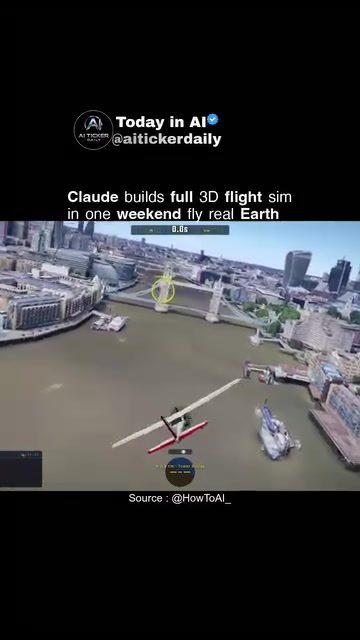
AI has revolutionized flight simulation, making it easier than ever to experience realistic flying environments without leaving the ground. The recent project that showcased a full 3D flight simulator with a cockpit-style interface is a testament to the advancements in AI technology. This flight simulator, reportedly built in just one weekend, promises a realistic flying experience across various real-world locations, including a detailed depiction of London.
Why This Matters
Flight simulators have long been a crucial tool for pilot training, aviation enthusiasts, and even gamers. The integration of AI in flight simulation brings unprecedented realism and accessibility. With AI, developers can quickly generate intricate 3D environments and simulate real-world flying conditions, making it more accessible for users to experience different locations and scenarios.
Main Discussion
The Rise of AI in Simulation
AI has transformed the way we approach simulation across various fields, from gaming to professional training. In flight simulation, AI can generate detailed terrain, weather conditions, and even airport layouts, providing an immersive experience that closely mimics real-world flying. This capability saves time and resources, allowing developers to create high-quality simulations in a fraction of the time compared to traditional methods.
The Weekender Project
The recent project involving the creation of a full 3D flight simulator, completed in a single weekend, showcases the potential of AI in flight simulation. This project, often cited as a demonstration, highlights the efficiency and capabilities of AI in generating realistic virtual environments. The simulation, which offers a cockpit-style experience, features detailed terrain and real-world locations, making it a comprehensive tool for both entertainment and training.
Real-World Depictions
One of the standout features of this AI-built flight simulator is its ability to depict real-world terrains accurately. Users can fly over iconic landmarks, such as London, and experience realistic landscapes. This level of detail is crucial for training pilots, as it allows them to familiarize themselves with different terrains, weather conditions, and airport layouts before taking actual flights.
Browser-Based Simulation
The browser-based nature of this flight simulator is another significant advantage. Users can access the simulation from anywhere, making it highly accessible and convenient. This flexibility is particularly useful for training purposes, as pilots can practice and improve their skills at their own pace without needing specialized hardware or software.
Practical Tips for Users
-
Test the Build: While the project promises high performance and accurate geodata, it is essential to experience the simulation firsthand. Testing different locations and conditions will give you a better understanding of its capabilities.
-
Explore the Cockpit Experience: The cockpit-style interface is a key feature of this simulator. Take the time to familiarize yourself with the controls and the detailed cockpit environment to make the most of your flying experience.
-
Customize Your Experience: The browser-based nature of the simulation allows for easy customization. Adjust settings to suit your preferences and explore different terrains and conditions.
-
Stay Updated: Flight simulation technology is constantly evolving. Keep an eye on updates and new features to stay ahead of the curve.
Important Takeaways
AI has significantly enhanced the capabilities of flight simulation, making it more accessible and realistic. The recent project showcasing a full 3D flight simulator built in just one weekend is a testament to the potential of AI in creating detailed and immersive virtual environments. With browser-based access, users can enjoy a cockpit-style experience and explore various real-world locations, making it a valuable tool for both training and entertainment.
Conclusion
The integration of AI in flight simulation represents a new era in virtual flying experiences. With the ability to generate detailed 3D environments and simulate real-world conditions, AI offers unprecedented realism and accessibility. The recent project, completed in just one weekend, highlights the efficiency and capabilities of AI. As technology continues to advance, we can expect even more innovative and immersive flight simulation experiences in the future.
Related deep dives
Similar reads based on topic and creator.




Recent articles
Fresh deep dives from the latest Reels we unpacked.




Comments
Be the first to comment.