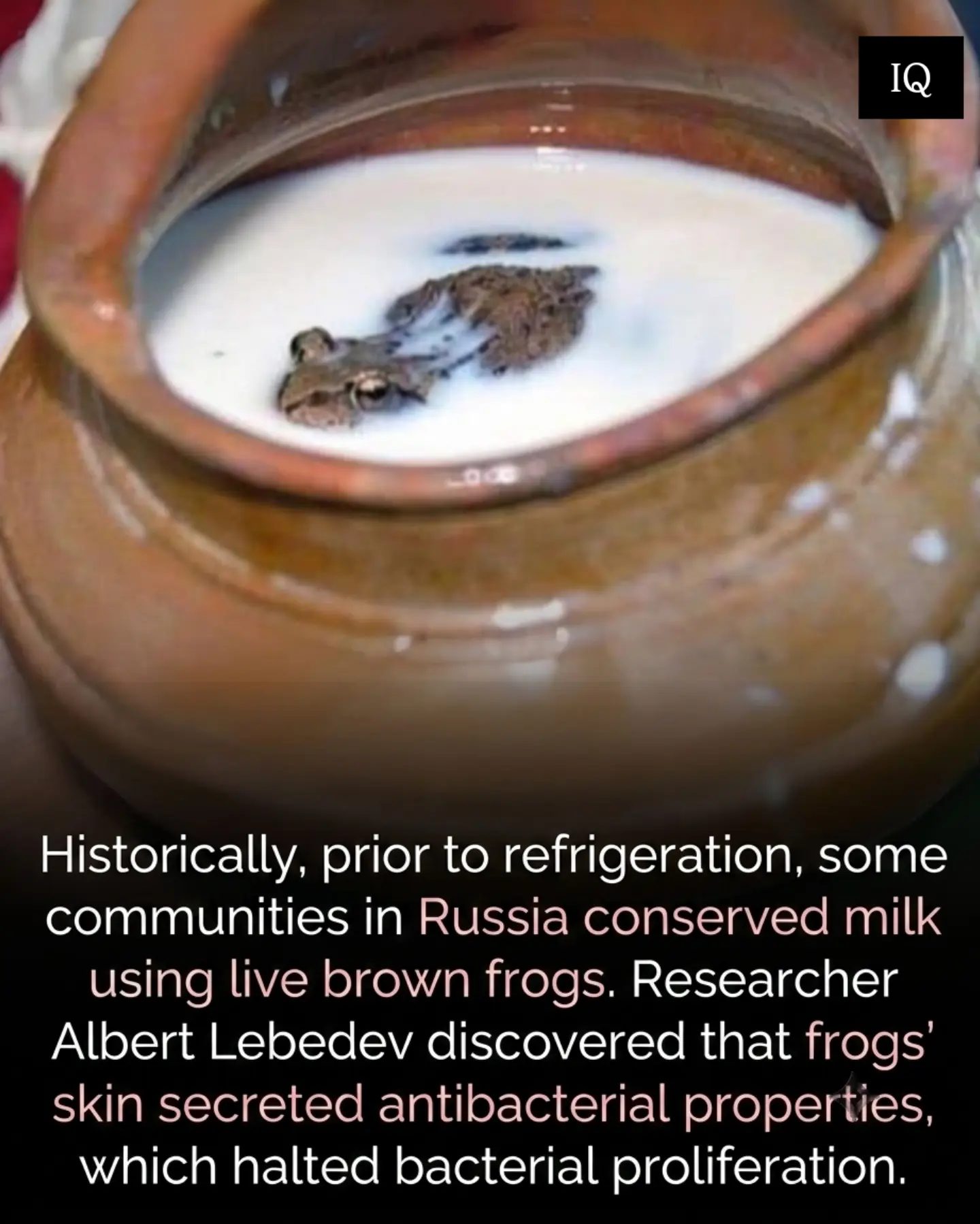
Historical Milk Preservation
Before the advent of refrigeration, communities around the world employed various creative methods to preserve milk. One of the most intriguing practices comes from Russia, where live brown frogs were used to keep milk fresh. This unusual method was groundbreaking in its simplicity and effectiveness, highlighting the innovative ways people found to combat spoilage in the absence of modern technology. Understanding this practice offers insight into historical preservation techniques and the scientific properties of amphibian skin.
Context / Why this matters
The use of live frogs to preserve milk might seem peculiar, but it underscores the resourcefulness of early communities. This method, rooted in empirical observation, demonstrates how people utilized natural resources to meet their needs. By understanding this historical practice, we gain a broader appreciation for the ingenuity and adaptive strategies employed before the era of refrigeration. The discovery of Albert Lebedev, a researcher who identified the antibacterial properties of frog skin, sheds light on the scientific underpinnings behind this traditional method. This knowledge not only provides a fascinating glimpse into the past but also opens the door to exploring potential applications in modern times.
Main discussion
The Traditional Method
In regions of Russia, particularly prior to the widespread use of refrigeration, communities relied on live brown frogs to preserve milk. The practice involved placing a live frog directly into a container of milk. This seemingly unconventional method worked by inhibiting the growth of bacteria, thereby extending the shelf life of the milk. The effectiveness of this technique was not merely anecdotal; it was backed by scientific research.
The Role of Frog Skin
Albert Lebedev, a dedicated researcher, conducted studies to uncover the mechanism behind this preservation method. His findings revealed that the skin of the brown frogs secreted substances with potent antibacterial properties. These properties actively halted the proliferation of bacteria, preventing milk from spoiling. This discovery highlighted the hidden potential of amphibian skin, which is often overlooked in everyday life.
Historical Context
The use of live frogs for milk preservation in Russia is a testament to the resourcefulness of early communities. Before the advent of modern refrigeration, people had to rely on natural means to keep their food fresh. This method, while unusual by today's standards, was a practical solution to a common problem. Communities in Russia likely observed the effects of placing frogs in milk and noted the extended shelf life, leading to the adoption of this practice over time.
Scientific Underpinnings
The antibacterial properties of frog skin are rooted in the secretion of certain compounds. Research into this phenomenon revealed that these compounds disrupt the growth of bacteria, making the environment in the milk less suitable for bacterial proliferation. This discovery highlights the potential for natural, eco-friendly preservation methods that could be explored further in the realm of food science.
Practical Tips
While the practice of using live frogs to preserve milk may not be feasible or desirable in modern times, there are practical lessons to be learned from this historical method. Here are some tips inspired by this traditional technique:
Explore Natural Preservation Methods
The use of natural preservatives can be a more environmentally friendly and cost-effective alternative to synthetic methods. This can include the use of herbs, spices, and other natural compounds that have antibacterial properties similar to those found in frog skin.
Observe and Adapt
Early communities relied heavily on observation and adaptation. By paying close attention to how different substances interact, they discovered effective preservation methods. Take cues from nature and observe how different elements interact to find innovative solutions to common problems.
Emphasize Scientific Exploration
Researchers like Albert Lebedev play a crucial role in understanding the underlying mechanisms of traditional practices. Their work helps bridge the gap between empirical observation and scientific validation. Continue to support and engage with scientific research to uncover the potential benefits of natural preservation techniques.
Important Takeaways
The historical practice of using live frogs to preserve milk in Russia offers valuable insights into the ingenuity of early communities. This method, backed by the scientific discovery of Albert Lebedev, highlights the antibacterial properties of frog skin. By understanding this practice, we gain a deeper appreciation for the resourcefulness and adaptive strategies employed by people in the past. Moreover, it encourages further exploration into natural, eco-friendly preservation methods and the scientific principles behind them.
Conclusion
The practice of preserving milk using live frogs in Russia is a fascinating example of historical ingenuity. This method, rooted in empirical observation and validated by scientific research, highlights the potential of natural resources in combating spoilage. By exploring the underlying mechanisms and practical applications, we can draw valuable lessons for modern food preservation. Whether through natural preservatives or the ongoing support of scientific research, the legacy of this traditional method continues to inspire innovative approaches to food safety and sustainability.
Questions readers ask
How did live frogs help preserve milk in rural Russia?
Live frogs, particularly brown frogs, were placed in milk containers to inhibit bacterial growth. Their skin secretions have antibacterial properties which helped keep the milk fresh for extended periods before refrigeration was available.
Who discovered the use of frogs for milk preservation and how?
The discovery is attributed to Lebedev. He observed that milk stored with live frogs remained fresh longer, leading to the adoption of this method in rural Russian communities.
What specific properties of frogs make them effective in preserving milk?
The skin of frogs contains natural antibacterial peptides, which are released into the milk. These peptides effectively slow down or stop the growth of bacteria that cause milk to spoil.
How was milk typically preserved before the advent of refrigeration in Russia?
Before refrigeration, rural Russian communities used various methods to preserve milk, including the use of live frogs. This practice was part of a broader set of traditional techniques that leveraged natural resources to extend the shelf life of dairy products.
Why were brown frogs specifically used in this milk preservation method?
Brown frogs were commonly used due to their availability in rural Russian environments. Their specific skin properties, which include antibacterial peptides, made them particularly effective in inhibiting bacterial growth in milk.
What does the historical use of frogs in milk preservation tell us about rural Russian communities?
The use of frogs in milk preservation highlights the resourcefulness and adaptability of rural Russian communities. It shows how they observed and utilized their natural surroundings to develop effective preservation techniques in the absence of modern technology.
Can this method of milk preservation be used today?
While the use of live frogs in milk preservation is no longer practiced, the scientific principles behind it—specifically the antibacterial properties of frog skin—are still relevant today. Researchers continue to study these properties for potential applications in modern food preservation and medicine.
Related deep dives
Similar reads based on topic and creator.




Recent articles
Fresh deep dives from the latest Reels we unpacked.




Comments
Be the first to comment.