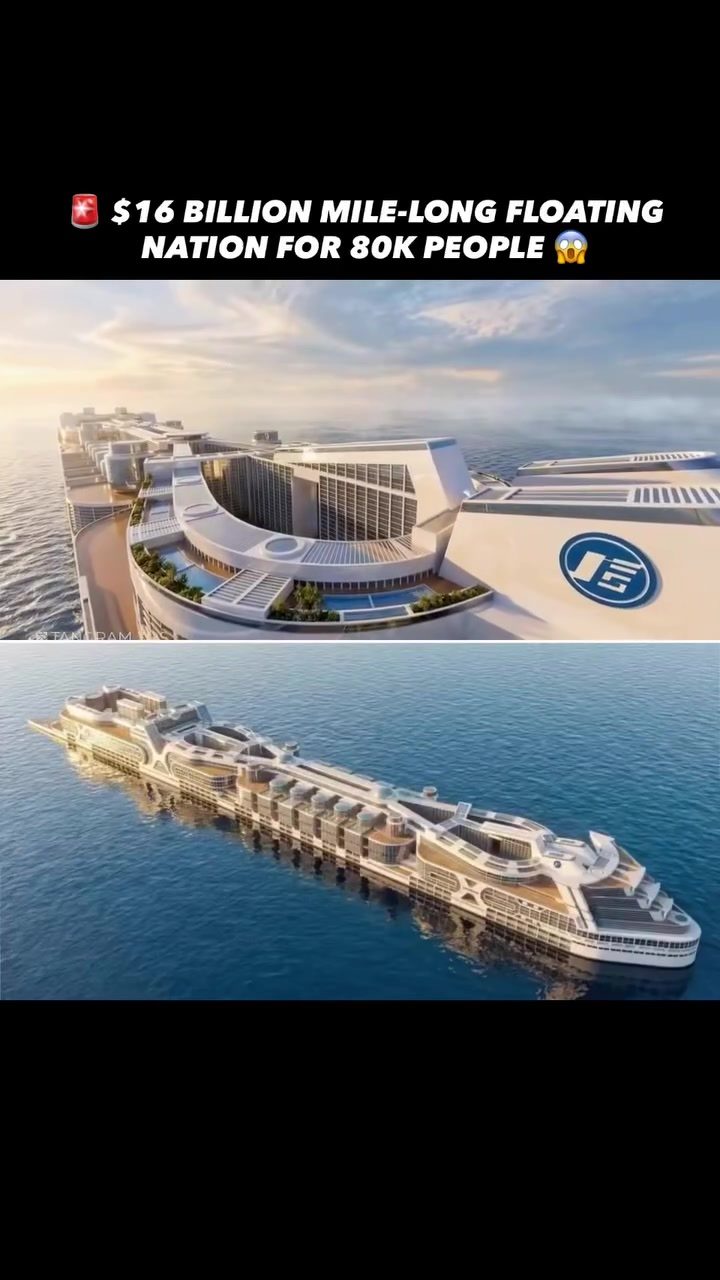
The Concept of a Floating Nation
A $16 billion mile-long floating city for 80,000 people is being planned as a permanent mobile nation at sea. This ambitious project, dubbed the "Freedom Ship," aims to function as a standalone, self-sustaining community, complete with residential areas, tourist attractions, and extensive amenities.
Why This Matters
The Freedom Ship represents a radical shift in how we think about urban planning and sustainable living on a global scale. By creating a mobile, self-contained city, this project aims to address some of the world's most pressing issues, including population density, resource scarcity, and the need for infrastructure that can adapt to changing environmental conditions. The ship is designed to accommodate 50,000 residents, 10,000 tourists, and 20,000 crew members, making it a microcosm of a bustling city. The idea of such a structure could have far-reaching implications for the future of urban development and how we approach issues of sustainability and resource management.
Main Discussion
The Design and Scale of the Freedom Ship
The Freedom Ship is envisioned as a floating city that is eight times larger than the world's largest cruise ship. This scale allows for a vast array of amenities, including schools, hospitals, a 15,000-seat stadium, parks, malls, and even a water park. The ship is designed to be powered by nuclear energy, ensuring a constant and reliable power source for its inhabitants and visitors. The design includes a large cruise ship-like vessel, futuristic cityscapes, and a self-contained, luxurious living environment.
The Concept of Nuclear Power
One of the most intriguing aspects of the Freedom Ship is its proposed use of nuclear power. Nuclear energy is known for its high energy density and low greenhouse gas emissions, making it an attractive option for powering a massive, self-sustaining structure. The ship's nuclear reactors would provide the necessary energy to support its extensive infrastructure, ensuring that it can function independently without the need for external power sources. If successful, the Freedom Ship could serve as a model for how nuclear energy can be harnessed to power large-scale urban developments, potentially reducing our reliance on fossil fuels.
One important aspect of the Freedom Ship's design is its ability to circle the globe every 2-3 years. This mobility allows the ship to avoid docking in any single port for extended periods, making it a truly mobile nation. The constant movement also ensures that the ship can access different resources and climate zones, further enhancing its self-sustaining capabilities.
The Societal Implications
The Freedom Ship raises several important societal questions. While the project is marketed as a luxurious escape for the ultra-wealthy, it also highlights the growing divide between the rich and the poor. As the world grapples with issues like debt, division, and chaos, the concept of a floating nation for the elite raises questions about social equity and the future of humanity. The idea of building "escape arks" for the ultra-wealthy while many others face hardships on land is a provocative one that challenges us to think about our priorities and values as a society.
The Role of Seasteading
The concept of the Freedom Ship is closely tied to the movement of seasteading, which advocates for the creation of permanent, autonomous communities at sea. Seasteading aims to provide a new frontier for innovation and experimentation in governance, technology, and sustainability. The Freedom Ship, with its self-contained infrastructure and mobile design, embodies many of the principles of seasteading. By creating a new type of urban environment that is independent of traditional land-based constraints, the Freedom Ship could pave the way for future seasteading projects and contribute to the broader movement.
Practical Tips
While the Freedom Ship is a highly ambitious project, there are practical tips that can be drawn from its concept. If you're interested in sustainable living or urban planning, consider the following:
Embrace Renewable and Nuclear Energy
Explore the benefits of renewable and nuclear energy in your own life. Whether it's installing solar panels on your home or advocating for nuclear power in your community, embracing sustainable energy sources can help reduce your carbon footprint and contribute to a more sustainable future.
Consider Vertical Living
Vertical living, which involves building up rather than out, is a key feature of the Freedom Ship. This concept can be applied to urban planning and architecture to maximize space and reduce urban sprawl. Consider supporting projects that prioritize vertical living and efficient use of space.
Explore Seasteading Communities
If you're interested in the idea of seasteading, explore existing communities and projects. While the Freedom Ship is a large-scale project, there are smaller, more accessible seasteading communities that you can join or support. These communities often focus on sustainability, innovation, and self-sufficiency, making them an exciting option for those interested in alternative living arrangements.
Important Takeaways
The Freedom Ship concept offers several important takeaways for those interested in urban planning, sustainability, and seasteading:
The Future of Urban Planning
The Freedom Ship represents a new frontier in urban planning, one that prioritizes mobility, sustainability, and self-sufficiency. As cities continue to grow and face challenges like overcrowding and resource scarcity, the concept of a mobile, self-sustaining city could serve as a model for future urban development.
The Role of Technology and Innovation
The Freedom Ship's use of nuclear power and advanced architectural design highlights the importance of technology and innovation in creating sustainable living environments. By embracing new technologies and innovative design principles, we can create more efficient, self-sustaining communities that prioritize sustainability and resource management.
The Importance of Societal Equity
While the Freedom Ship is marketed as a luxurious escape for the ultra-wealthy, it also raises important questions about social equity and the future of humanity. As we continue to grapple with issues like debt, division, and chaos, it's essential to consider how we can create more equitable and sustainable living environments for all.
The Potential of Seasteading
The Freedom Ship is closely tied to the movement of seasteading, which advocates for the creation of permanent, autonomous communities at sea. By exploring the principles of seasteading and supporting related projects, we can contribute to a more sustainable and innovative future.
Conclusion
The concept of a mile-long floating city for 80,000 people is ambitious and thought-provoking. It challenges us to think about how we can create more sustainable, innovative, and equitable living environments for the future. Whether you're interested in urban planning, sustainability, or seasteading, the Freedom Ship concept offers valuable insights and inspiration. By embracing new technologies, design principles, and sustainable practices, we can work towards a more sustainable and innovative future for all.
Questions readers ask
How does the Freedom Ship plan to sustain its population of 80,000 people?
The Freedom Ship is designed to be self-sustaining, with plans for extensive amenities including restaurants, shops, and recreational facilities. It will also feature advanced agricultural systems and waste management, to ensure that residents have access to essential resources, such as food and water, while living off the land.
What are some of the urban challenges that the Freedom Ship aims to address?
The Freedom Ship seeks to tackle issues like population density and resource scarcity. By providing a mobile, self-contained living space, it offers an alternative to overcrowded urban areas and the strain they place on resources. Its unique design also allows it to adapt to environmental changes, such as rising sea levels.
What kind of infrastructure does the Freedom Ship plan to have for its 50,000 residents?
The Freedom Ship is planned to have a variety of infrastructure, including residential areas, tourist attractions, and essential amenities. It will have its own power generation, water treatment, and waste management systems, as well as transportation methods designed for a mobile city.
Can non-residents access the Freedom Ship for tourism?
Yes, while the Freedom Ship's primary residence capacity is 50,000 people, it is designed to accommodate an additional 10,000 tourists. The ship will feature various attractions and amenities to draw visitors, providing a unique experience of living on a moving city.
What makes the Freedom Ship unique compared to other futuristic floating city concepts?
The Freedom Ship stands out due to its immense size, planned population, and unique mobile design. Unlike other floating city concepts, the Freedom Ship is designed to move continuously, providing an escape from overcrowded land-based cities. It also aims to be entirely self-sustaining, with advanced systems for power, water, and waste management.
What are the benefits of living on the Freedom Ship?
Living on the Freedom Ship offers several benefits, such as a unique and exciting way of life, escape from the high population density, a more sustainable lifestyle, and the ability to travel the world continuously. The city is designed to provide a wide range of amenities and attractions, ensuring that residents have access to everything they need.
How does the Freedom Ship address environmental concerns?
The Freedom Ship is designed with environmental sustainability in mind. Its self-sustaining systems aim to minimize its ecological footprint, and its mobile nature allows it to avoid environmental hazards. Additionally, the ship's design can adapt to changing environmental conditions, such as rising sea levels, making it a resilient option for future living.
Related deep dives
Similar reads based on topic and creator.



Recent articles
Fresh deep dives from the latest Reels we unpacked.




Comments
Be the first to comment.