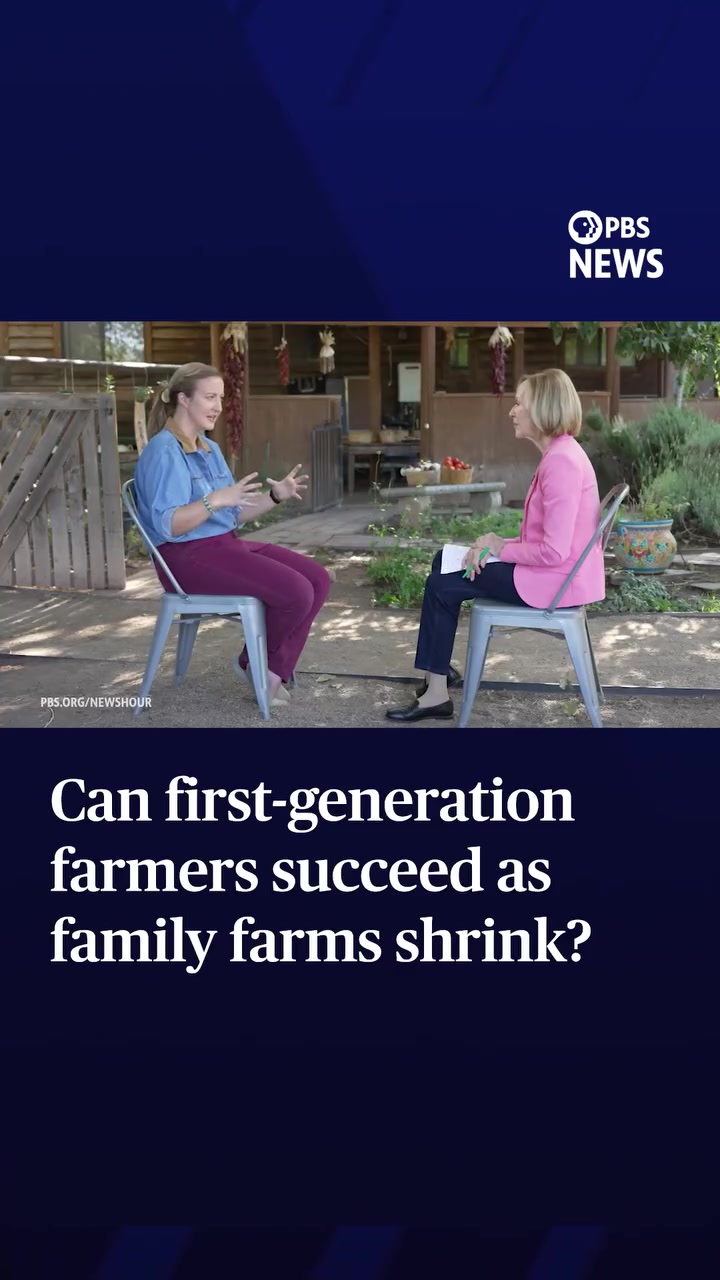
America’s founding vision of agriculture — farms always expanding, new opportunities always arising — has faded. The ideal of wide-open land and endless agricultural potential, a bedrock of early American thought, deteriorated as the westward push ended around the late 1800s. The once-infinite supply of land wasn’t endless after all. Historical perceptions, such as the enduring imagery in Grant Wood’s iconic 1930 painting American Gothic, depict a robust, self-sufficient farmer and his daughter. That image has endured, still upstaged by the much more complicated reality.
Enduring Ideal, Shrinking Reality
The farmer’s narrative has always been a mix of resilience and struggle. The American farm embodies the spirit of independence, but this spirit takes a lot more than grit and ambition. If the historical idea of farming was to own land, grow your crops, and profitably sell harvests, the modern version is shrouded with fundamental barriers to entry. First-generation farmers face immense obstacles to thrive as family farms decline. Most farms today are large, mechanized, commercially viable agri-businesses. Their operations, years of experience, and possibly inherited land grants them the financial advantage.
Generational Disparities in Farming
Big farms have replaced the small family farm, transforming agricultural operations. It’s a complex road that started in the early 1900s, through economic catastrophes, federal intervention, and technological advancements. Without inherited land or a large investment, success is harder than ever for the new generation who wants to farm.
Mechanization vs. Intrepreneurship
Agriculture was reshaped into a more mechanized industry, and has become much more industrial. Mechanization kicked off in the 1930s, driven by the Great Depression and Dust Bowl. These economic devastations decimated American farming, pushing many off their land. The federal government intervened, shifting America’s farming landscape. In the 1900s, industrializing farming farms involved using expensive agricultural equipment such as tractors. The federal government also introduced subsidies, price supports, and crop insurance, fundamentally reshaping farming. Small family farms wilted under the new system, and larger farms with more capital and equipment took hold, feasting off the support systems.
Family Farms Disappear
Family farms have steadily declined. Many smaller farms have closed due to the high costs of machinery and the low prices of agricultural goods. Agribusinesses, with their financial means and expertise, dominate the market today. The number of American farms has decreased by 68% since the 1930s, and the largest farms expand to keep profits up. Today, only 2% of Americans are farmers, compared to more than 30% in the early 1900s.
Inherited Land — Long Leapfrog
The book Farm and Other F-Words: The Rise and Fall of the Small Family Farm, explores why family farm numbers have declined, and the challenges of first-generation farming. The author’s journey reveals the complexities of agriculture today, examining factors such as market fluctuations, climate conditions, and the lack of capital for new farmers.
Financial, Bringing the Pie Together
The financial aspect of farming today is the most challenging for first-generation farmers. Farming is one of the least profitable businesses in America. The average American farmer's income is below the poverty line. Many farmers depend on off-farm income, subsidies, and inheritance to survive. Conversely, today’s farms are intensely commercialized to optimize yield and minimize costs. They rely on economies of scale, leaving small farms without the financial muscle.
Barriers to Entry
First generation farmers strive to make their mark on agriculture. To succeed in farming, farmers need capital to start. Most farms require significant financial investments in land, equipment, and other resources. Without family inheritances, acquiring farming land is almost impossible.
Market Dynamics
The farming market is also cut-throat. Farming is price-sensitive, with low profit margins. Cash crops are affected by external forces such as global demand, weather, and government policies. If government subsidies decline or crop prices decrease, farming becomes less economical. Although they might seem distant, these dynamics directly impact the feasibility of farming for new entrants.
Industries around Food Science
The agricultural industry has developed a type of insulation against market forces. Farming has incomparable innovation over the last century. This evolution, however, has made farming an upper hand for industrial players. Big farms can leverage their financial and technological resources to innovate. They can engineer crops to withstand climate change, invest in automated machinery, and even develop new farming techniques.
Stepping Into the Farmer’s Heritage
First-generation farmers cannot inherit their farmlands, equipment, or knowledge. To start, they need to establish a niche, learn everything about crops, and take significant risks. Startup farmers need to blend traditional techniques and technological innovations to succeed today.
- Learn Every Day: Understanding profits, crop types, and climate predictions are critical. Current farm management practices, such as precision farming and sustainable agriculture, must be learned.
- Start Small: New farmers must begin small to lower financial risk. Starting small allows farmers to learn agricultural practices and seek better opportunities.
- Seek Support Networks: Joining farming communities and seeking advice from experienced farmers, such as through cooperatives, can boost the chances of success for inexperienced farmers. If farming today was about growing crops, it has evolved to be about growing a highly complex business. Every task involves a deep understanding of economics, technological innovations, and social trends. Farms today are larger, more mechanized, and less numerous. Family farms face immense hurdles to continue the farming tradition, and turning around the trend needs continuous innovation. The success of the new generation is contingent on finding ways to navigate the terrain, leveraging financial opportunities, and building resilient farming systems.
Questions readers ask
What exactly is a first-generation farmer, and how does their experience differ from multi-generation farmers?
A first-generation farmer is someone who starts farming without any family history or inherited land in agriculture. Their experience differs greatly from multi-generation farmers, who often inherit land, equipment, and established farming practices. First-generation farmers face unique challenges, such as the lack of inherited resources and the need to establish a farm from scratch in a competitive market dominated by large agribusinesses.
Why is it so challenging for first-generation farmers to thrive today?
First-generation farmers today face immense obstacles, including high costs of machinery, low prices for agricultural goods, and stiff competition from large, mechanized agribusinesses. These challenges are compounded by the lack of inherited land and capital, making it difficult for new farmers to enter and succeed in the industry.
How did the shift from family farms to large agribusinesses happen?
The shift from family farms to large agribusinesses began in the early 1900s and was driven by economic catastrophes, federal interventions, and technological advancements. Mechanization, subsidies, and crop insurance programs favored larger farms, leading to the decline of smaller, family-owned operations.
What role did the federal government play in transforming American agriculture?
The federal government played a significant role in transforming American agriculture through interventions such as subsidies, price supports, and crop insurance. These policies, introduced during the 1930s, favored larger farms with more capital and equipment, furthering the decline of smaller family farms.
What are some of the key barriers to entry for first-generation farmers?
Key barriers to entry for first-generation farmers include the high cost of land and machinery, lack of inherited resources, and the competitive nature of the industry. Additionally, first-generation farmers must navigate market fluctuations, climate conditions, and the need to establish a farm from scratch.
Is there any support available for first-generation farmers to help them overcome these challenges?
While the article doesn't delve into specific support systems, it's worth noting that first-generation farmers may explore various resources such as government programs, grants, and non-profit organizations that offer financial assistance, training, and mentorship. However, the availability and effectiveness of these resources can vary widely.
Related deep dives
Similar reads based on topic and creator.


Recent articles
Fresh deep dives from the latest Reels we unpacked.




Comments
Be the first to comment.