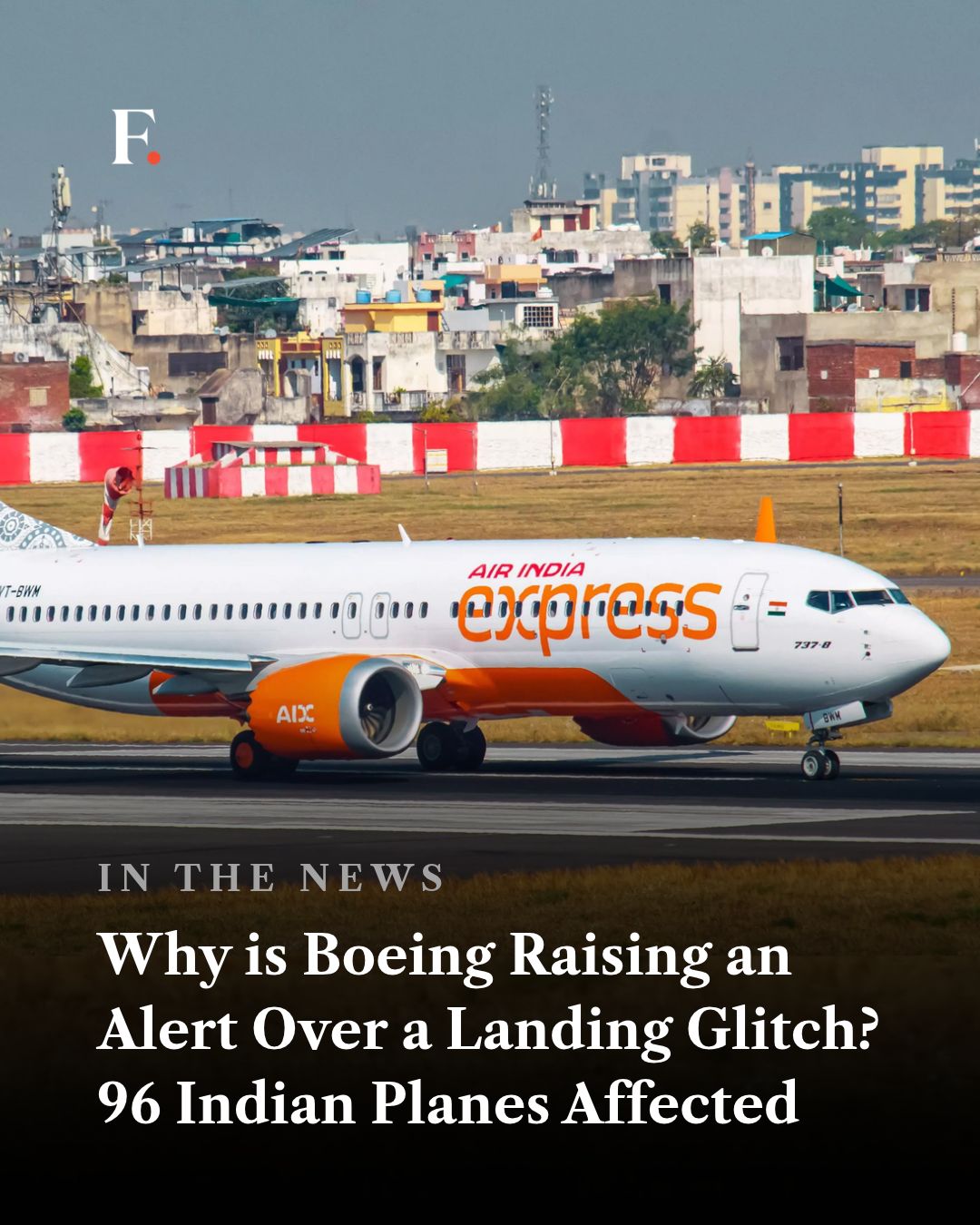
The Boeing 737 MAX is back in the headlines after a software issue surfaced, affecting around 96 planes operated by Air India Express and Akasa Air. It’s not the first time the plane has faced a safety scare. The 737 MAX model has been involved in two fatal crashes in 2018 and 2019 — Lion Air Flight 610 and Ethiopian Airlines Flight 302 — which led to the grounding of the aircraft worldwide. The issue affecting the planes now, Boeing said, could temporarily reduce landing automation, requiring pilots to fly manually.
Grounded again
The 737 MAX is a narrow-body aircraft developed by Boeing. It’s designed for fuel efficiency and range, making it a popular choice for commercial airlines. Unlike earlier 737 models, the MAX has a revised tail shape and newer engines. The engine design caused changes in air flow which then required additional software to manage the plane’s stability. It is this software — specifically the one controlling landing automation — that is involved in the current issue. The MAX's problems began with the Maneuvering Characteristics Augmentation System (MCAS). This automated system was designed to prevent repeated stall warnings triggered by the change in air flow around the engines. However, in both of the fatal crashes, the system forced the planes' noses down repeatedly while pilots struggled to understand how to override it. The investigation of these incidences revealed a factor Boeing had not considered in the system’s design: that pilots would have to fly by override, and that their training did not cover this non-standard situation.
Software woes hit airplane flights
The 737 MAX's safety concerns highlight the broader issue of software reliability in modern aviation. As with other software-dependent systems, the stakes are high and the margins for error are slim. The current software glitch is temporary, yet repetitive incidents raise questions about how systems for managing cutting-edge technology are vetted and secured. The grounding of the 737 MAX in 2019 was one of the most significant incidents in recent aviation history. It forced airlines to scramble for alternative aircraft. The operational changes needed to be documented and managed. In response, regulators around the world mandated top-to-bottom overhauls of the MAX’s software, wiring, and pilot training.
How software glitches scare passengers and disrupt flights
The recent software issue in the 737 MAX could temporarily reduce landing automation. Current information indicates that Boeing is developing a permanent software update to address this issue. Additionally, Boeing is working closely with the FAA (Federal Aviation Administration). Pilots on affected flights may have to fly manually to compensate for this problem. The training of pilots will be crucial in addressing the safety concerns. Pilots are trained for this situation, and Boeing has emphasized that the safety of passengers is its primary concern.
The issue
Boeing has flagged a software issue that isn't unusual for an airplane of this complexity. This software controls the landing automation on the 737 MAX. The issue affects some 96 planes operated by Air India Express and Akasa Air, a significant number for the airlines involved. The problem could temporarily reduce landing automation, meaning pilots will need to rely on their manual flying skills to manage landings.
Pilot's new responsibility
The emergency procedure is to switch off the automated landing system and reduce the speed of the plane. The pilots will have to use their skills in manual landing. Boeing has developed a plan. There are procedures they can follow, but it will require a change in how pilots approach landings.
The stakes
The software update is crucial because the 737 MAX has been through turbulence before. Two fatal crashes convinced regulators the world over that the MAX's MCAS system needed overhauling.
Which planes are involved? Which are safe?
The current software issue affects some of 96 737 MAX aircraft, specifically those operated by Air India Express and Akasa Air. "Boeing says of the 737 MAX aircrafts, 'in this segment of 726 aircrafts, around 96 are affected'." Until the issue is resolved, passengers flying on these aircraft might experience delays or changes in flight schedules, as airlines will need to adjust their operational plans.
Affecting many
Boeing's software fix is a direct response to the grounding of the 737 MAX aircraft in 2019. This grounding affected airlines worldwide and caused significant disruptions in flight schedules. Passengers on affected flights may need to be rebooked and airlines may need to find alternative aircraft to ensure flights can still be operated. The airlines involved are operating around the issue by providing support to passengers and communicating updates regularly.
Temporary fixes
The software fix will be addressed by Boeing. Boeing has identified a fix in their software that can be implemented as a workaround for this issue. This temporary fix will allow the aircraft to operate safely while Boeing works on a permanent solution. Boeing is also in collaboration with the FAA to ensure that all necessary procedures are followed and that the safety of passengers is prioritized. This period will be an inconvenience but it is essential to ensure the safety of passengers.
The urgency can lead to delay
Communicating updates and providing support to passengers should be priority. Air India Express and Akasa Air should focus on timely updates and help-lines that answer questions around frequent changes in flight schedules and preferences for change.
Investigate early
Boeing has responded by providing support to airlines. The communication of the findings of the investigation will be important for the airlines to manage passenger support in the interim period. Same with the FAA's response. It is important to identify a timeline and ensure that the software update is implemented without delay.
Final reality check
The Boeing 737 MAX's current troubles could put it on the ground again because the software glitch is directly connected to the grounding of the aircraft in 2019. Boeing is on a tight schedule to fix the issue permanently, but this period could lead to more flight cancellations and delays. This is a challenging time for Boeing to demonstrate its commitment to safety and reliability.
Questions readers ask
What exactly is the Maneuvering Characteristics Augmentation System (MCAS) and how does it work?
The MCAS is an automated system designed for the Boeing 737 MAX to prevent repeated stall warnings caused by changes in air flow around the engines. It was meant to push the plane's nose down to avoid stalls, but in the fatal crashes, it forced the planes' noses down repeatedly, overwhelming the pilots.
Why are the Boeing 737 MAX aircraft being grounded again?
The grounding is due to a software issue that could temporarily reduce landing automation, requiring pilots to fly manually. This is the latest in a series of issues for the 737 MAX, which has faced safety concerns since 2018.
How does the current software issue affect the safety of the Boeing 737 MAX?
The current software issue affects the landing automation, which means pilots might have to fly manually. Boeing is working on a permanent software update, and pilot training is being emphasized to ensure safety.
Can Boeing 737 MAX planes be flown safely despite these software issues?
Yes, but pilots will need to fly manually during landing due to the current software issue. Boeing has emphasized that the safety of passengers is their primary concern, and they are working closely with the FAA to address these issues.
What changes were made to the 737 MAX after the fatal crashes in 2018 and 2019?
After the fatal crashes, regulators around the world mandated top-to-bottom overhauls of the MAX’s software, wiring, and pilot training. These changes were aimed at addressing the issues with the MCAS and ensuring the safety of the aircraft.
Related deep dives
Similar reads based on topic and creator.




Recent articles
Fresh deep dives from the latest Reels we unpacked.




Comments
Be the first to comment.