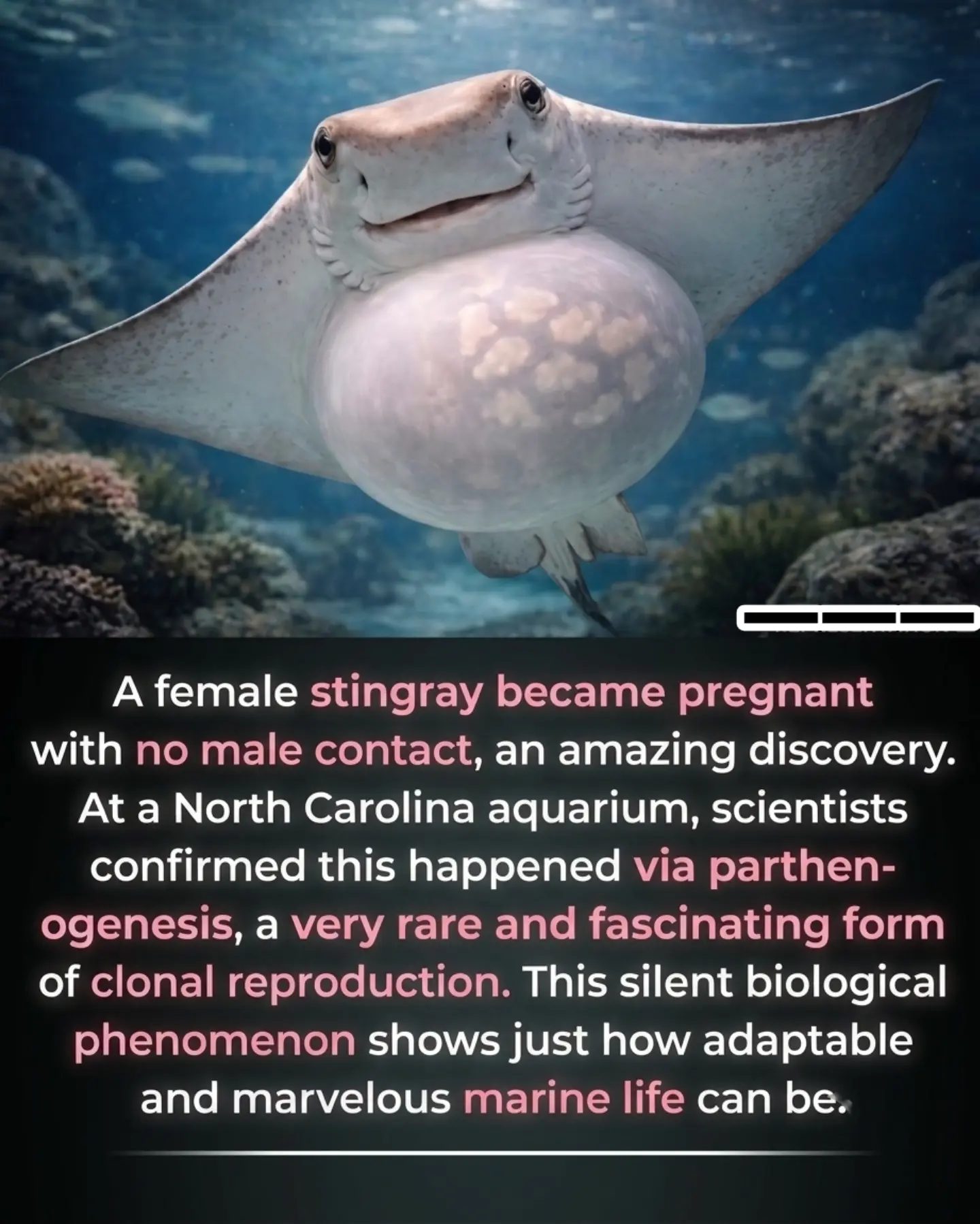
Rare Stingray Reproduction
Marine life is full of surprises, and one of the most remarkable recent discoveries involves a female stingray named Charlotte. Living in an aquarium in North Carolina with no male stingrays, Charlotte somehow became pregnant, defying typical reproductive norms. This extraordinary event is a prime example of a rare biological phenomenon known as parthenogenesis, where a female can reproduce without fertilization.
Context / Why This Matters
Parthenogenesis is a fascinating process in which an unfertilized egg develops into an embryo. In the case of marine life, this is particularly noteworthy because it challenges conventional understanding of reproduction. This phenomenon might seem like a biological miracle, but it serves as a reminder of nature's incredible adaptability and resilience. Understanding this rare form of reproduction can offer insights into how marine species evolve and survive, especially in controlled environments like aquariums.
Main Discussion
The Phenomenon of Parthenogenesis
Parthenogenesis, derived from the Greek words for "virgin" and "creation," is a form of asexual reproduction where growth and development of an embryo occur without fertilization. This process is well-documented in certain species, including some insects, reptiles, and fish. However, it is exceedingly rare in stingrays.
In the case of Charlotte the Stingray, scientists confirmed that her pregnancy occurred via parthenogenesis. This form of reproduction typically involves the division of a diploid egg, resulting in offspring that are essentially clones of the mother. This mechanism allows the species to persist in the absence of males, ensuring the continuation of genetic material even in challenging conditions.
The Discovery at a North Carolina Aquarium
Charlotte's story unfolded in a controlled aquarium environment, making the discovery even more intriguing. Aquariums are designed to mimic natural habitats while providing a safe and monitored space for marine life. The fact that this event occurred in such a setting highlights the unpredictability and adaptability of marine species.
Charlotte's pregnancy was a significant discovery, not only for the aquarium staff but also for the scientific community. The event underscores the importance of ongoing research and observation in marine biology. Charlotte's case provides valuable data for scientists studying parthenogenesis and its implications for conservation and the understanding of marine life.
Implications for Marine Biology
The occurrence of parthenogenesis in stingrays has several implications for marine biology:
-
Genetic Diversity: While parthenogenesis ensures the continuation of a species, it also raises questions about genetic diversity. Clonal reproduction can lead to a lack of genetic variation, potentially making the species more vulnerable to environmental changes and diseases.
-
Conservation Efforts: Understanding parthenogenesis can aid in conservation efforts by providing alternative methods of reproduction for endangered species. In cases where males are scarce or absent, parthenogenesis could be a lifeline for the species' survival.
-
Evolutionary Adaptations: This phenomenon showcases the remarkable adaptive capabilities of marine life. Parthenogenesis allows species to thrive even in the absence of typical reproductive conditions, proving that nature has numerous ways to ensure survival.
Practical Tips
For those interested in marine biology or who work in aquariums, here are some practical tips to consider:
-
Monitoring Marine Life: Regular and thorough monitoring of marine life in aquariums can lead to surprising discoveries. Keeping detailed records of behaviors, health, and reproductive patterns can provide valuable insights.
-
Collaboration with Scientists: Aquarium staff should collaborate with marine biologists and researchers to document and analyze unusual occurrences. This collaboration can lead to groundbreaking discoveries.
-
Public Awareness: Sharing stories like Charlotte's with the public can raise awareness about the wonders of marine life and the importance of conservation efforts.
Important Takeaways
The story of Charlotte the Stingray highlights several key points:
- Parthenogenesis is a rare but significant form of reproduction that allows some species to persist in the absence of males.
- Aquariums play a crucial role in both observing and understanding these phenomena.
- Such discoveries underscore the importance of continued research and public awareness in marine biology.
Conclusion
Charlotte's journey from a seemingly impossible pregnancy to a remarkable scientific discovery is a testament to the wonders of marine life. Her story not only sheds light on the fascinating world of parthenogenesis but also highlights the adaptability and resilience of marine species. By understanding and appreciating these natural marvels, we can better appreciate and protect the diverse ecosystems that sustain our planet.
Questions readers ask
What exactly is parthenogenesis and how does it occur in stingrays?
Parthenogenesis is a form of asexual reproduction where an unfertilized egg develops into an embryo without fertilization. In stingrays, this process allows a female to become pregnant and give birth without male contact. It typically involves the egg cell duplicating its chromosomes and initiating embryonic development independently.
Why is Charlotte the stingray's pregnancy significant?
Charlotte's pregnancy is significant because it demonstrates a rare and unusual reproductive strategy in a controlled environment. Her pregnancy without male contact showcases the adaptability of marine life and provides valuable insights into the reproductive capabilities of stingrays.
Can parthenogenesis occur in other marine species besides stingrays?
Yes, parthenogenesis is known to occur in various marine species, not just stingrays. Other examples include certain species of sharks, fish, and even some crustaceans. This reproductive strategy allows these species to reproduce asexually under specific conditions, often when males are not available.
What are the implications of Charlotte's pregnancy for aquarium management?
Charlotte's pregnancy highlights the potential for unexpected reproductive events in controlled environments. Aquarium staff may need to consider the possibility of parthenogenesis when managing female stingrays, ensuring they are prepared for such occurrences and understanding the potential genetic implications for the offspring.
How common is parthenogenesis in stingrays?
Parthenogenesis in stingrays is quite rare. Most stingray species typically reproduce sexually, requiring both male and female individuals. The occurrence of parthenogenesis is sporadic and often unexpected, making Charlotte's case particularly notable.
What are the potential benefits of parthenogenesis for marine life?
Parthenogenesis can be beneficial for marine life by allowing species to reproduce and maintain populations even when males are scarce. This reproductive strategy can help ensure the survival of a species in challenging environments or when population sizes are low.
What should I know about the offspring of a parthenogenetic pregnancy in stingrays?
The offspring of a parthenogenetic pregnancy in stingrays are genetically identical to the mother, as they develop from an unfertilized egg. This means the young stingrays will share the same genetic makeup as their mother, which can have implications for genetic diversity within the population.
Related deep dives
Similar reads based on topic and creator.
Recent articles
Fresh deep dives from the latest Reels we unpacked.




Comments
Be the first to comment.