AI Prompt Libraries: Harnessing High-Leverage Prompts for Comprehensive AI Skills
AI prompt libraries are essential tools for those looking to leverage AI for comprehensive, multi-step tasks. Fable 5, for instance, is designed for one-million-token, honest, and multi-step work, setting it apart from faster chat options. This article dives into the structure and utility of AI prompt libraries, focusing on Fable 5 and its high-leverage prompts across ten categories. These libraries are invaluable for enhancing AI capabilities in various domains, from research to personal development.
Why This Matters
In the fast-paced world of AI, prompt libraries serve as critical resources for developers and researchers aiming to optimize AI outputs. These libraries help users perform complex tasks, such as analyzing large datasets, conducting comprehensive research, and generating well-structured code. By using these high-leverage prompts, users can achieve more accurate and detailed results, making their workflows more efficient and productive.
Understanding AI Prompt Libraries
The Structure of Fable 5
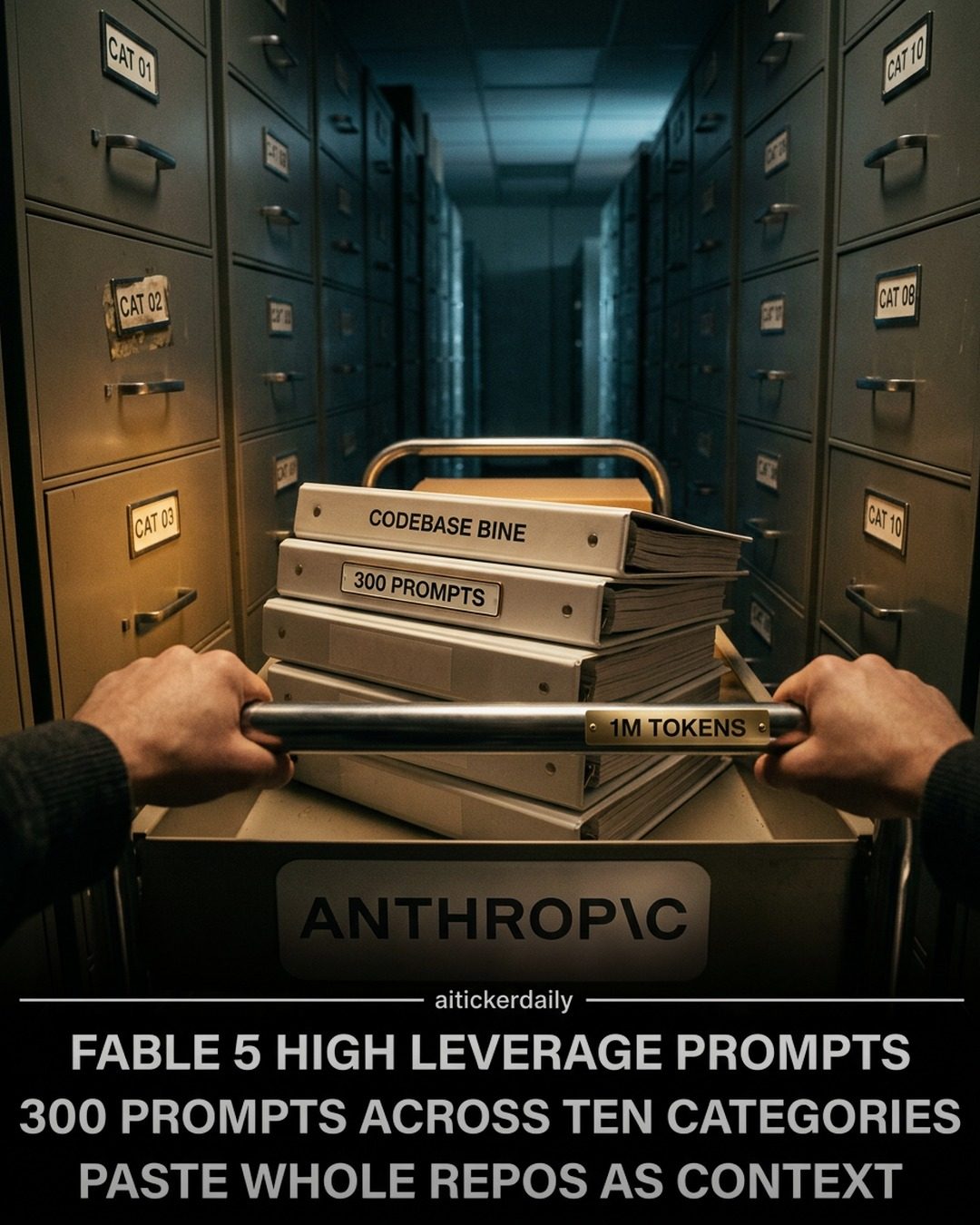
Fable 5 is a comprehensive AI prompt library that maps 300 high-leverage prompts across ten categories. This structure allows users to choose prompts tailored to their specific needs, whether they are working on research, coding, or personal development. The library is designed to handle one-million-token inputs, ensuring that it can process large volumes of data efficiently.
Key Features of Fable 5:
- 300 Prompts Across Ten Categories: The library covers a wide range of topics, from technical architecture to personal development, making it a versatile tool for various AI applications.
- Full Codebase or Research Folder Integration: Users can feed entire codebases or research folders into the system, allowing for a more comprehensive analysis.
- Weekly Reruns: Users are encouraged to rerun prompts weekly to continually improve their skills and knowledge.
Categories and Their Applications
The ten categories in Fable 5 are designed to address specific aspects of AI development and application. Here’s a closer look at some of these categories:
Category 3 and 4: Business Strategy and Technical Architecture
- Category 3 focuses on business strategy and technical architecture. This includes prompts for strategic planning, market analysis, and technical design.
- Category 4 covers code review, security tests, and productive engineering. These prompts are essential for developers looking to enhance the quality and security of their code.
Category 9 and 10: Problem-Solving and Personal Development
- Category 9 emphasizes problem-solving and first principles thinking. This category is ideal for users looking to tackle complex problems systematically.
- Category 10 addresses personal development and career considerations. These prompts help users develop skills that are crucial for their personal and professional growth.
Practical Tips for Using AI Prompt Libraries
Maximizing the Use of Prompt Libraries
To make the most of AI prompt libraries, consider the following tips:
- Select Prompts Carefully: Choose prompts that align with your goals and the specific tasks you need to accomplish. For example, if you are working on a research project, select prompts from categories related to research and analysis.
- Rerun Prompts Regularly: Consistent use of prompts helps in continuously improving skills and knowledge. Rerun prompts weekly to stay updated with the latest developments and refine your approach.
- Integrate Full Codebases or Research Folders: Feeding entire codebases or research folders into the system ensures a comprehensive analysis and better results.
Creating a Weekly Routine
Developing a weekly routine can help in efficiently using AI prompt libraries. Here’s a suggested routine:
- Monday: Start with prompts related to research and analysis. This can include data collection, literature review, and preliminary analysis.
- Wednesday: Focus on technical aspects, such as code review and security tests. Use prompts from categories related to technical architecture and productive engineering.
- Friday: End the week with prompts on personal development and career considerations. Reflect on your progress and plan for future tasks.
Important Takeaways
AI prompt libraries like Fable 5 are invaluable for anyone looking to leverage AI for comprehensive, multi-step tasks. By understanding the structure and utility of these libraries, users can significantly enhance their AI capabilities. Key takeaways include:
- Versatility: AI prompt libraries offer a wide range of prompts across various categories, making them suitable for different applications.
- Comprehensive Analysis: Feeding full codebases or research folders into the system allows for a more comprehensive analysis and better results.
- Regular Use: Consistent use of prompts helps in continuously improving skills and knowledge.
Conclusion
AI prompt libraries are powerful tools for enhancing AI capabilities. Fable 5, with its 300 high-leverage prompts across ten categories, is a prime example of how these libraries can be structured to maximize their utility. By integrating these libraries into your workflow and following a consistent routine, you can achieve more accurate and detailed results, making your projects more efficient and productive. Stay updated with the fast-moving world of AI by following resources like @curatedaidotnet and leveraging prompt libraries to their fullest potential.
Questions readers ask
What are the 10 key categories covered in the Fable 5 AI prompt library?
The Fable 5 AI prompt library covers 10 key categories: data analysis, code generation, content creation, personal development, research assistance, problem-solving, natural language processing, machine learning, system automation, and creative writing. Each category includes a set of high-leverage prompts designed to optimize AI outputs for specific tasks.
How does Fable 5 differ from other AI prompt libraries?
Fable 5 stands out by focusing on one-million-token, honest, and multi-step work, making it ideal for complex tasks that require in-depth processing. Unlike faster chat options, Fable 5 offers a structured approach to handling intricate tasks, ensuring comprehensive and detailed AI responses.
Who can benefit from using the Fable 5 AI prompt library?
The Fable 5 AI prompt library is tailored for researchers and developers seeking to optimize AI outputs and enhance their AI capabilities. Additionally, professionals in various fields who need to perform complex, multi-step tasks, and people interested in personal development can significantly benefit from this library.
What are high-leverage prompts and why are they important?
High-leverage prompts are designed to produce the most effective and comprehensive AI responses, specifically tailored to perform complex, multi-step tasks. These prompts are crucial for tasks that require detailed and accurate outputs, such as data analysis, code generation, and research assistance, making them invaluable for users looking to optimize AI performance.
Can Fable 5 be used for personal development tasks?
Yes, Fable 5 includes prompts specifically designed for personal development. These prompts can help users set goals, track progress, and gain insights into various aspects of personal growth, such as time management, skill development, and self-reflection, making it a versatile tool for individual improvement.
How can developers utilize Fable 5 for code generation?
Developers can use Fable 5 to generate code more efficiently by leveraging the high-leverage prompts designed for this task. The library provides structured prompts that can help in writing, debugging, and optimizing code, making it an essential tool for streamlining coding processes.
What is the significance of a structured approach in AI prompt libraries?
A structured approach in AI prompt libraries, as seen in Fable 5, ensures that AI tasks are broken down into manageable steps, leading to more coherent and accurate outputs. This method is particularly useful for complex tasks that require multi-step processing, as it helps in maintaining focus and clarity throughout the process.
Related deep dives
Similar reads based on topic and creator.




Recent articles
Fresh deep dives from the latest Reels we unpacked.




Comments
Be the first to comment.