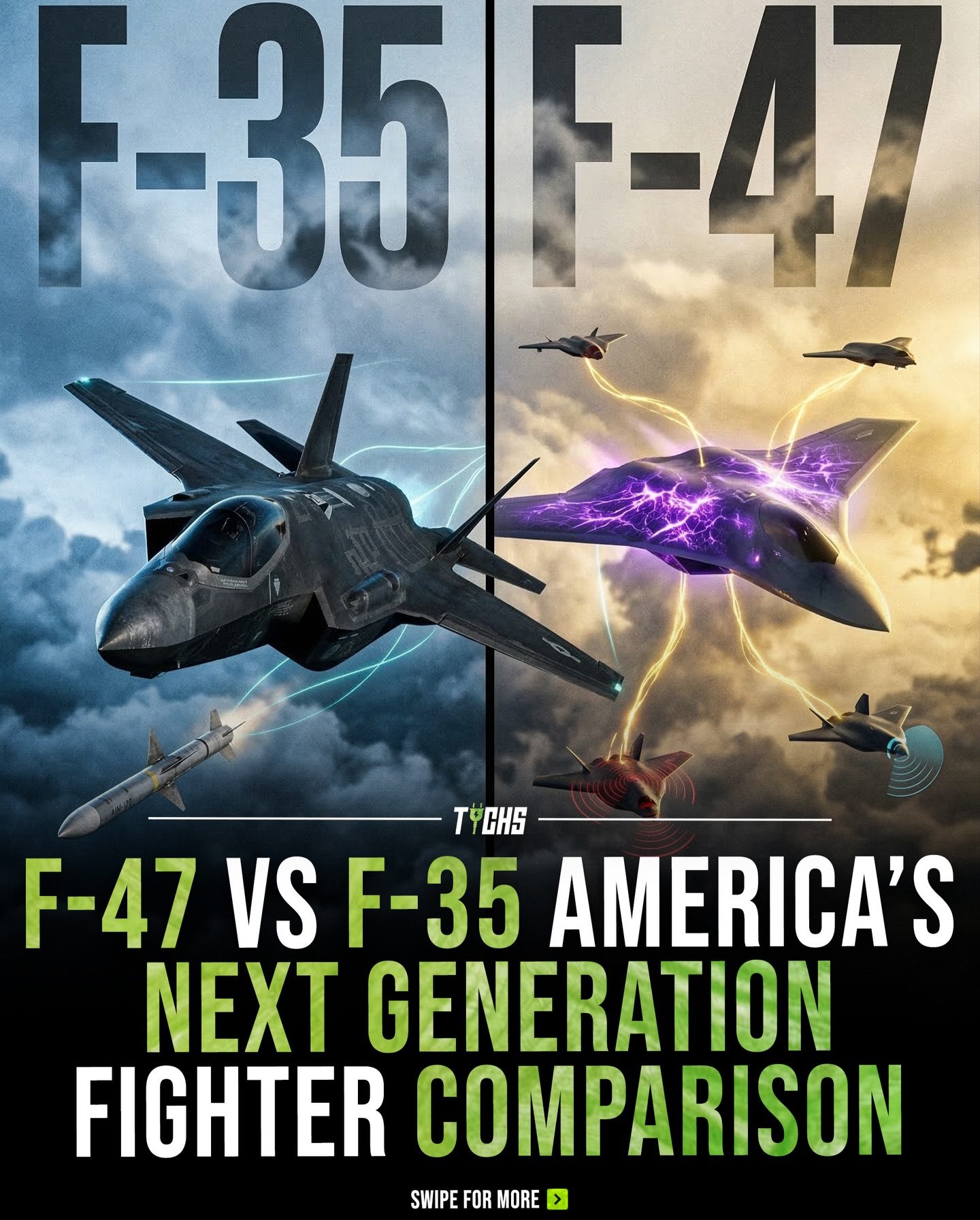
The F-47: Next-Generation Air Combat Technology
The F-47 represents the future of air combat technology, poised to build on the advancements of the current F-35 Lightning II. Both aircraft are multi-role fighters, but the F-47 is designed to push the boundaries of what's possible in modern aerial warfare. Understanding these aircraft involves a deep dive into their capabilities, from stealth and sensor fusion to drone integration and artificial intelligence.
Why This Matters
The evolution from the F-35 to the F-47 signifies a shift in military strategy and technology. The F-35, already one of the most advanced fighters, introduced fifth-generation stealth, sensor fusion, and networked warfare. However, the F-47 is expected to take these capabilities to the next level, incorporating drone teaming, longer range missions, and enhanced electronic warfare protection. This progression reflects the increasing importance of AI and highly connected systems in modern combat.
Main Discussion
Design and Capabilities
The F-47 is designed to address some of the limitations of the F-35. One of the most significant advantages is its increased fuel capacity, which is 40% higher than that of the F-35. This allows the F-47 to undertake longer range missions without requiring refueling, making it more effective in vast battle zones.
Drone Integration
One of the standout features of the F-47 is its ability to coordinate with drones. This drone teaming capability allows the F-47 to act as a central node in a larger combat network, coordinating not just other aircraft but also unmanned aerial vehicles. This integration enhances situational awareness and operational efficiency, enabling more effective mission execution.
Networked Warfare
Both the F-35 and the F-47 are designed with networked warfare in mind. The F-35 already shares battlefield data, but the F-47 is expected to act as the central node of a much larger combat network. This means that the F-47 will not only share data but also coordinate and manage the flow of information across multiple platforms, including drones, ground vehicles, and other aircraft. This level of connectivity is crucial for real-time decision-making and coordinated operations.
Artificial Intelligence and Electronic Warfare
The F-47 is set to incorporate advanced AI systems that assist pilots in analyzing threats and coordinating combat operations. These systems will provide real-time data analysis, helping pilots make more informed decisions. Additionally, the F-47 is expected to have stronger electronic warfare protection, enhancing its ability to operate in contested environments.
Adaptive Cycle Engines
Another key feature of the F-47 is its adaptive cycle engines. These engines offer better speed and efficiency, allowing the aircraft to adapt to different mission requirements. This adaptability is essential for modern air warfare, where the ability to quickly respond to changing conditions can be a decisive factor.
Practical Tips
Understanding the Role of the F-47
To fully appreciate the F-47's capabilities, it's essential to understand its role in the larger combat network. The F-47 is not just a fighter jet; it's a central command node that coordinates multiple platforms. This means that its effectiveness is enhanced when operating in conjunction with drones, ground vehicles, and other aircraft.
The Importance of Drone Coordination
Drone coordination is a critical aspect of the F-47's design. Pilots need to be trained in managing and coordinating drone teams effectively. This involves understanding the capabilities and limitations of different drone types and how they can be best utilized in various combat scenarios.
Real-Time Data Analysis
The F-47's AI systems provide real-time data analysis, which is crucial for decision-making. Pilots need to be adept at interpreting this data and using it to make quick, informed decisions. This requires not only technical training but also a deep understanding of combat strategies and tactics.
Electronic Warfare
The F-47's enhanced electronic warfare capabilities are crucial for surviving in contested environments. Pilots need to be trained in electronic warfare techniques, including the use of jamming and spoofing to protect the aircraft and its networked assets.
Important Takeaways
The Future of Air Warfare
The F-47 represents a significant leap forward in air combat technology. Its advanced capabilities, including drone integration, networked warfare, and AI systems, reflect the future of air warfare. This future is highly connected and AI-assisted, with aircraft acting as central nodes in a larger combat network.
The Evolution of Fighter Jets
The progression from the F-35 to the F-47 highlights the continuous evolution of fighter jets. Each new generation builds on the strengths of its predecessor, incorporating new technologies and capabilities to meet the changing demands of modern warfare.
The Role of AI and Connectivity
AI and connectivity are becoming increasingly important in modern air warfare. The F-47's advanced AI systems and networked warfare capabilities demonstrate how these technologies can enhance combat effectiveness and situational awareness.
Conclusion
The F-47 is set to revolutionize air combat technology, pushing the boundaries of what's possible with its advanced capabilities. From increased fuel capacity and drone integration to networked warfare and AI systems, the F-47 is designed to operate effectively in the modern battlefield. As military technology continues to evolve, the F-47 represents a significant step forward in the future of air warfare.
Questions readers ask
What are the key differences between the F-47 and the F-35 in terms of capabilities?
The F-47 is designed to surpass the F-35 in several areas. It offers longer-range capabilities, better drone integration, and advanced AI systems. These enhancements reflect the evolving demands of modern combat and the importance of interconnected systems in air warfare.
How does the F-47's drone integration compare to the F-35's?
The F-47 is built with more advanced drone integration capabilities, allowing for enhanced coordination and control of unmanned aerial vehicles. While the F-35 already supports drone operations, the F-47 takes this a step further, reflecting a growing emphasis on autonomous systems in military strategy.
What role does AI play in the F-47's design and operation?
AI is a central component of the F-47, enabling advanced decision-making, sensor fusion, and autonomous capabilities. This integration helps pilots manage complex combat situations more effectively, providing a significant advantage in modern air warfare.
How does the F-47's range compare to the F-35's?
The F-47 is engineered for longer-range operations, allowing it to perform missions over greater distances without refueling. This extended range is crucial for modern military strategies, enabling the aircraft to project power more effectively and respond to threats from farther away.
What are the advantages of the F-47's advanced sensor fusion?
The F-47's advanced sensor fusion integrates data from various sources to provide a comprehensive and real-time view of the battlefield. This capability allows pilots to make more informed decisions, improve situational awareness, and enhance operational effectiveness in complex combat scenarios.
Why is the F-47 considered a next-generation fighter jet?
The F-47 is considered next-generation due to its cutting-edge technologies, including advanced AI, superior drone integration, and extended range. These features represent a significant leap from the already advanced F-35, positioning the F-47 at the forefront of modern air combat technology.
Related deep dives
Similar reads based on topic and creator.




Recent articles
Fresh deep dives from the latest Reels we unpacked.




Comments
Be the first to comment.