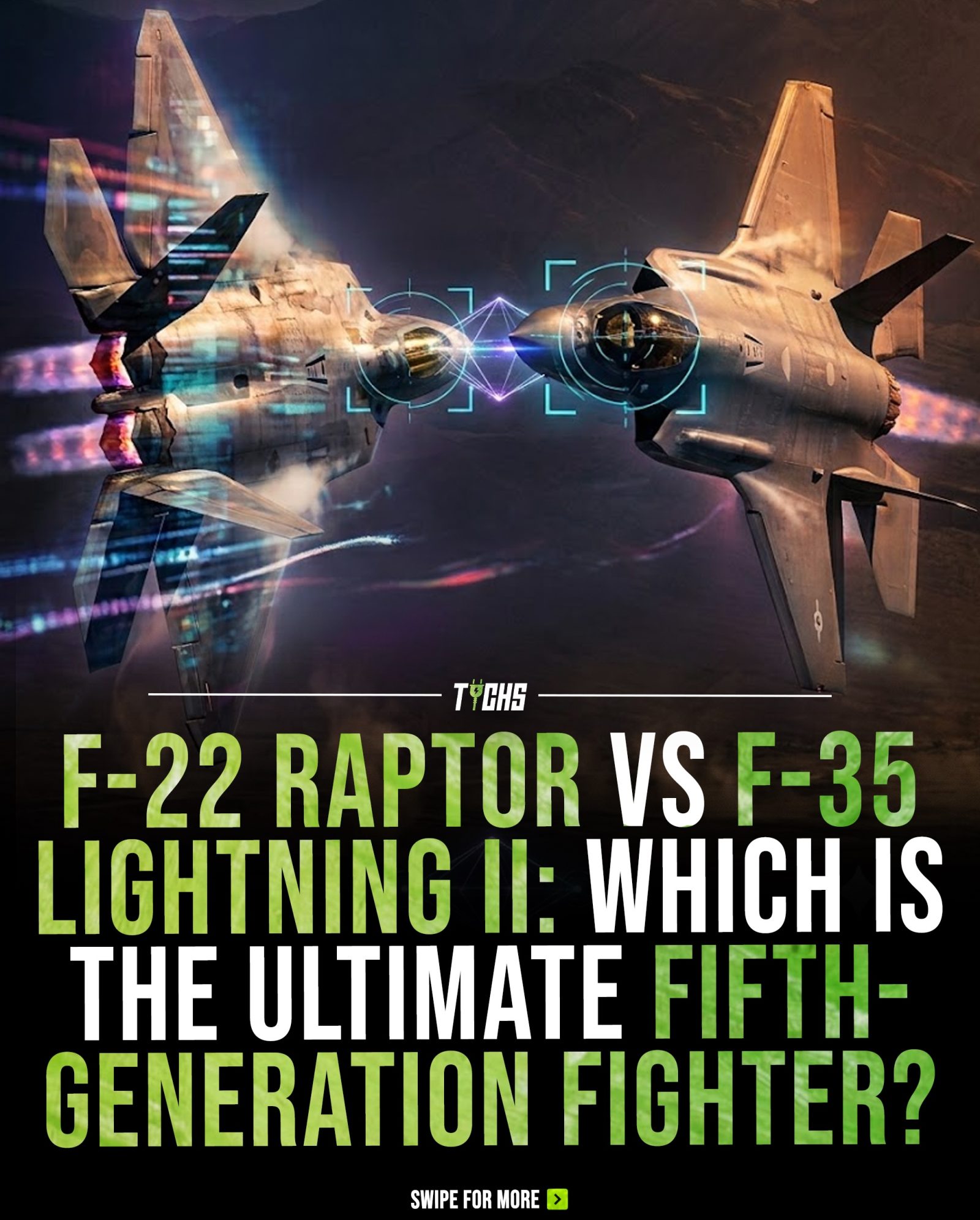
The F-22 Raptor and F-35 Lightning II are two of the most advanced fifth-generation fighter aircraft in the world, each designed to excel in different aspects of aerial combat. These aircraft represent the pinnacle of modern military technology and are integral to the United States' air power strategy. Here, we delve into the unique capabilities, costs, and roles of these remarkable machines.
Context / Why this matters
In an era where aerial warfare is increasingly complex, understanding the capabilities of these fighter jets is crucial. They are not just symbols of technological prowess but are critical to national defense strategies, providing air superiority and multi-role capabilities that are essential in modern combat scenarios.
Main discussion
Design and Role
The F-22 Raptor, developed by Lockheed Martin, is designed with a primary focus on air superiority. Its design emphasizes high speed, agility, and stealth, making it a formidable opponent in dogfights. The Raptor's twin engines generate a thrust of 70,000 pounds-force (312 kilonewtons), which enables it to perform high-speed maneuvers and maintain superior performance in air-to-air combat.
In contrast, the F-35 Lightning II, also developed by Lockheed Martin, is a multirole fighter designed for versatile missions. Its advanced sensor fusion, stealth technology, and networked combat capabilities make it suitable for a wide range of operations, including ground attack, air-to-air combat, and reconnaissance. The Lightning II's engines produce 56,000 pounds-force (250 kilonewtons) of thrust, which, while less than the Raptor, is still impressive and sufficient for its multifaceted missions.
Cost
The unit cost of these aircraft is a significant factor in their deployment and operational strategies. The F-22 Raptor, with a unit cost of $143 million, is more expensive than the F-35 Lightning II, which costs $125 million per unit. This difference in cost reflects the specialized nature of the Raptor, which is optimized for air superiority, versus the more versatile and adaptable F-35.
Practical tips
Understanding Operational Costs
For those interested in military procurement, understanding the operational costs beyond the initial purchase price is crucial. Maintenance, upgrades, and operational logistics are significant factors that can affect the overall cost-effectiveness of these aircraft. The Raptor, being a more specialized aircraft, may have higher maintenance costs due to its advanced systems and high-performance components. In contrast, the F-35's multirole capabilities may offer cost savings in terms of versatility and flexibility.
Training and Personnel
Both aircraft require highly trained personnel for optimal performance. The Raptor's advanced systems and high-performance capabilities necessitate pilots with extensive training in air-to-air combat. The F-35, with its multifaceted roles, requires pilots and ground crews skilled in various combat scenarios and sensor fusion technologies. Investing in training and personnel development is essential for maximizing the effectiveness of these aircraft.
Maintenance Considerations
Regular maintenance and upgrades are crucial for keeping these aircraft in peak condition. The Raptor's advanced systems and high-performance engines require meticulous maintenance to ensure reliability and performance. The F-35's advanced sensors and networking capabilities also demand regular updates and maintenance to stay ahead of evolving threats.
Important takeaways
Comparing the F-22 Raptor and F-35 Lightning II reveals two distinct but complementary approaches to modern aerial combat. The Raptor's focus on air superiority and high-performance capabilities make it a dominant force in the skies, while the F-35's versatility and advanced sensor fusion capabilities offer a versatile solution for a wide range of missions. Each aircraft plays a critical role in the overall U.S. air power strategy, combining air dominance with networked combat capabilities to address the evolving threats of today's battlefield.
Conclusion
The F-22 Raptor and F-35 Lightning II represent the future of aerial warfare, each with unique strengths and capabilities. While the Raptor excels in air superiority, the F-35 offers unmatched versatility and advanced sensor fusion. Understanding the roles, costs, and operational requirements of these aircraft is essential for appreciating their significance in modern military strategy. Together, they form the backbone of U.S. tactical air power, ensuring air dominance and versatility in an ever-changing battlefield.
Questions readers ask
What is the primary role of the F-22 Raptor in combat situations?
The F-22 Raptor is primarily designed for air superiority, meaning it excels in air-to-air combat. Its advanced aerodynamics, supercruise capability, and advanced avionics make it highly effective in engaging and defeating enemy aircraft in the skies.
How does the F-35 Lightning II differ from the F-22 Raptor in terms of combat role?
Unlike the F-22, the F-35 is a multi-role fighter, equipped for a variety of missions including air-to-ground strikes, reconnaissance, and air defense. This versatility makes the F-35 suitable for a broader range of combat scenarios compared to the F-22.
What are the key differences in the stealth capabilities of the F-22 and F-35?
Both aircraft are designed with advanced stealth technology, but the F-22 is considered to have superior stealth capabilities due to its all-aspect stealth design. The F-35, while also stealthy, is optimized for multi-role missions and has a more pronounced focus on ground attack capabilities.
Which aircraft is more cost-effective for a military budget?
The F-35 is generally considered more cost-effective in terms of procurement and maintenance. While both aircraft are expensive, the F-35's multi-role capabilities allow it to perform a wider range of missions, potentially reducing the need for multiple aircraft types. However, the F-22 is more affordable per unit.
What makes the F-22 Raptor a superior choice for air-to-air combat?
The F-22 Raptor's superior aerodynamics, high speed, and advanced avionics systems give it a significant edge in air-to-air combat. Its ability to supercruise, or maintain supersonic speed without using afterburners, allows it to quickly engage and disengage from enemy aircraft as needed.
Why is the F-35 Lightning II crucial for modern combat situations?
The F-35's versatility and advanced sensor suite make it invaluable for modern combat. It can perform a wide range of missions, from ground attacks to reconnaissance, and its advanced avionics and stealth capabilities allow it to operate effectively in contested environments.
What are the primary differences in the design of the F-22 Raptor and F-35 Lightning II?
The F-22 Raptor has a more conventional fighter jet design with a focus on speed and agility, while the F-35 Lightning II has a more angular and blended wing design. This design choice in the F-35 allows for enhanced sensor integration and multi-role capabilities, but the F-22's design enhances its air superiority capabilities.
Related deep dives
Similar reads based on topic and creator.




Recent articles
Fresh deep dives from the latest Reels we unpacked.




Comments
Be the first to comment.