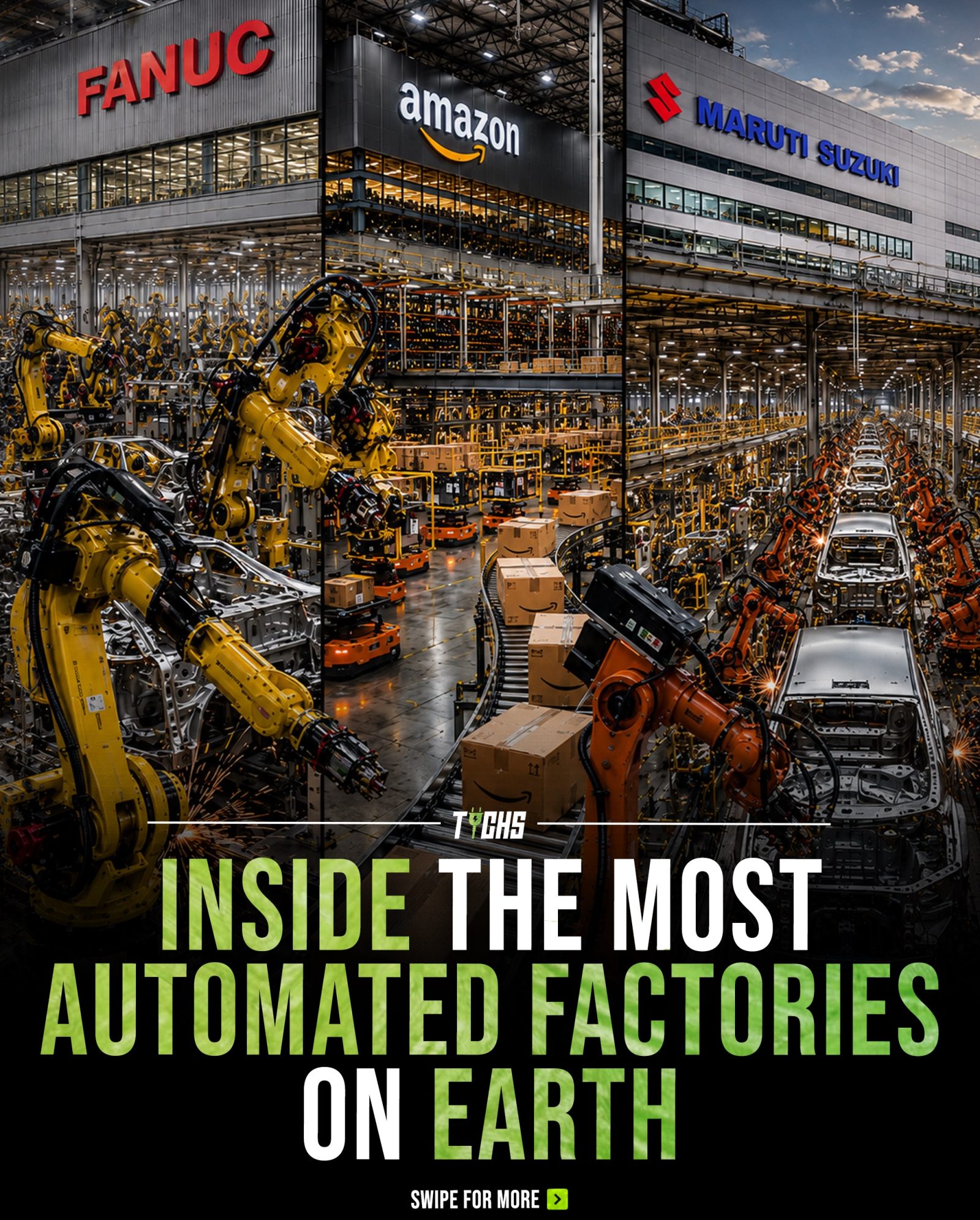
Automated factories are revolutionizing manufacturing. Today, these facilities are designed with massive robotic systems, AI-driven logistics, and near fully automated production lines that can operate almost nonstop, minimizing the need for human intervention. Robotics, sensors, and automated transport systems are transforming factories into highly efficient, optimized smart production ecosystems.
Context / Why this matters
The shift towards automation is profound and widespread. Companies like Maruti Suzuki, Amazon, TSMC, BMW, Siemens, FANUC, and Xiaomi are at the forefront of this revolution. These manufacturing giants are leveraging robotic automation, digital twins, smart logistics, and precision manufacturing to produce vehicles, electronics, chips, and industrial robots at an unprecedented scale.
Main discussion
The Role of Robotics in Manufacturing
Robotics is a cornerstone of modern factory automation. Companies deploy robotic arms and automated guided vehicles (AGVs) to handle a wide range of tasks, from material handling to assembly and packaging. For example, FANUC robotic arms are often seen in these advanced manufacturing environments, where they execute precise, repetitive tasks with unmatched efficiency.
AI and Smart Logistics
AI-driven logistics enhance the efficiency and accuracy of supply chains. Smart logistics systems employ artificial intelligence to optimize inventory management, route planning, and demand forecasting. This ensures that raw materials and finished products flow smoothly through the factory, reducing delays and waste.
Digital Twins and Precision Manufacturing
Digital twins are virtual replicas of physical assets, processes, or systems. In automated factories, these digital twins enable precise monitoring and control of production lines, leading to higher quality outputs. For instance, Siemens uses digital twin traceability systems to achieve over 99.9% production quality, illustrating the transformative potential of this technology.
The Impact on Productivity and Efficiency
The integration of AI, robotics, and advanced automation technologies results in significant productivity gains. Automated systems can work continuously, reducing downtime and increasing throughput. For example, Amazon's fulfillment centers, equipped with over 750,000 robots, demonstrate the scale and efficiency of automated logistics, making same-day delivery possible.
Environmental and Economic Benefits
Automated factories not only enhance productivity but also contribute to sustainability. Robotic systems and smart logistics can optimize resource usage, reducing energy consumption and waste. Additionally, the economic benefits are substantial, as factories can produce more goods with fewer labor costs, leading to competitive pricing and increased profitability.
Practical tips
Automating a factory doesn't happen overnight. Here are some practical tips for companies looking to transition to automated factories:
Assess Your Needs
Before investing in automation, conduct a thorough assessment of your current processes. Identify areas where automation can provide the most significant benefits. This could be in material handling, assembly, packaging, or logistics.
Start Small
Begin with a pilot project. Implement automation in a small, manageable area of your factory. This allows you to test the technology, identify any issues, and make necessary adjustments before scaling up.
Invest in Training
Automated systems require skilled personnel to operate and maintain them. Invest in training programs for your existing workforce to ensure they are equipped to handle the new technology.
Integrate Systems Seamlessly
Ensure that your automated systems integrate smoothly with your existing infrastructure. Compatibility and integration are crucial for maximizing the benefits of automation.
Regular Maintenance
Regular maintenance of automated systems is essential to keep them running efficiently. Schedule routine checks and updates to prevent breakdowns and ensure optimal performance.
Continuous Improvement
The goal of automation is to continually improve efficiency and productivity. Regularly review and optimize your automated processes to stay ahead of the competition.
Important takeaways
Advanced automated factories are redefining manufacturing. Key takeaways include:
- Robotics and AI: These technologies are integral to modern manufacturing, enhancing productivity and efficiency.
- Digital Twins: They enable precision manufacturing and quality control, as seen in the Siemens example.
- Efficiency and Productivity: Automated systems work continuously, reducing downtime and increasing throughput.
- Scalability: Companies can start small and scale up as they become more comfortable with automation.
- Integration: Integrating automated systems with existing infrastructure is crucial for maximizing benefits.
Conclusion
Automated factories represent the future of manufacturing. By leveraging robotics, AI, and advanced automation technologies, companies can achieve unprecedented levels of efficiency, productivity, and quality. The transformation is not just about technology; it's about creating smarter, more sustainable production ecosystems that drive economic growth and innovation. As more companies embrace automation, the manufacturing landscape will continue to evolve, setting new standards for efficiency and sustainability.
Questions readers ask
What are some key benefits of advanced factory automation for manufacturers?
Advanced factory automation enhances efficiency, reduces operational costs, and improves product quality. It allows for near-continuous production, minimizes human error, and enables real-time monitoring and adjustments through AI and smart sensors.
How does AI contribute to automated production processes?
AI plays a crucial role in automated production by optimizing logistics, predicting maintenance needs, and making real-time adjustments to manufacturing processes. It enhances decision-making and improves overall operational efficiency.
What are some examples of companies leading the way in automated manufacturing?
Companies like Maruti Suzuki, Amazon, and BMW are pioneering the use of automated manufacturing systems. They employ extensive robotics, AI-driven logistics, and smart factory technologies to achieve high levels of production efficiency and precision.
How do automated transport systems enhance factory operations?
Automated transport systems streamline material handling and reduce downtime by ensuring timely delivery of components and products within the factory. They integrate with other automated systems to create a seamless, efficient production flow.
What is the role of digital twins in modern manufacturing?
Digital twins are virtual replicas of physical manufacturing processes and systems. They enable real-time monitoring, simulation, and optimization of factory operations, allowing for better planning and faster problem-solving.
How does Siemens contribute to the advancement of factory automation?
Siemens is a leader in automation technologies, offering comprehensive solutions for smart factories. Their products include advanced robotics, AI systems, and digital factory solutions that enhance production efficiency and flexibility.
What trends are shaping the future of factory automation?
Current trends in factory automation include the integration of AI and robotics, the use of digital twins for simulation and optimization, and the development of precise manufacturing robotics. Additionally, there is a growing emphasis on automated transport systems and smart logistics to further streamline operations.
Related deep dives
Similar reads based on topic and creator.




Recent articles
Fresh deep dives from the latest Reels we unpacked.




Comments
Be the first to comment.