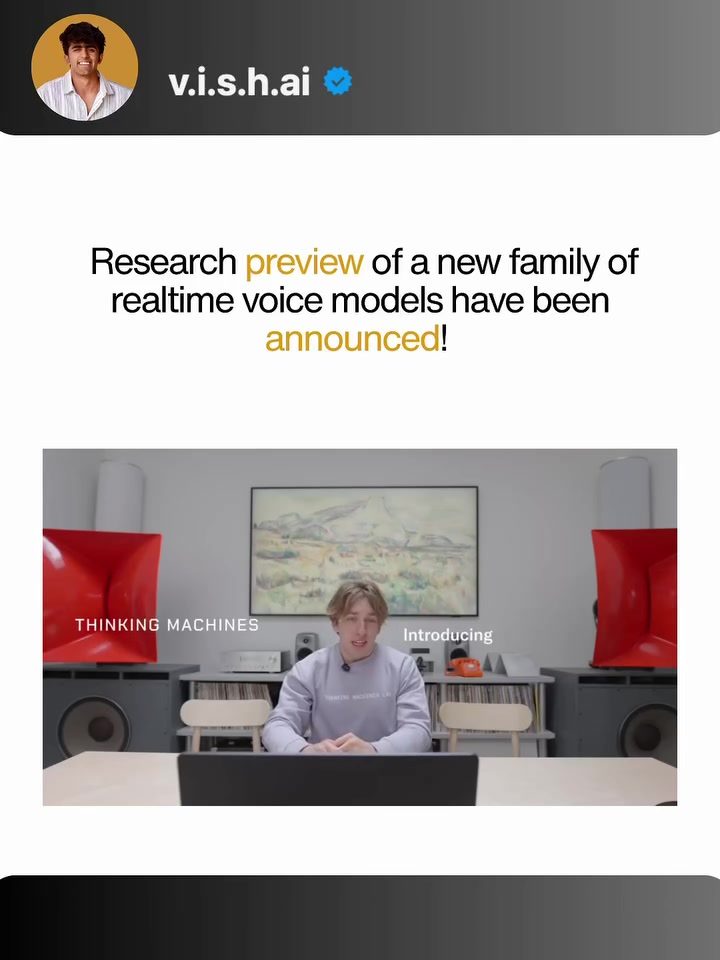
AI Voice Models for Real-Time Interaction
Real-time voice models are revolutionizing the way we interact with technology. These advanced systems are designed to understand and respond to human speech instantly, making interactions more seamless and natural. With the recent release of a model by v.i.s.h.ai, the capabilities of real-time voice models are now at the forefront of technological advancements. This article explores the latest developments in real-time voice models, their applications, and how they are being integrated into various systems.
Why This Matters
The development of real-time voice models is crucial for enhancing user experiences across various platforms. These models enable devices to understand and respond to spoken commands instantaneously, making them invaluable for applications like virtual assistants, customer service, and even real-time language translation. As technology continues to evolve, the demand for more intuitive and responsive voice interaction systems is on the rise.
Main Discussion
What Are Real-Time Voice Models?
Real-time voice models are AI-driven systems designed to process and respond to spoken language in real-time. Unlike traditional voice recognition systems that may have a delay, real-time models are capable of immediate interaction. This is made possible through advanced algorithms and machine learning techniques that allow the models to understand and generate responses to spoken commands.
Full Duplex Audio and Video
The latest models from companies like v.i.s.h.ai are pushing the boundaries of what is possible with real-time voice interaction. Full duplex audio and video systems are a significant advancement in this field. These systems allow for simultaneous input and output, meaning a user can speak to the system while it is still processing and responding to their previous input. This capability is particularly useful for applications like virtual meetings, where real-time interaction is crucial.
Applications of Real-Time Voice Models
Real-time voice models have a wide range of applications across various industries. Some of the most notable applications include:
Virtual Assistants
Virtual assistants like Siri, Alexa, and Google Assistant are increasingly relying on real-time voice models to provide more intuitive and responsive interactions. These assistants can now understand and respond to complex commands in real-time, making them more useful for everyday tasks.
Customer Service
In customer service, real-time voice models are being used to enhance the efficiency and effectiveness of customer interactions. These models can handle multiple queries simultaneously, providing instant responses and reducing wait times.
Language Translation
Real-time language translation is another area where voice models are making a significant impact. These models can translate spoken language in real-time, making them invaluable for multilingual communication. For instance, the demonstration by v.i.s.h.ai showcased the capability of real-time translation from Hindi to English, highlighting the potential of these models in bridging language barriers.
How Real-Time Voice Models Work
Real-time voice models rely on a combination of advanced technologies to achieve their functionality. Here are some of the key components that make these models work:
Natural Language Processing (NLP)
Natural Language Processing is the backbone of real-time voice models. NLP enables the models to understand and interpret human language, allowing them to generate appropriate responses. This involves multiple stages, including speech recognition, language understanding, and response generation.
Machine Learning
Machine learning algorithms are essential for training real-time voice models. These algorithms enable the models to learn from vast amounts of data, improving their accuracy and responsiveness over time. Techniques like deep learning and neural networks are commonly used in this context.
Real-Time Processing
Real-time processing is crucial for the functionality of these models. This involves processing and responding to spoken commands in real-time, with minimal delay. Advanced hardware and optimized algorithms are used to achieve this level of performance.
Practical Tips
Implementing Real-Time Voice Models
Implementing real-time voice models requires a combination of technical expertise and the right tools. Here are some practical tips for getting started:
Choose the Right Platform
Select a platform that supports real-time voice models. Popular choices include cloud-based solutions from companies like AWS, Google Cloud, and Microsoft Azure, which offer robust AI and machine learning services.
Integrate NLP and ML
Ensure that your system includes NLP and machine learning components. These are essential for understanding and interpreting spoken language, as well as generating appropriate responses.
Optimize for Real-Time Performance
Optimize your system for real-time performance. This involves using efficient algorithms and leveraging powerful hardware to minimize latency and ensure smooth interactions.
Test and Iterate
Continuously test and iterate your implementation. Real-time voice models require fine-tuning to achieve optimal performance, so regular testing and feedback are crucial.
Enhancing User Experience
To enhance the user experience with real-time voice models, consider the following:
Natural Language Understanding
Focus on natural language understanding to make interactions more intuitive. This involves improving the model's ability to understand context, handle ambiguities, and generate human-like responses.
Personalization
Personalize interactions based on user preferences and behavior. This can make the interactions more relevant and engaging, enhancing the overall user experience.
Multilingual Support
Ensure that your system supports multiple languages. Real-time language translation is a powerful feature that can significantly enhance user engagement, especially in multilingual environments.
Important Takeaways
Real-time voice models are transforming the way we interact with technology. As these systems evolve, they are becoming more intuitive, responsive, and versatile, with applications ranging from virtual assistants to customer service and language translation. Key takeaways include:
- Real-time voice models enable seamless, natural interactions through advanced NLP and machine learning techniques.
- Full duplex audio and video systems are pushing the boundaries of real-time interaction, allowing for simultaneous input and output.
- Applications of real-time voice models include virtual assistants, customer service, and language translation, among others.
- Implementing real-time voice models requires a combination of the right platform, NLP, machine learning, and real-time processing capabilities.
- Enhancing user experience involves focusing on natural language understanding, personalization, and multilingual support.
Conclusion
Real-time voice models represent a significant leap forward in voice interaction technology. As these models continue to improve, they are set to revolutionize various industries, making interactions more intuitive and responsive. Whether it's through virtual assistants, customer service, or language translation, the potential applications of real-time voice models are vast and diverse. As we continue to explore and develop these technologies, their impact on our daily lives will only grow, making interactions with technology more seamless and natural than ever before.
Questions readers ask
What are real-time voice models and how do they work?
Real-time voice models are advanced systems that process and respond to human speech instantly. They use sophisticated algorithms to convert spoken language into text and then generate appropriate responses in real-time, enabling seamless and natural voice interactions. v.i.s.h.ai's latest models exemplify this technology, offering instantaneous understanding and response to voice commands.
How does v.i.s.h.ai's real-time voice model improve language translation?
v.i.s.h.ai's real-time voice model enhances language translation by providing simultaneous, real-time language translation. This means that as someone speaks, the model can instantly translate their words into another language, facilitating smoother and more efficient communication across language barriers. This capability is particularly useful in applications like virtual assistants and real-time translation services.
What are some practical applications of real-time voice models?
Real-time voice models have a wide range of applications. They can be integrated into virtual assistants to provide immediate responses to user queries, enhancing user experience. Additionally, they can be used in customer service for instant voice recognition and response, making interactions more efficient. In the realm of translation, these models enable real-time language translation, allowing for seamless communication in multilingual environments.
What is the significance of real-time voice processing in today's technology?
Real-time voice processing is significant because it allows for instant and natural interactions with technology. This capability transforms how users engage with devices, making interactions more intuitive and efficient. For instance, real-time voice processing enables virtual assistants to respond immediately to user commands, and it enhances the functionality of duplex voice systems, where both parties can speak and be understood simultaneously.
How do real-time voice models contribute to the development of advanced virtual assistants?
Real-time voice models contribute to the development of advanced virtual assistants by enabling them to understand and respond to user commands instantly. This real-time interaction makes virtual assistants more effective and user-friendly, as they can provide immediate assistance and support. With the integration of voice model technology, virtual assistants can handle a wider range of tasks and improve overall user satisfaction.
What advantages do v.i.s.h.ai's new voice models offer over traditional voice recognition systems?
v.i.s.h.ai's new voice models offer several advantages over traditional voice recognition systems. They provide more accurate and instantaneous responses, reducing the delay typically associated with voice processing. Additionally, these models are designed to understand and generate natural language more effectively, making interactions more fluid and human-like. This advancement is particularly beneficial in applications requiring real-time interaction and translation.
Can real-time voice models be used for other languages besides English?
Yes, real-time voice models like those developed by v.i.s.h.ai can be used for numerous languages. These models are designed to support multilingual capabilities, enabling voice recognition and translation across various languages. This makes them highly versatile and useful in global applications, facilitating communication and interaction across different linguistic backgrounds.
Related deep dives
Similar reads based on topic and creator.




Recent articles
Fresh deep dives from the latest Reels we unpacked.




Comments
Be the first to comment.