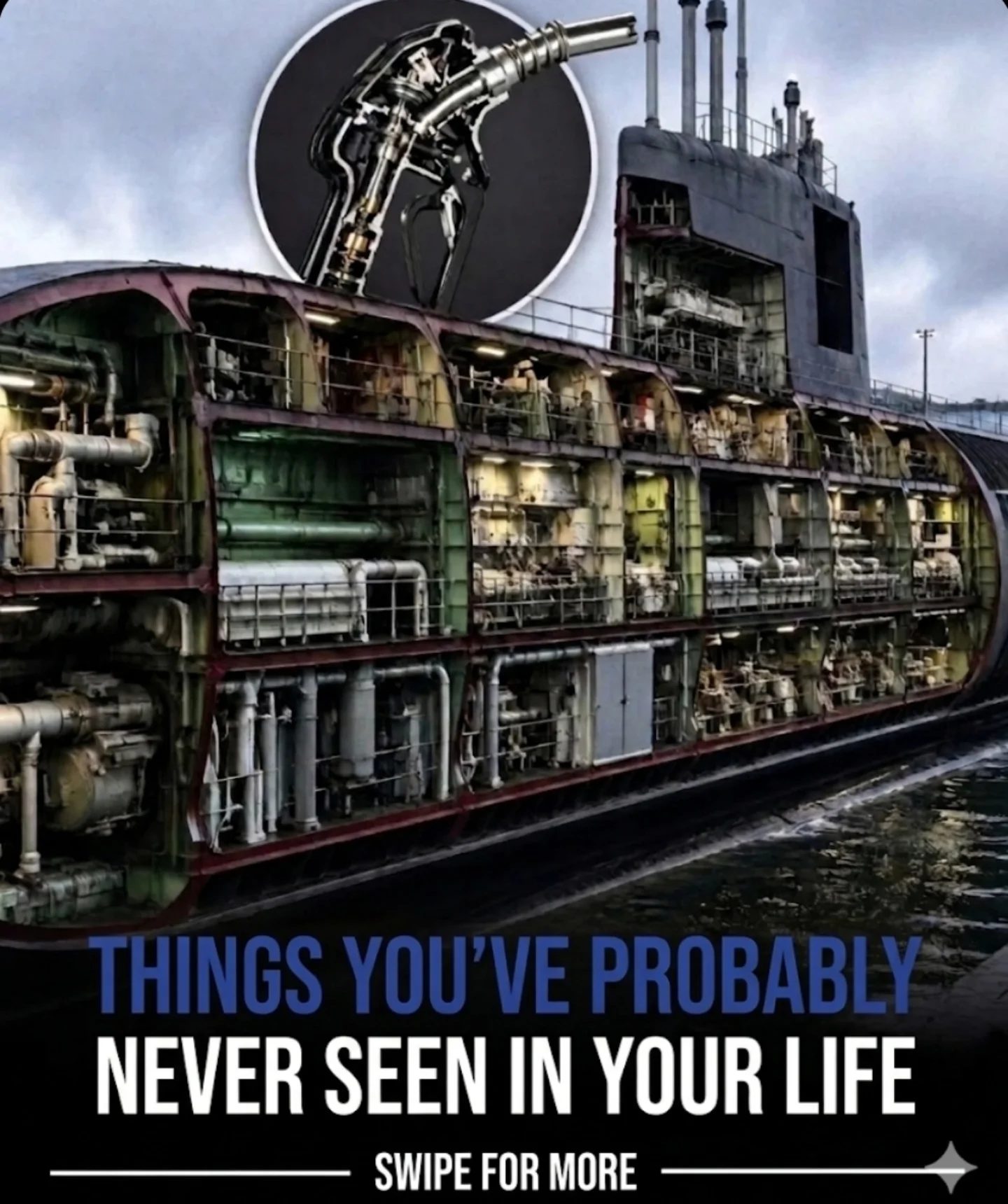
Inside a Nuclear Submarine
Nuclear submarines are engineering marvels that operate beneath the ocean's surface, often far from public view. These vessels are designed for stealth, endurance, and the ability to travel vast distances without refueling. Understanding the intricacies of a nuclear submarine provides insight into the advanced engineering and technology that power these underwater craft.
Why This Matters
Nuclear submarines play a crucial role in modern naval strategies. Their ability to remain submerged for extended periods makes them ideal for surveillance, deterrence, and tactical operations. The engineering behind these vessels is a testament to human ingenuity and innovation in the field of marine technology.
The Complexities of a Nuclear Submarine
Power and Propulsion
The heart of a nuclear submarine is its nuclear reactor. This power plant generates heat, which is used to produce steam. The steam then drives turbines that power the submarine's propulsion system. This method of propulsion allows the submarine to travel at high speeds for long durations without the need for refueling.
Life Support Systems
Submarines are essentially self-contained ecosystems. They must provide air, water, and food for the crew while managing waste and maintaining a breathable atmosphere. Life support systems include air purification units, filtration systems, and water recycling systems. These systems ensure that the crew can survive and operate effectively in the confined, isolated environment of a submarine.
Navigation and Communication
Navigating underwater poses unique challenges. Submarines use a combination of sonar, inertial navigation systems, and GPS (when surfaced) to determine their position. Communication is also critical, especially for coordinating operations with other naval vessels. Submarines use Very Low Frequency (VLF) and Extremely Low Frequency (ELF) radio waves, which can penetrate water and travel long distances.
Weapons and Defense
Nuclear submarines are equipped with advanced weaponry, including torpedoes, missiles, and sometimes even nuclear weapons. These weapons systems are integrated into the submarine's design to ensure rapid deployment and maximum effectiveness. Defense mechanisms include stealth technology, which minimizes the submarine's acoustic signature, making it harder to detect.
Crew Comfort and Morale
Living conditions aboard a submarine are challenging. Crew members must endure long periods of isolation, confined spaces, and the constant hum of machinery. To maintain morale, submarines are designed with living quarters that offer a degree of comfort. Recreational areas, exercise facilities, and communication systems that allow crew members to stay in touch with the outside world are essential for psychological well-being.
Inside a Spray Paint Can
Spray paint is a versatile tool used in various artistic and industrial applications. Understanding its composition and the technology behind it reveals the science and engineering that make it possible.
The Composition of Spray Paint
Propellant and Pigment
Spray paint is composed of two main components: the pigment and the propellant. The pigment provides the color, while the propellant, usually a compressed gas, forces the paint out of the can. The liquid propellant and pigment mix within the can, creating a fine mist that can be easily applied to surfaces.
Application and Uses
Spray paint is used in a wide range of applications, from street art and graffiti to industrial coating and automotive refinishing. Its ease of use and precision make it a popular choice for both hobbyists and professionals. The ability to create detailed patterns and designs with minimal effort is one of the key advantages of spray paint.
Inside an Elevator Shaft
Elevator shafts are a critical component of modern buildings, facilitating vertical transportation and allowing people to move between floors efficiently. Understanding the internal structure of an elevator shaft provides insight into the engineering that makes these systems possible.
Structure and Design
Elevator shafts are tall, vertical structures designed to house the elevator car and its counterweights. They are typically made of reinforced concrete or steel, ensuring structural integrity and stability. The shaft also contains the elevator's mechanical and electrical systems, including the motor, pulleys, and control panels.
Safety and Maintenance
Safety is paramount in elevator systems. Regular maintenance and inspections are necessary to ensure that the elevator operates smoothly and safely. This includes checking the cables, brakes, and mechanical systems for wear and tear. Emergency systems, such as backup power and communication systems, are also in place to handle any malfunctions or emergencies.
Practical Tips
For Naval Enthusiasts
If you're interested in learning more about nuclear submarines, consider visiting naval museums or attending military expos. Many museums offer guided tours that provide in-depth information about submarine design and operations. Additionally, there are numerous books and documentaries that delve into the history and technology of submarines.
For Artists
For those interested in spray paint art, experimenting with different techniques and surfaces can yield unique and creative results. Practice on various materials, such as canvas, metal, and wood, to see how the paint interacts with different surfaces. Always work in a well-ventilated area and use protective gear to minimize exposure to fumes.
For Building Managers
For building managers, regular inspections and maintenance of elevator systems are crucial. Ensure that all components are in good working condition and that emergency systems are operational. Regularly scheduled maintenance can prevent unexpected breakdowns and ensure the safety of occupants.
Important Takeaways
Nuclear Submarines
Nuclear submarines are complex machines that require advanced engineering and technology. Their ability to operate independently for extended periods makes them invaluable for naval operations. Understanding their design and functionality provides insight into modern marine technology.
Spray Paint
Spray paint is a versatile tool that combines science and art. Its composition and application techniques make it suitable for a wide range of applications, from artistic expression to industrial use. Experimenting with different surfaces and techniques can enhance your artistic skills.
Elevator Shafts
Elevator shafts are engineered to ensure structural integrity and safety. Regular maintenance and inspections are essential to maintain the reliability and safety of elevator systems. Keeping up with maintenance schedules can prevent breakdowns and ensure smooth operation.
Conclusion
Exploring the hidden corners of our world reveals the extraordinary engineering and technology that surround us. From the complex internal machinery of nuclear submarines to the vibrant pigments and propellants of spray paint cans, and the intricate structure of elevator shafts, each of these elements showcases human innovation and ingenuity. By delving into these topics, we gain a deeper appreciation for the unseen wonders that make our world work.
Questions readers ask
How do nuclear submarines generate power and stay submerged for extended periods?
Nuclear submarines use nuclear reactors to generate power. This allows them to operate for extended periods without needing to surface for refueling, as the reactors can produce vast amounts of energy from a small amount of nuclear fuel. The steam generated by the reactor is used to drive the submarine's engines, and the excess steam can be used for various on-board systems.
What systems are in place to support the life of the submarine crew?
The life support systems in a nuclear submarine are crucial for sustaining the crew during long missions. These systems regulate air quality, manage waste, and provide fresh water. Advanced filtration and recycling processes ensure that the crew has a constant supply of breathable air and potable water, even when submerged for months at a time.
How do nuclear submarines navigate underwater?
Nuclear submarines use sophisticated navigation systems to travel underwater. They rely on inertial navigation systems, sonar, and gyroscopes to determine their position and direction. These systems work together to provide accurate navigation data, even in the depths of the ocean where GPS signals are unavailable.
What makes nuclear submarines stealthy?
Nuclear submarines are designed with stealth in mind, often equipped with low-noise machinery and acoustic tiles that absorb sound waves. These features help to minimize detection by sonar systems used by other vessels. Additionally, the ability to run on nuclear power allows them to remain submerged for extended periods without the need to surface for refueling, further enhancing their stealth capabilities.
How do submarines communicate while underwater?
Communication systems on nuclear submarines include very-low-frequency (VLF) radio and acoustic systems. VLF signals can penetrate deep water, allowing submarines to receive messages from shore. For sending messages, acoustic communication systems use sound waves to transmit information. However, communications are limited by the need to minimize detection and the constraints of underwater environments.
What are the key engineering challenges in designing a nuclear submarine?
Designing a nuclear submarine involves overcoming several engineering challenges, including managing heat and noise generated by the reactor, ensuring the structural integrity of the hull, and developing efficient life support and steering systems. Engineers must also design systems that can operate reliably in the harsh underwater environment, where pressure, corrosion and limited space are constant concerns.
Can you explain the concept of a self-sustaining ecosystem within a nuclear submarine?
A self-sustaining ecosystem within a nuclear submarine means that the vessel can operate independently for long periods. This includes systems for generating power, producing fresh water, recycling air, and managing waste. By having these systems in place, the submarine can support the crew's needs without relying on external resources, making it capable of remaining underwater for extended missions.
Related deep dives
Similar reads based on topic and creator.




Recent articles
Fresh deep dives from the latest Reels we unpacked.




Comments
Be the first to comment.