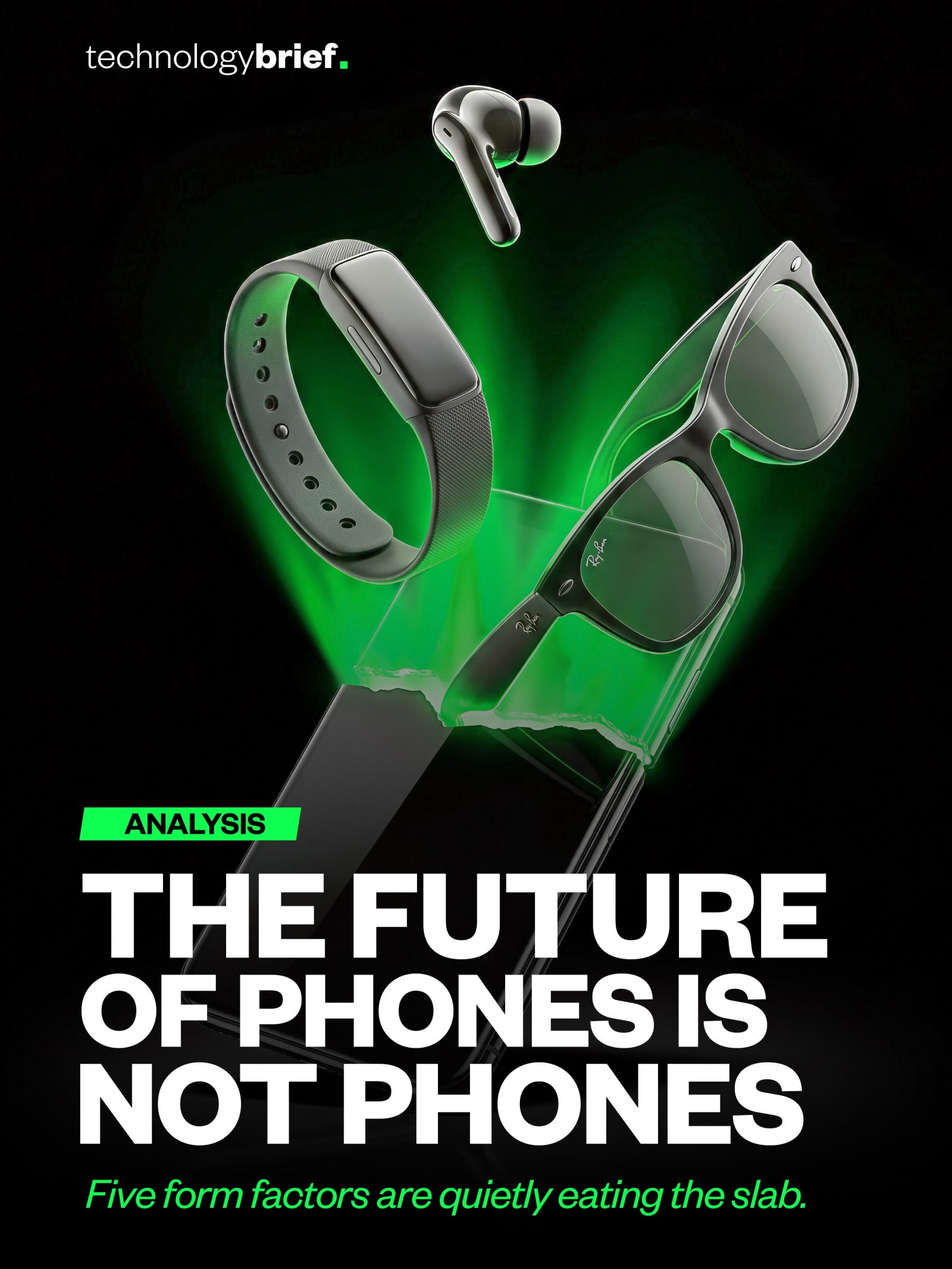
The Evolution of Mobile Technology: Beyond the Smart Slab
The smartphone, as we know it, is evolving. For nearly a decade, the flagship phone has maintained a familiar form: a glass slab with incremental improvements in screen size, camera quality, and annual promises of revolutionary changes. However, the next significant shift in mobile technology is unlikely to resemble another rectangular device in your pocket. Instead, the future of mobile computing is spreading across various form factors, including smart glasses, neural wristbands, and advanced AI agents.
Why This Matters
The traditional smartphone, or 'slab,' is facing competition from multiple fronts. Smart glasses are transforming the screen into wearable technology, AI agents are automating tasks that once required manual interaction, and neural wristbands are redefining how we interact with devices. This shift is not just about incremental upgrades; it's about a fundamental change in how we engage with technology.
The Rise of Alternative Form Factors
Smart Glasses
Smart glasses are emerging as a key component in the future of mobile technology. Meta's AI glasses, in particular, have made significant strides. By 2025, Meta sold over 7 million units, capturing approximately 82% of the entire smart-glasses market. These glasses are not just a fashion statement; they represent a new way of interacting with the digital world. Partnering with Samsung and Google, Meta's glasses are expected to be available in the fall of 2026, priced at $799. This collaboration underscores the industry's recognition of the potential in wearable technology.
Neural Wristbands
Neural wristbands are another innovative development in mobile technology. These devices read the electrical signals in your forearm, allowing users to perform gestures like pinching, swiping, and scrolling without the need for a touchscreen. Meta's neural wristband, which ships with a Ray-Ban display, exemplifies this technology. By interpreting neural signals before the fingers even move, these wristbands offer a seamless and intuitive way to interact with devices. This technology is not just about convenience; it's about integrating technology more naturally into our daily lives.
AI Agents
AI agents are revolutionizing how we use apps. By automating tasks such as booking appointments, making purchases, and navigating websites, these agents reduce the need for manual input. This background processing allows users to focus on more critical tasks, making technology more efficient and user-friendly. AI agents are set to become an integral part of the mobile ecosystem, working alongside other form factors to create a cohesive and streamlined user experience.
Practical Tips for Staying Ahead
As the mobile landscape evolves, staying informed and adaptable is crucial. Here are some practical tips to help you navigate this transition:
-
Explore Wearable Technology: Smart glasses and neural wristbands offer new ways to interact with digital content. Experimenting with these devices can give you a head start in understanding their potential and limitations.
-
Leverage AI Agents: Utilize AI agents for automating repetitive tasks. This not only saves time but also allows you to focus on more strategic activities.
-
Stay Updated: Keep an eye on the latest developments in mobile technology. Following tech news and insights can help you stay ahead of the curve and make informed decisions about your tech choices.
Important Takeaways
-
The Future is Wearable: Smart glasses and neural wristbands are poised to revolutionize how we interact with technology. These devices offer new levels of convenience and integration.
-
AI is the New Interface: AI agents are automating tasks, making technology more intuitive and efficient. This shift towards AI-driven interactions is set to transform user experiences.
-
The Slab is Here to Stay (for Now): Traditional smartphones will likely remain relevant for years, but their role is evolving. They are becoming the command center for a system of integrated devices.
Conclusion
The future of mobile technology is not just about better phones; it's about a system of interconnected devices that work together to enhance our daily lives. Smart glasses, neural wristbands, and AI agents are at the forefront of this transformation, offering new ways to interact with and utilize technology. As these innovations continue to evolve, staying informed and adaptable will be key to embracing the future of mobile computing.
Questions readers ask
How do smart glasses differ from traditional smartphones in terms of functionality?
Smart glasses offer a hands-free, immersive digital experience, allowing users to interact with technology through voice commands and gestures. Unlike smartphones, they can provide real-time information directly in the user's field of view, making them useful for navigation, communication, and even augmented reality applications.
Which company has a significant market share in the smart glasses industry?
Meta has captured a substantial portion of the smart glasses market. Meta's AI-powered smart glasses are notable for their integration of advanced features and seamless user experience, making them popular among early adopters of wearable tech.
What are some emerging wearable technologies beyond smart glasses?
Beyond smart glasses, wearable technology trends include smart wristbands with neural interfaces. These devices can monitor health metrics, automate tasks, and interact with other digital systems, signaling the next step in wearable innovation.
How do smart glasses enhance the user experience compared to smartphones?
Smart glasses provide a more immersive and interactive user experience. They offer an always-on, hands-free interface, which is particularly useful for multitasking while on the go. This makes them an attractive alternative for users who prefer a more integrated, natural interaction with technology.
What is the potential future of smartphones in the context of emerging wearable technologies?
Traditional smartphones, as we know them, may evolve into more specialized devices. They could integrate with other form factors like smart glasses, smart wristbands, or AI agents, creating a more comprehensive and interconnected personal technology ecosystem.
What are the key advantages of smart glasses in comparison to smartphones?
Smart glasses offer a hands-free, immersive digital experience, which is particularly useful for tasks that require constant attention, like navigation or real-time translation. They also eliminate the need to constantly pull out a device from a pocket, making them more convenient for quick tasks.
How are AI agents contributing to the evolution of mobile technology?
AI agents are automating numerous tasks that were previously performed manually on smartphones. By integrating AI, these agents can handle scheduling, reminders, and even perform complex actions on behalf of the user, making the interaction with technology more seamless and intuitive.
Related deep dives
Similar reads based on topic and creator.




Recent articles
Fresh deep dives from the latest Reels we unpacked.




Comments
Be the first to comment.