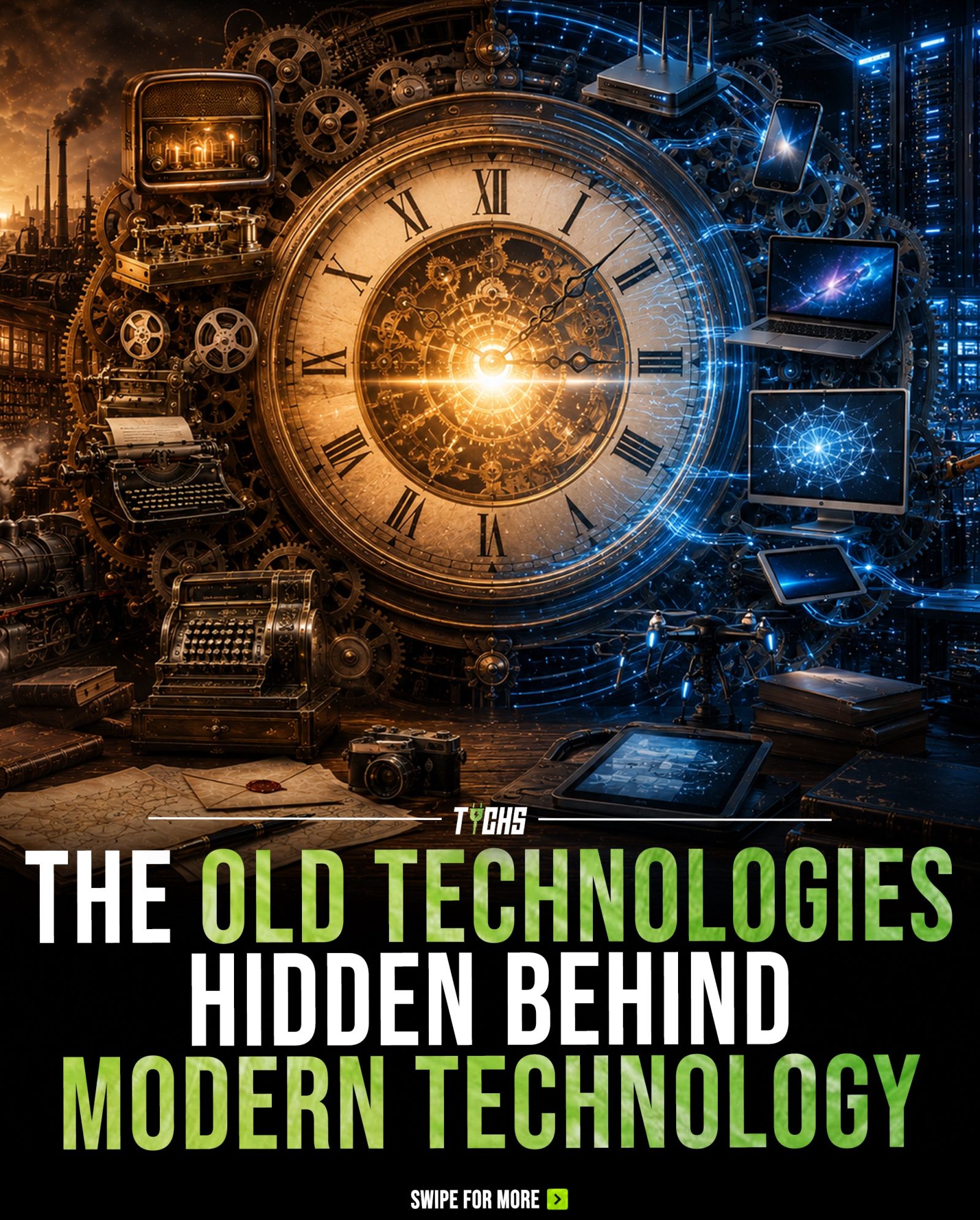
How Modern Technology Builds on Old Ideas
Technology is often seen as a force that propels us into the future, but it is also deeply rooted in the past. Today's most innovative tools are frequently built upon ideas that have existed for decades, transforming and adapting to fit the needs of the present. Understanding this evolution helps us appreciate how innovation truly works and where today’s technology comes from.
Context / Why this matters
Many of today’s biggest innovations are modern versions of older technologies. The core principles remain the same, but speed, scale, and intelligence have changed dramatically. From analog clocks to digital displays, from film cameras to smartphone cameras, and from physical libraries to digital search engines, the path of technological evolution is clear. By recognizing how old ideas have been incorporated into new technologies, we can better appreciate the continuous flow of information and innovation.
Invisible Foundations
Older technologies are often hidden behind the sleek interfaces of modern devices, but their influence is undeniable. The evolution of technology is not a series of abrupt replacements but a gradual transformation where older ideas are adapted and enhanced. The principles of optics, image capture, and information retrieval that were central to old technologies are now integrated into the modern digital landscape.
Evolution of Film Cameras
One of the most striking examples of this evolutionary process is the transition from film cameras to smartphone cameras. The fundamental principles of photography, such as lenses, exposure, framing, and image capture, have remained constant. What has changed is the medium and the convenience. Smartphone cameras represent a miniaturization of traditional camera technology, fitting the same principles into a device that fits in your pocket. This transformation has democratized photography, making it accessible to everyone.
Key Principles Remain
The core concepts of photography—lenses, exposure, framing, and image capture—have remained the same, but the devices and methods have been modernized. The convenience of carrying a camera in a smartphone has transformed how we capture and share moments, making photography an integral part of daily life.
The Rise of Digital Photography
The shift from film to digital photography has been a game-changer. The process of developing film and waiting for prints is now a thing of the past. With digital photography, images can be captured, edited, and shared instantly, changing the way we document and share our lives.
The Digital Age of Information
Another profound example of technological evolution is the transition from physical libraries to digital search engines. Libraries have always been repositories of organized knowledge, and this function has now been digitized and made accessible instantly. Today, organized knowledge is no longer confined to the shelves of a library; it is searchable digital information available within seconds.
Accessing Information
The way we access and search for information has dramatically changed. Libraries provided organized knowledge, which has now been digitized. Search engines offer instant access to information, making knowledge more accessible than ever before. This shift has revolutionized education, research, and everyday decision-making.
The Future of Information Retrieval
As technology continues to evolve, the future of information retrieval looks even more promising. With advancements in artificial intelligence and machine learning, search engines are becoming smarter and more intuitive, providing users with more accurate and relevant results. The integration of voice assistants and virtual reality is also transforming how we interact with information.
Practical Tips
Understanding the evolutionary nature of technology can help us make more informed decisions about the tools we use. Here are some practical tips:
-
Appreciate the Past: Recognize the foundational principles behind modern technologies. This appreciation can help you use these tools more effectively.
-
Stay Curious: Keep exploring how different technologies have evolved. This curiosity can lead to a deeper understanding and better utilization of these tools.
-
Adapt and Innovate: Look for ways to adapt and innovate based on the principles of older technologies. Sometimes, the best innovations come from building on what already exists.
Important Takeaways
The evolution of technology is a continuous process where older ideas are adapted and enhanced to fit modern needs. Understanding this process helps us better appreciate how innovation works and where today’s technology comes from. From film cameras to smartphone cameras, and from physical libraries to digital search engines, the path of technological evolution is clear. By recognizing how old ideas have been incorporated into new technologies, we can better appreciate the continuous flow of information and innovation.
Conclusion
Today’s technology builds on ideas that have existed for decades, transforming them into the tools we use every day. Understanding this process helps us appreciate how innovation really works. The future isn’t always built from scratch; sometimes, it’s simply the next chapter of an old invention.
Questions readers ask
How have film cameras influenced the development of smartphone cameras?
Film cameras laid the groundwork for smartphone cameras by establishing fundamental principles of optics and image capture. As technology advanced, these principles were applied to digital sensors, leading to the compact, high-quality cameras we have today in smartphones. Modern smartphone cameras also benefit from advancements in image processing, which can trace its roots back to early film camera technologies.
What are some examples of old technology that have evolved into modern innovations?
Many old technologies have evolved significantly over time. For instance, analog clocks have transitioned to digital displays, and physical libraries have been transformed into digital search engines. Even text-to-speech technology, which originated from early voice synthesis, now provides real-time voice assistance.
How has the evolution of screen technology impacted modern devices?
Screen technology has evolved from simple analog displays to high-resolution, touch-sensitive screens. This progression has enabled the development of interactive devices like smartphones and tablets, which rely on advanced screen technologies for user interaction and visual output. The evolution of screen technology continues to drive innovation in various devices, from TVs to wearable tech.
In what ways have information search engines transformed from older technologies?
Information search engines have evolved from simple card catalogs in libraries to complex digital platforms. The transition started with early computer databases and has progressed to sophisticated algorithms that can process vast amounts of data instantaneously, providing users with relevant information quickly and efficiently.
How have image processing advancements influenced modern technology?
Image processing advancements have significantly impacted modern technology by improving the quality and functionality of digital images. These advancements allow for better image editing, enhancement, and analysis, which are crucial in fields like photography, medicine, and security. The evolution of image processing has enabled features like facial recognition and augmented reality in smartphones and other devices.
What role do old technologies play in the development of new technologies?
Old technologies provide a foundation for new innovations by offering established principles and concepts. By building on these foundations, new technologies can be developed more efficiently. This process of evolution allows for continuous improvement and adaptation, ensuring that modern technologies benefit from the wisdom of the past while addressing contemporary needs.
How has the evolution of camera technology influenced other categories of technology?
The evolution of camera technology has had a ripple effect across various technology categories. For example, advancements in image sensors and processing have improved medical imaging, satellite photography, and even automotive safety features. This cross-pollination of ideas and technologies highlights how progress in one area can drive innovation in others, creating a more interconnected technological landscape.
Related deep dives
Similar reads based on topic and creator.




Recent articles
Fresh deep dives from the latest Reels we unpacked.




Comments
Be the first to comment.