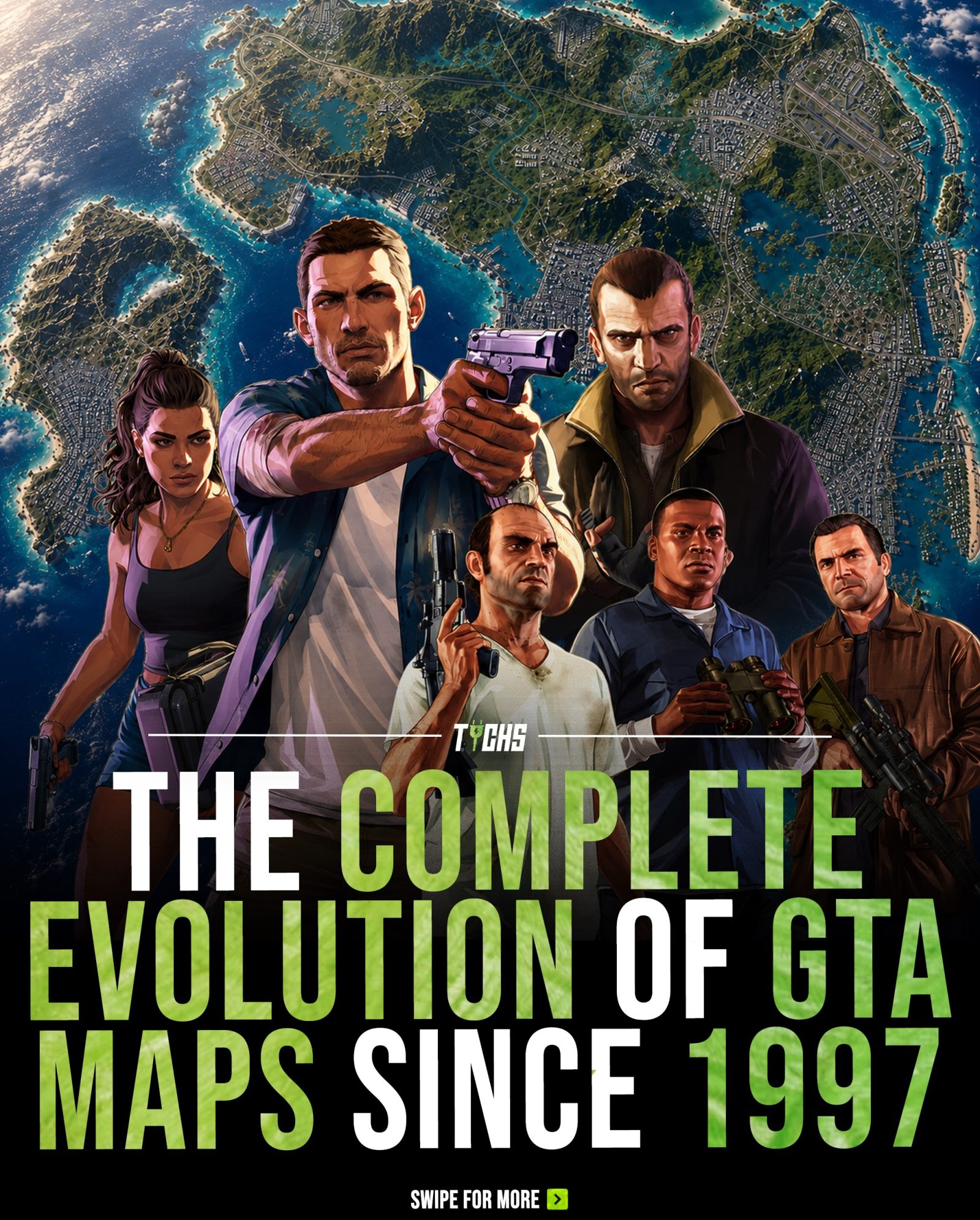
Evolution of GTA Maps: From 2D Streets to Massive Open Worlds
Grand Theft Auto (GTA) has transformed from simple 2D city maps into some of the most detailed open worlds in gaming history. This evolution spans nearly three decades, with each new release introducing larger maps, richer environments, and more immersive experiences. Let's dive into the journey from the top-down streets of GTA 1 in 1997 to the expansive state of Leonida in the upcoming GTA VI.
Why This Evolution Matters
The evolution of GTA maps is more than just an improvement in graphics. It reflects significant advancements in technology, world design, and storytelling. These advancements have not only made GTA games more engaging but have also set new standards for open-world gaming. Players now expect detailed environments, dynamic interactions, and vast open worlds, thanks in large part to the innovations seen in the GTA series.
The Evolution of GTA Maps
GTA 1 to GTA III: The Early Days
The journey begins with GTA 1, released in 1997. The game featured a simple 2D overhead view of three cities: Liberty City, Vice City, and San Andreas. The maps were straightforward, with a focus on mission objectives rather than exploration. Players could drive around, complete missions, and cause chaos, but the world was relatively static and lacked depth.
GTA 3, released in 2001, marked a significant leap forward. This game introduced a 3D environment, allowing players to explore Liberty City in a more immersive way. The map design became more complex, with multiple layers and verticality, including buildings that players could enter. This shift from 2D to 3D opened up new possibilities for gameplay and exploration.
GTA IV and Beyond: Expanding Horizons
GTA IV, released in 2008, continued to refine the open-world experience. The map of Liberty City was even more detailed, with a greater emphasis on realism and immersion. Players could engage with a more dynamic world, complete with NPCs (non-player characters) going about their daily lives, traffic, and a more detailed urban environment. The game also introduced a more structured narrative, with a deeper focus on storytelling.
GTA V: The Golden Age
GTA V, released in 2013, set a new benchmark for open-world games. The game's map is expansive, encompassing the fictional state of San Andreas, which includes three major cities: Los Santos, Blaine County, and San Fierro. The map is not only vast but also incredibly detailed, with a variety of landscapes, from urban environments to rural countryside and deserts. The game also introduced a multiplayer mode, allowing players to explore the world together, adding a new layer of social interaction.
GTA VI: The Future of Open Worlds
The upcoming GTA VI promises to take the series to new heights. Rumors and leaks suggest that the game will feature an even more detailed and immersive world, with the state of Leonida as the primary setting. Players can expect a vast open world with a level of detail and interactivity that surpasses previous entries. The game is also expected to push the boundaries of storytelling, with a narrative that delves deeper into the lives of its characters and the world they inhabit.
Key Features of GTA Map Design
Realism and Detail
One of the standout features of GTA maps is the level of realism and detail. From the intricate design of buildings to the dynamic weather systems and day-night cycles, every aspect of the game world is meticulously crafted to create an immersive experience. This attention to detail extends to the game's NPCs, who exhibit more realistic behavior and interactions.
Verticality and Layering
Modern GTA maps have become more than just flat surfaces. The introduction of verticality and layering allows players to explore buildings, underground tunnels, and even the skies. This adds a new dimension to gameplay, making the world feel more dynamic and interconnected.
Dynamic Environments
GTA maps are not static; they evolve with the player's actions. Weather changes, traffic patterns, and NPC behaviors all contribute to a living, breathing world. This dynamic environment makes each playthrough unique and keeps players engaged.
Interactive Elements
GTA maps are filled with interactive elements that enhance gameplay. From vehicles to weapons to environmental hazards, every aspect of the game world can be interacted with in meaningful ways. This creates a more immersive and engaging experience.
Practical Tips for Exploring GTA Maps
Exploring GTA maps can be a rewarding experience, but it can also be overwhelming given the size and complexity of the worlds. Here are some practical tips to help you make the most of your exploration:
Take Your Time
Don't rush through the game. Take your time to explore every corner of the map. You never know what hidden treasures or secrets you might discover.
Use Fast Travel Wisely
While fast travel can be convenient, it can also ruin the sense of discovery. Try to use it sparingly and rely more on your own navigation skills.
Engage with NPCs
NPCs can provide valuable information and side quests. Engage with them, listen to their stories, and see where their interactions take you.
Experiment with Different Vehicles
GTA maps are designed to be explored in various ways. Experiment with different vehicles, from cars to boats to aircraft, to get a unique perspective on the world.
Keep an Eye on the Map
The in-game map is a valuable tool. Use it to plan your routes, mark points of interest, and keep track of your progress.
Important Takeaways
The evolution of GTA maps is a testament to the series' commitment to innovation and excellence. From the simple 2D maps of GTA 1 to the expansive and detailed worlds of GTA V and beyond, each new release has pushed the boundaries of what is possible in open-world gaming. Whether you're a long-time fan or new to the series, there's always something new to discover in the ever-evolving world of GTA.
Conclusion
The journey of GTA maps from 2D streets to massive open worlds has been nothing short of incredible. With each new release, the series has redefined what players expect from open-world games, setting new standards for detail, immersion, and interactivity. As we look forward to the upcoming GTA VI, it's clear that the evolution of GTA maps is far from over. The future of open-world gaming is bright, and GTA is at the forefront of this exciting journey.
Questions readers ask
How have GTA maps evolved since the first game in 1997?
GTA maps have evolved from simple 2D layouts in the initial games, like GTA 1, to complex 3D open worlds. This transformation includes significant increases in size, detail, and interactivity, creating more engaging gaming experiences.
What are some key differences between the GTA 2D maps and the 3D open worlds?
The 2D maps in early GTA games featured a top-down perspective with simple city layouts and limited detail. In contrast, 3D open worlds, like those in GTA III and GTA IV, offer a first-person or third-person perspective with vast, detailed environments and a deeper level of interaction.
How did the map design change from GTA 2001 to GTA 2008?
Between 2001 and 2008, GTA transitioned from the 2.5D, semi-open world of GTA II and GTA 2001 to fully realized 3D environments. This change is evident in games like GTA III and GTA IV, where maps became more expansive, detailed, and immersive, setting a new benchmark for the series.
What are some of the most notable map changes in the GTA series?
Notable map changes include the shift from 2D to 3D environments, the introduction of verticality in cities, and the expansion of maps to include various landscapes and regions. For instance, GTA III introduced a detailed 3D city, and GTA IV expanded on this with a more immersive and dynamic environment.
What impact has the evolution of GTA maps had on the gaming experience?
The evolution of GTA maps has significantly enhanced the gaming experience by providing players with more detailed, interactive, and expansive worlds to explore, leading to increased immersion and engagement. This has also influenced the expectations of players for open-world games in general.
Related deep dives
Similar reads based on topic and creator.



Recent articles
Fresh deep dives from the latest Reels we unpacked.




Comments
Be the first to comment.