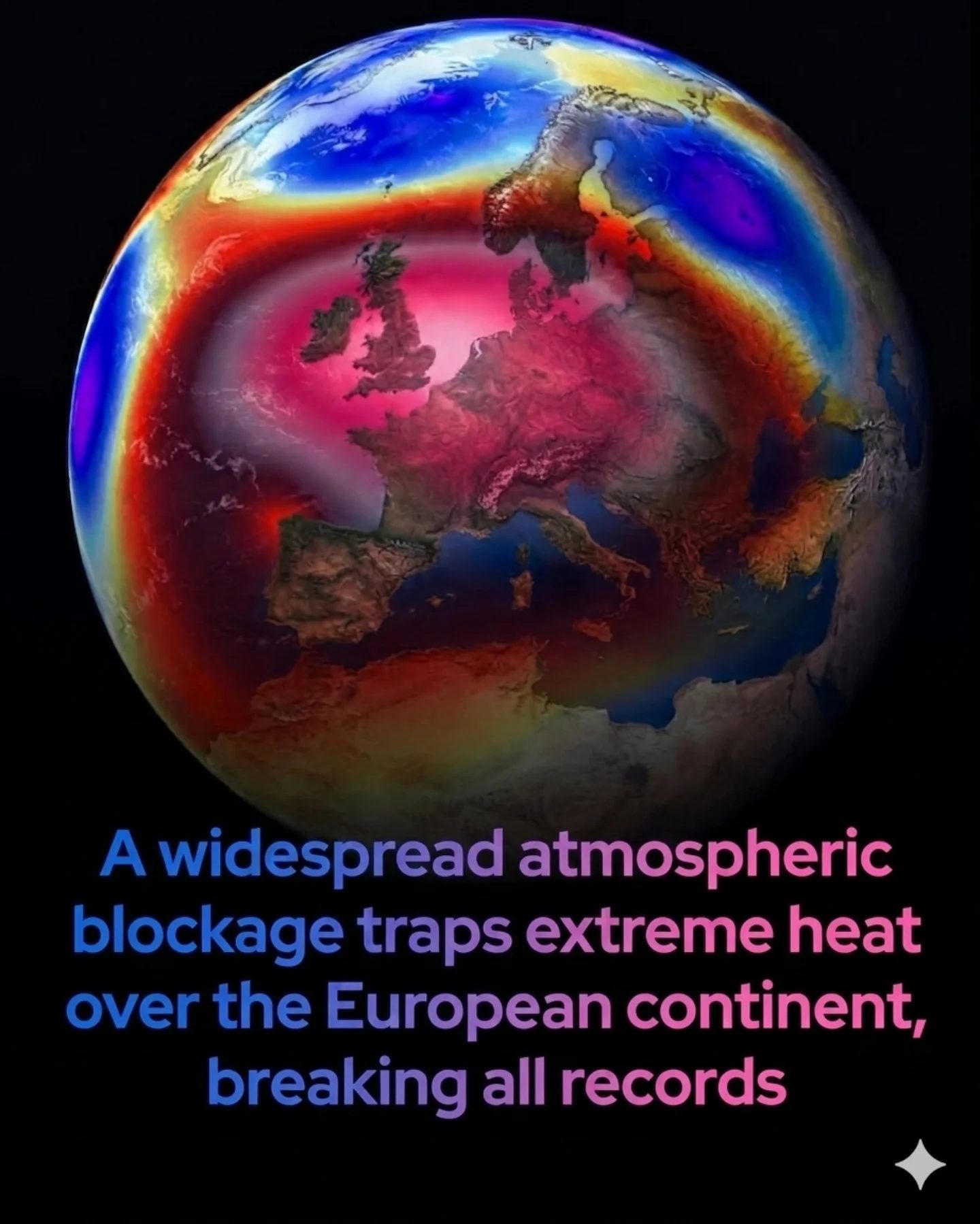
Climate Change Visualization: The Late-May Heatwave in Europe
Europe is currently experiencing an unprecedented late-May heatwave, with temperatures soaring 12 to 16 °C (22 to 29 °F) above seasonal norms. This extreme weather event is characterized by a significant "heat dome" that is expanding across the continent, resulting in widespread record-breaking conditions. Understanding the mechanisms behind this heatwave and its implications is crucial for grasping the broader impacts of climate change.
Current Conditions and Forecast
The heatwave is affecting various regions with differing intensities. In Southern Europe, temperatures in Spain, Portugal, and France are approaching 35–38 °C (95–100 °F). Meanwhile, parts of the United Kingdom have recorded the highest May temperatures in decades, with London recently reaching 32.3 °C (90.1 °F). Forecasts suggest that southern England may reach near-record levels for this period.
Meteorological Overview
The primary driver of this heatwave is a powerful upper-level ridge of high pressure extending northward from Africa. This phenomenon, commonly referred to as a heat dome, acts as an atmospheric "lid." The dome compresses the air as it sinks within the high-pressure system, leading to significant warming. Additionally, the system suppresses cloud cover and precipitation, allowing for continuous, intense solar heating of the surface. The stationary nature of this ridge traps and accumulates heat over the affected regions, providing minimal relief.
The Heat Dome Phenomenon
A heat dome occurs when a high-pressure system in the upper atmosphere acts as a cap, trapping warm air underneath. This atmospheric blockage prevents cooler air from moving in, leading to a buildup of extreme heat. The trapped air is compressed and warms, further exacerbating the heatwave conditions.
Atmospheric Blockage
The atmospheric blockage is a critical factor in the current heatwave. It creates a widespread barrier that traps extreme heat over the European continent. This blockage is depicted in visualizations, showing how the heat is trapped and intensified over the region.
Breaking Temperature Records
The heatwave is breaking all records, with temperatures soaring to unprecedented levels. This is particularly concerning because such extreme heat is typically associated with the summer months of July or August, making it statistically rare to experience such conditions in May. This early-season heat poses a higher risk to public health and infrastructure, as populations and ecosystems have not yet acclimated to such extreme temperatures.
Risks and Implications
The timing of this event is particularly concerning. Extreme heatwaves are typically associated with July or August, but an event of this magnitude in May is statistically rare. This early-season heat poses a higher risk to public health and infrastructure, as populations and ecosystems have not yet acclimated to extreme temperatures.
Public Health and Infrastructure
Early-season heatwaves can be particularly dangerous because people and ecosystems are not yet adapted to the extreme temperatures. This can lead to increased health risks, including heat exhaustion and heatstroke, as well as strain on infrastructure such as power grids and water supplies.
Environmental Impact
The heatwave also has significant environmental implications. Prolonged periods of extreme heat can lead to drought conditions, wildfires, and other environmental hazards. These conditions can disrupt ecosystems, affecting wildlife and agricultural productivity.
Societal Impacts
The societal impacts of such heatwaves are far-reaching. They can lead to disruptions in daily life, including school closures, workplace disruptions, and strain on healthcare services. Communities must be prepared to manage these impacts to minimize their effects on public health and daily functioning.
Practical Tips
To cope with the extreme heat, it is essential to take practical steps to stay safe and comfortable.
Stay Hydrated
Drink plenty of water and avoid alcohol and caffeine, which can dehydrate the body.
Cool Down Your Home
Use air conditioning if available, or create a cooler environment with fans, shades, and drapes.
Dress Appropriately
Wear lightweight, light-colored clothing made of breathable fabrics like cotton.
Avoid Peak Sun Hours
Stay indoors during the hottest part of the day, typically between 11 AM and 3 PM.
Check on Vulnerable Individuals
Look out for elderly neighbors, children, and pets who may be more susceptible to heat-related illnesses.
Important Takeaways
Extreme heatwaves, such as the one currently affecting Europe, are becoming more frequent and intense due to climate change. Understanding the mechanisms behind heat domes and their impacts is crucial for preparing and mitigating the risks associated with these events.
By taking practical steps to stay safe and informed, communities can better cope with the challenges posed by extreme heat. It is also essential to recognize the broader implications of these events on public health, infrastructure, and the environment, and to support efforts to address the underlying causes of climate change.
Conclusion
The current heatwave in Europe serves as a stark reminder of the real-time impacts of climate change. With temperatures soaring to record-breaking levels, it is clear that extreme weather events are becoming more frequent and intense. By understanding the mechanisms behind heat domes and their implications, we can better prepare for and mitigate the risks associated with these events. Taking practical steps to stay safe and informed, and supporting efforts to address climate change, is crucial for protecting public health, infrastructure, and the environment.
Questions readers ask
What is causing the late-May heatwave in Europe?
The late-May heatwave in Europe is primarily caused by a powerful atmospheric phenomenon known as a 'heat dome.' This occurs when a strong area of high pressure traps heat at the surface, leading to unusually high temperatures.
Which regions in Europe are most affected by the heatwave?
Southern Europe, including countries like Spain, Portugal, and France, is experiencing some of the most intense heat, with temperatures approaching 35–38 °C (95–100 °F). The United Kingdom is also seeing record-breaking temperatures for this time of year.
How does this heatwave relate to broader climate change patterns?
This heatwave is consistent with the broader patterns of climate change, which are leading to more frequent and intense heatwaves. While individual weather events cannot be solely attributed to climate change, the increasing severity and frequency of such events align with scientific predictions.
What is a 'heat dome' and how does it contribute to extreme heat?
A 'heat dome' is a large area of high atmospheric pressure that acts like a lid, trapping heat beneath it. This prevents cool air from moving in and allows temperatures to rise significantly, leading to extreme heat conditions on the ground.
Are these temperatures typical for late May in Europe?
No, the temperatures experienced during this heatwave are not typical for late May. They are 12 to 16 °C (22 to 29 °F) above normal, making this a record-breaking event that is unprecedented for this time of year.
How long is the heatwave expected to last?
The duration of the heatwave can vary by region. While specific forecasts can change, it is important to monitor local weather updates for the most accurate and up-to-date information on when the heatwave is expected to subside in each affected area.
Related deep dives
Similar reads based on topic and creator.




Recent articles
Fresh deep dives from the latest Reels we unpacked.




Comments
Be the first to comment.