Compact Folding Wings: A Revolution in Engineering
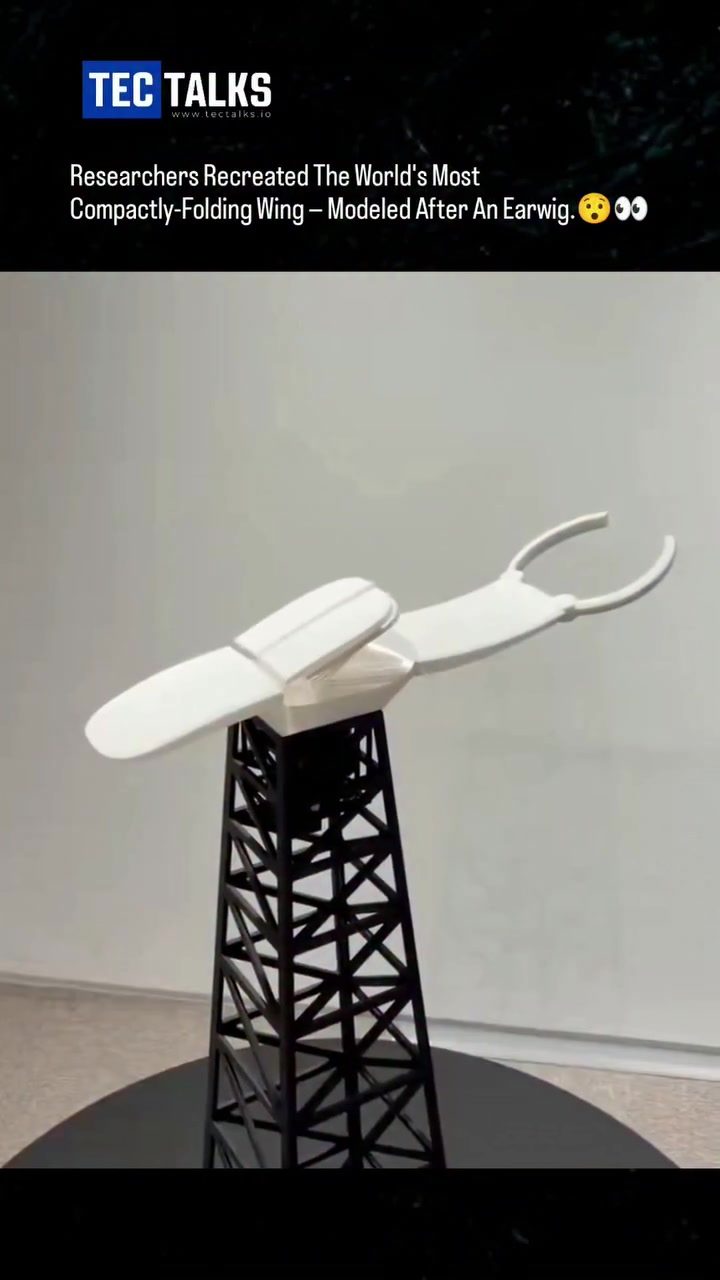
Compact folding wings, inspired by the intricate mechanisms of earwig wings, represent a significant advancement in the field of engineering. The Hiegaki-Yamanaka Lab and Saito Kazuya Lab have developed a groundbreaking prototype called "Ready to Fly / Earwig," which closely mimics the folding patterns of an earwig's wing. This prototype showcases a unique and efficient folding mechanism that has the potential to revolutionize various industries, from aerospace to robotics.
Context: Why This Matters
The development of compact folding wings is not just about creating smaller, more efficient designs. It's about leveraging nature's ingenuity to solve complex engineering problems. The earwig's wing, known for its compact and efficient folding, serves as the perfect model for engineers aiming to create deployable structures that can pack small and unfold large. This innovation could have far-reaching implications, particularly in the design of drones, foldable solar panels, and space equipment.
Main Discussion
The Earwig's Wing: A Model of Efficiency
The earwig's wing is a remarkable example of nature's engineering. These insects can fold their wings in a way that maximizes space efficiency, allowing them to hide their wings almost entirely when not in use. This ability is particularly valuable in the field of engineering, where space and weight are critical factors.
The folding mechanism of an earwig's wing involves intricate patterns and creases that allow it to fold and unfold smoothly. This mechanism has been meticulously studied and replicated by researchers, leading to the creation of the "Ready to Fly / Earwig" prototype.
The "Ready to Fly / Earwig" Prototype
The "Ready to Fly / Earwig" prototype is a testament to the advancements in 3D printing and mechanical engineering. Built using a 3D printer and a motor drive, this prototype accurately replicates the folding pattern of an earwig's wing. The wing is mounted on a unique geometric stand, allowing for a clear demonstration of its folding and unfolding mechanism.
The prototype showcases several key features:
- No Standard Hinge: Unlike traditional folding mechanisms, this prototype does not rely on standard hinges. Instead, it uses a series of creases and folds that mimic the natural folding pattern of an earwig's wing.
- Compact Design: The wing can fold down to the last crease, making it extremely compact when not in use. This feature is particularly useful in applications where space is limited.
- Efficient Deployment: The wing can unfold quickly and efficiently, making it suitable for applications that require rapid deployment.
Applications and Potential Uses
The potential applications of compact folding wings are vast and varied. Here are a few areas where this technology could make a significant impact:
- Drones: Compact folding wings could revolutionize the design of drones, making them more efficient and easier to deploy. This could be particularly useful in search and rescue operations, where quick deployment is crucial.
- Foldable Solar Panels: The compact and efficient folding mechanism could be used to create foldable solar panels, making them easier to store and transport.
- Space Equipment: In the aerospace industry, where space is at a premium, compact folding wings could be used to create equipment that can pack small and unfold large, such as satellites and space stations.
Practical Tips for Implementing Compact Folding Wings
When implementing compact folding wings in your designs, consider the following tips:
Understand the Natural Mechanism
Before attempting to replicate the folding patterns of an earwig's wing, it's crucial to understand the natural mechanism. Study the creases and folds, and how they work together to create a compact and efficient design.
Use Advanced Manufacturing Techniques
Utilize advanced manufacturing techniques, such as 3D printing, to create prototypes that accurately replicate the natural folding patterns. This will allow you to test and refine your designs more effectively.
Test and Refine
Testing is a critical part of the design process. Test your prototypes in a variety of conditions to ensure they perform as expected. Use the feedback from these tests to refine your designs and improve their performance.
Consider the Application
When designing compact folding wings, it's important to consider the specific application. Different applications will have different requirements, so tailor your design to meet these needs.
Explore Different Materials
Experimentation with various materials can enhance the design and functionality of the folding wings. Materials that offer a balance of flexibility and strength are ideal for such applications. 3D printing allows for the creation of prototypes with intricate details, enabling the testing of different material combinations.
Collaboration and Expertise
Collaboration between different fields of engineering and expertise in biomimicry is essential. The interdisciplinary approach can lead to more innovative and effective solutions.
Important Takeaways
Nature's Wisdom
The natural world often provides the best solutions to complex engineering problems. The earwig's wing is a perfect example of nature's ingenuity, demonstrating how efficient and compact folding mechanisms can be achieved.
Potential for Innovation
The development of compact folding wings represents a significant step forward in engineering. The potential applications of this technology are vast, and it could revolutionize industries from aerospace to robotics.
Importance of Advanced Manufacturing
Advanced manufacturing techniques, such as 3D printing, play a crucial role in the development of compact folding wings. These techniques allow for the creation of prototypes that accurately replicate natural folding patterns, enabling engineers to test and refine their designs more effectively.
Conclusion
Compact folding wings, inspired by the earwig's intricate folding mechanism, represent a groundbreaking innovation in engineering. The "Ready to Fly / Earwig" prototype, developed by the Hiegaki-Yamanaka Lab and Saito Kazuya Lab, showcases the potential of this technology. With applications ranging from drones to foldable solar panels and space equipment, this innovation has the potential to revolutionize various industries. By leveraging nature's wisdom and advanced manufacturing techniques, engineers can create more efficient and compact designs, paving the way for future advancements.
Questions readers ask
What makes the earwig's wing folding mechanism so special?
The earwig's wing folding mechanism is remarkable due to its efficiency and compactness. Earwigs can fold their wings into a tiny, flat shape, allowing them to fit into tight spaces and then unfold them quickly. This mechanism has inspired engineers to create similarly compact and efficient folding structures.
How do compact folding wings benefit the aerospace industry?
In the aerospace industry, compact folding wings can lead to significant advancements in space equipment design. These structures can be launched in a compact form and then unfold once in space, allowing for larger structures that can be deployed efficiently.
Can this technology be applied to drones?
Yes, foldable drone wings are a promising application of this technology. By using compact folding mechanisms, drones can be designed to fold their wings during storage or transport, making them more portable and easier to handle, then unfold them for flight.
What other industries can benefit from earwig-inspired folding technology?
Beyond aerospace and robotics, industries such as automotive, marine, and even consumer electronics can benefit from compact folding structures. This technology enables the creation of devices and structures that are compact and easy to store, then unfold to their full size when needed.
What is the significance of the 'Ready to Fly / Earwig' prototype?
The 'Ready to Fly / Earwig' prototype, developed by the Hiegaki-Yamanaka Lab and Saito Kazuya Lab, is significant because it closely mimics the folding patterns of an earwig's wing. This prototype demonstrates the practical application of bio-inspired engineering in creating deployable structures that offer a leap forward in folding technology.
What are the potential challenges in implementing earwig-inspired folding technology?
One of the primary challenges is ensuring the durability and reliability of the folding mechanisms over multiple cycles. Additionally, optimizing the materials and manufacturing processes to achieve the same level of efficiency and compactness as seen in nature is crucial for successful implementation.
How can bio-inspired engineering help in solving complex problems in other fields?
Bio-inspired engineering draws inspiration from natural mechanisms to solve complex problems. By studying and mimicking the efficient folding mechanisms of insects like earwigs, engineers can develop innovative folding designs that offer practical benefits in various fields, such as robotics, aerospace, and more.
Related deep dives
Similar reads based on topic and creator.

Recent articles
Fresh deep dives from the latest Reels we unpacked.




Comments
Be the first to comment.