Ancient Baobab Trees
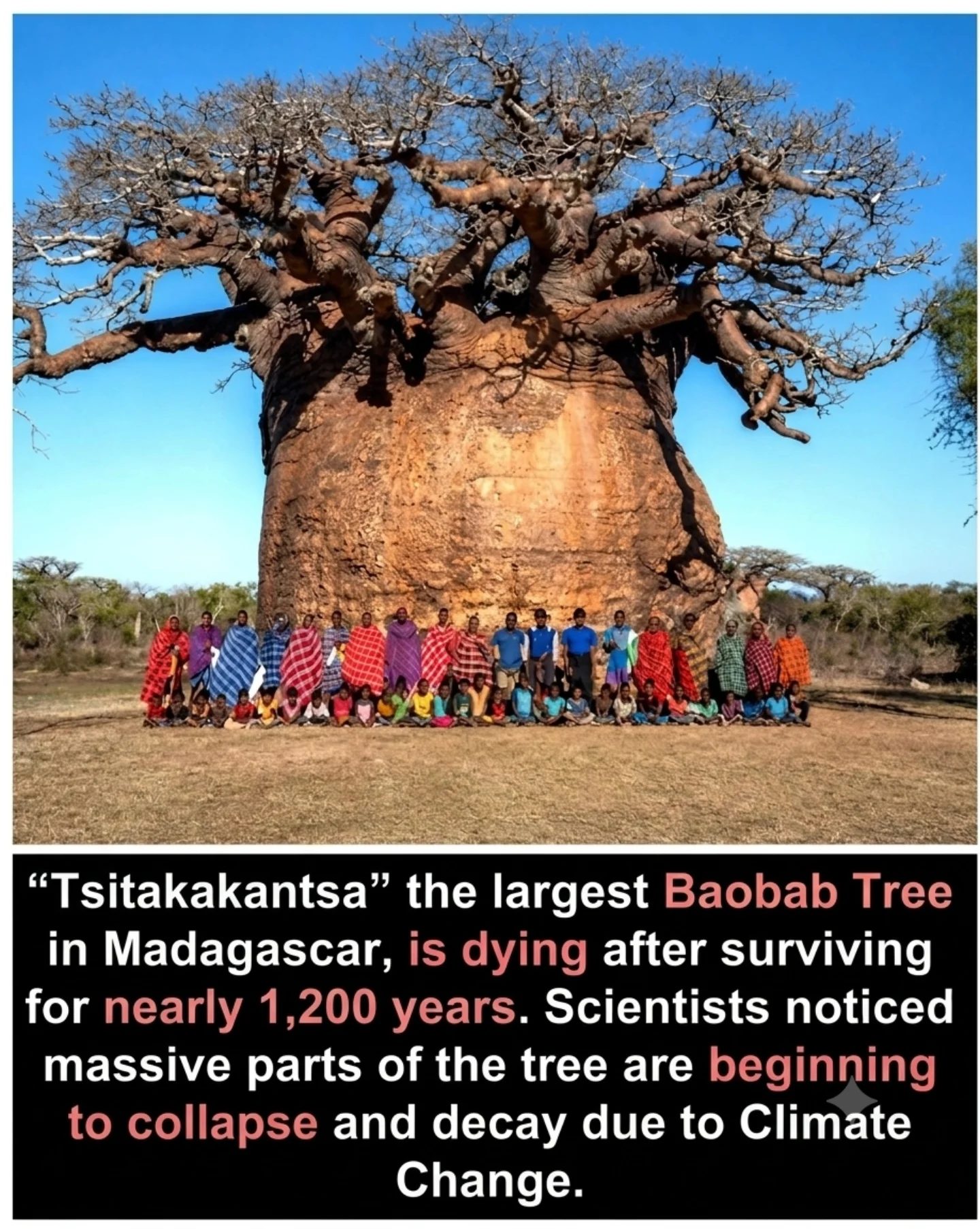
Tsitakakantsa, the colossal Baobab tree is dying. This ancient tree in Madagascar is estimated to be 1,000 to 1,500 years old. Located in the Andombiry Forest, Tsitakakantsa measures 28.82 meters in circumference, making it the largest known sacred Baobab tree of its kind. Its Malagasy name translates to a song cannot reach across from one side of the trunk to the other.
The irreversible decline of this ancient tree is a tragic reminder of nature's fragility. Tsitakakantsa has been a central spiritual anchor and cultural monument for the local community, following the collapse of a previous giant, Tsitakakoike, in 2018. However, experts and biogeographers have confirmed that Tsitakakantsa is in its final stages of life. Tropical Storm Jude struck the region, causing extreme rainfall that filled a deep, gaping cavity at the top of the tree's canopy. This led to a severe internal fungal infection, structural decay, and the collapse of major branches.
Context / Why Tsitakakantsa Matters
Baobab trees hold significant cultural and ecological importance in many regions, particularly in Madagascar. These trees are often considered sacred and are deeply intertwined with the local communities' traditions and beliefs. The loss of Tsitakakantsa is not just an ecological loss but a cultural one as well.
Moreover, the decline of Tsitakakantsa serves as a stark warning about the impacts of climate change. While these trees are known for their resilience, the changing climate is pushing them to their limits. Understanding the factors contributing to the decline of Tsitakakantsa can provide insights into how we can protect other ancient trees and ecosystems.
Understanding Tsitakakantsa
The Ancient Baobab
Baobab trees, particularly the species Adansonia grandidieri, are known for their longevity and unique characteristics. These trees have a unique, sponge-like wood composition designed to store immense volumes of water. This adaptation allows them to survive in arid environments, but it also means they do not dry out when dying. Instead, they structurally fracture and rapidly fragment under their own weight.
The Role of Climate Change
Scientists have observed that parts of Tsitakakantsa are beginning to collapse and decay due to climate change. Extreme weather events, such as Tropical Storm Jude, have exacerbated the tree's decline. The storm caused excessive rainfall, filling a deep cavity in the tree's canopy and leading to a severe internal fungal infection. This infection has caused structural decay, leading to the collapse of major branches.
Practical Tips for Protecting Ancient Trees
Protecting ancient trees like Tsitakakantsa requires a multi-faceted approach. Here are some practical steps that can be taken:
Monitoring and Research
Regular monitoring and research are crucial for understanding the health of ancient trees. Scientists can provide valuable insights into the factors contributing to the decline of these trees and suggest measures to protect them.
Conservation Efforts
Conservation efforts, such as protecting the surrounding ecosystem and preventing deforestation, are essential for preserving ancient trees. This includes implementing sustainable forestry practices and raising awareness about the importance of these trees.
Climate Change Mitigation
Mitigating the effects of climate change is critical for protecting ancient trees. Reducing greenhouse gas emissions, promoting renewable energy, and implementing climate-resilient practices can help protect these trees from the impacts of extreme weather events.
Important Takeaways
Tsitakakantsa's decline serves as a stark reminder of the fragility of nature and the urgent need for conservation efforts. Here are some key takeaways:
- The decline of Tsitakakantsa is a result of extreme weather events and climate change.
- Ancient trees like Tsitakakantsa are crucial for cultural and ecological reasons.
- Protecting these trees requires a multi-faceted approach, including monitoring, conservation, and climate change mitigation.
Conclusion
Tsitakakantsa is in its final stages of life, and its imminent demise is a testament to the profound impact of climate change. This ancient Baobab tree has stood for centuries, but it is now facing an irreversible decline. The loss of Tsitakakantsa is a significant reminder of the need to protect our natural heritage and take urgent action against climate change.
Questions readers ask
Why is Tsitakakantsa, the ancient Baobab tree, considered significant?
Tsitakakantsa is significant due to its immense age, estimated to be between 1,000 to 1,500 years old, and its size, with a circumference of 28.82 meters. It holds cultural and spiritual importance for the local community in Madagascar, serving as a central anchor and monument.
What are the main causes of Tsitakakantsa's decline?
The decline of Tsitakakantsa is primarily attributed to the impacts of climate change and the fragility of nature. Recent extreme weather events, such as Tropical Storm Jude, have also contributed to its deterioration.
What cultural impact does the loss of Tsitakakantsa have?
The loss of Tsitakakantsa is deeply felt by the local community, who view it as a sacred site. The loss of this tree also follows the collapse of another giant, Tsitakakoike, in 2018, further emphasizing the cultural and spiritual loss.
How does the decline of Tsitakakantsa affect the ecosystem?
The decline of Tsitakakantsa is a poignant reminder of the delicate balance of nature and the broader ecosystem. It serves as an indicator of the environmental changes occurring in the region, which could impact other flora and fauna.
What makes Tsitakakantsa the largest sacred Baobab tree of its kind?
Tsitakakantsa's status as the largest sacred Baobab tree of its kind is due to its immense size, with a circumference of 28.82 meters. Its name, which translates to a song cannot reach across from one side of the trunk to the other, underscores its immense proportions.
What efforts have been made to study and protect Tsitakakantsa?
Scientists and biogeographers have been studying Tsitakakantsa to understand its decline and the broader impacts on the ecosystem. However, the tree's decline is irreversible, highlighting the need for protective measures for other ancient trees and their habitats.
What can the decline of Tsitakakantsa teach us?
The decline of Tsitakakantsa serves as a stark reminder of the impacts of climate change and the delicate balance of nature. It underscores the importance of environmental conservation and the need to protect ancient and culturally significant trees and their habitats.
Related deep dives
Similar reads based on topic and creator.




Recent articles
Fresh deep dives from the latest Reels we unpacked.




Comments
Be the first to comment.