Forest Restoration with Drones
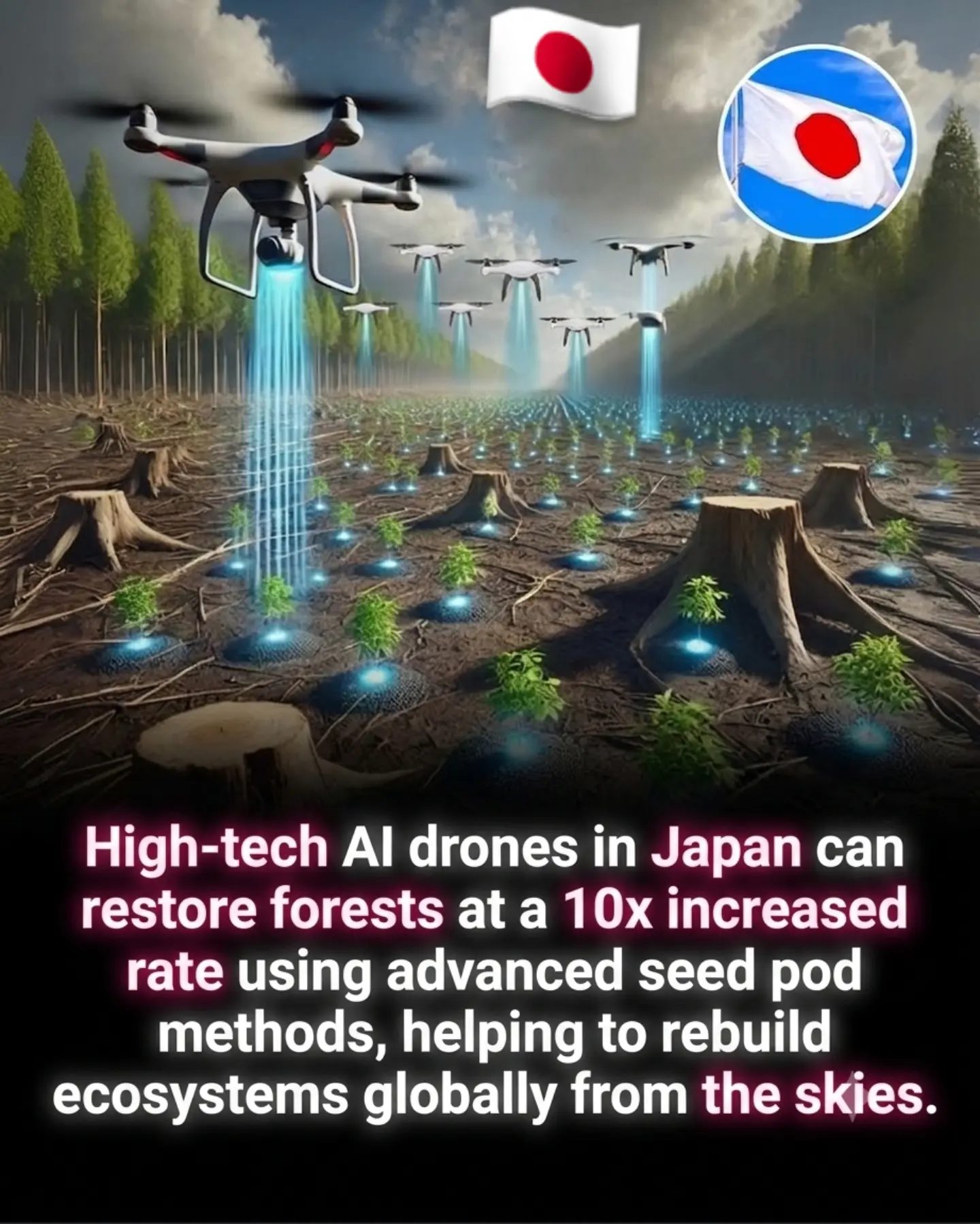
Japan is at the forefront of a revolutionary initiative to restore forests using drones. This cutting-edge technology aims to accelerate the process of reforestation, making it significantly more efficient than traditional methods. Advanced AI-powered drones are being deployed to plant seeds in deforested areas, with the goal of increasing the restoration rate by a factor of ten. This approach not only speeds up the reforestation process but also helps in rebuilding ecosystems globally.
Why This Matters
With increasing deforestation rates due to urbanization and climate change, traditional methods of reforestation are often slow and labor-intensive. Drones offer a promising solution by automating the planting process, making it faster and more scalable. This technology is particularly valuable in remote or hard-to-reach areas where manual planting is challenging.
Main Discussion
The Role of AI in Reforestation
AI-powered drones are equipped with sophisticated algorithms that allow them to navigate and plant seeds with precision. These drones can map out deforested areas, identify optimal planting sites, and deploy seed pods accurately. The use of AI ensures that the seeds are planted in the most suitable conditions, maximizing their chances of germination and growth.
Advanced Seed Pod Methods
The drones employ advanced seed pod methods, which are specially designed to enhance seed survival rates. These pods contain not just seeds but also nutrients, moisture, and other essentials needed for the seeds to germinate and grow. The pods are designed to be biodegradable, ensuring that they break down naturally without harming the environment.
Scalability and Efficiency
One of the most significant advantages of using drones for reforestation is their ability to scale operations quickly. Traditional reforestation methods often involve planting seeds by hand, which is time-consuming and expensive. Drones can cover large areas in a short amount of time, significantly increasing the rate of reforestation.
Practical Tips
Choosing the Right Drones
When selecting drones for reforestation, it's essential to choose models that are durable, reliable, and capable of carrying the necessary payload. The drones should also be equipped with high-precision sensors and AI capabilities to navigate and plant seeds accurately.
Preparing the Seed Pods
The success of reforestation efforts depends heavily on the quality of the seed pods. Ensure that the pods are designed to protect the seeds from environmental stressors and provide all the necessary nutrients for germination. The pods should also be biodegradable to minimize environmental impact.
Planning the Routes
Efficient planning is crucial for maximizing the effectiveness of drone-based reforestation. Use advanced mapping software to identify deforested areas and plan optimal routes for the drones. This will ensure that the drones cover as much ground as possible in the shortest amount of time.
Important Takeaways
- AI and Drones: AI-powered drones are revolutionizing reforestation by automating the planting process, making it faster and more efficient.
- Advanced Seed Pods: The use of advanced seed pods enhances seed survival rates, ensuring that more seeds germinate and grow into healthy trees.
- Scalability: Drones can cover large areas quickly, making it possible to restore forests at an accelerated rate.
- Global Impact: This technology has the potential to rebuild ecosystems globally, helping to combat deforestation and climate change.
Conclusion
The use of drones in forest restoration represents a significant step forward in environmental conservation. By leveraging AI and advanced seed pod methods, Japan is leading the way in making reforestation more efficient and scalable. This innovative approach has the potential to restore forests at an unprecedented rate, aiding in the global effort to rebuild ecosystems and combat climate change. As technology continues to advance, the possibilities for drone-based reforestation are vast, offering a promising solution to one of the world's most pressing environmental challenges.
Questions readers ask
How do drones accelerate the reforestation process in Japan?
Drones accelerate reforestation by automating the seed planting process, which is significantly faster than traditional manual methods. This allows for more seeds to be planted in a shorter amount of time, increasing the restoration rate by up to ten times.
What role does AI play in drone reforestation efforts in Japan?
AI enhances drone reforestation by enabling precise navigation and planting. It helps drones to identify suitable planting sites, avoid obstacles, and optimize flight paths, ensuring efficient and effective reforestation, especially in remote or challenging terrains.
How do drones planting process work in Japan's deforested lands?
Drones in Japan use automated seed pods that are filled with seeds, nutrients, and growth enhancers. These pods are then planted in deforested areas using GPS-guided drones which are able to plant the seeds at the optimal depth in the soil.
What advantages do drones offer over traditional reforestation methods?
Drones offer several advantages, including increased efficiency, speed, and the ability to reach remote or difficult-to-access areas. They also reduce the need for manual labor, lowering costs and minimizing human impact on the environment.
Can drones plant a variety of tree species in Japan's deforested areas?
Yes, drones can be programmed to plant a variety of tree species. The seed pods can be customized to include different types of seeds, allowing for diverse reforestation efforts that support biodiversity and ecosystem restoration.
How does drone reforestation help in combating climate change in Japan?
By accelerating reforestation, drones help to increase carbon sequestration, which is the process of capturing and storing carbon dioxide from the atmosphere. This contributes to mitigating climate change by reducing the amount of greenhouse gases in the atmosphere.
What are the future prospects of drone reforestation technology in Japan?
The future of drone reforestation in Japan looks promising, with ongoing advancements in AI and drone technology. As the technology becomes more sophisticated, it is expected to further enhance reforestation efforts, making them even more efficient and effective.
Related deep dives
Similar reads based on topic and creator.




Recent articles
Fresh deep dives from the latest Reels we unpacked.




Comments
Be the first to comment.