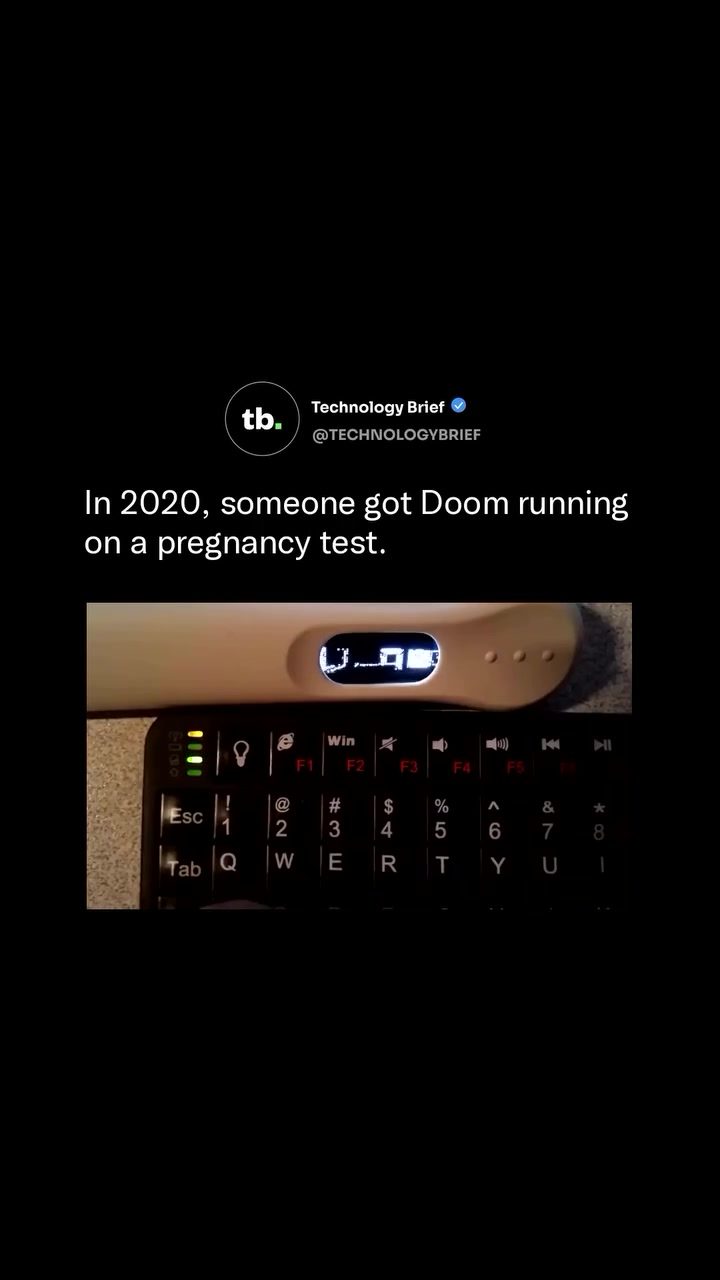
How a Programmer Got Doom Running on a Pregnancy Test
Foone Turing, a programmer, achieved something extraordinary in September 2020: they managed to run the classic game Doom on a digital pregnancy test. This ingenious hack involved an Equate brand electronic pregnancy test kit, a wireless keyboard, and a lot of technical ingenuity.
Why This Matters
The project showcases the versatility and hackability of modern hardware, even the most unconventional. It also highlights the clever engineering that goes into seemingly simple devices. Beyond the novelty, the project offers insights into the inner workings of digital pregnancy tests and the broader world of hardware hacking.
The Hack: From Pregnancy Test to Gaming Device
Doom, originally launched in 1993, is renowned for its lightweight engine and freely available source code. These qualities have made it a popular target for developers looking to port it to all manner of unlikely hardware. The "but can it run Doom?" joke has led to the game being run on everything from ATMs to calculators, fridges, and even a standalone Microsoft Word document.
The Hardware Modifications
To get Doom running on the Equate pregnancy test, Foone Turing had to make several key hardware modifications:
- CPU Replacement: The original CPU in the pregnancy test could not be reprogrammed, so it was swapped out for a more flexible component.
- Screen Upgrade: The small LCD screen was replaced with a new OLED display to better handle the game's graphics.
- Input Method: A wireless keyboard was used to control the game, providing a functional input method for the tiny device.
The Result
The modified pregnancy test displayed pixelated Doom gameplay on its tiny 128x32 monochrome screen. Despite the limitations, the hack proves that even the most basic electronic devices can be repurposed for unexpected tasks with the right modifications.
The Surprising Inner Workings of Digital Pregnancy Tests
One of the more surprising revelations from this project is the simplicity of the technology inside digital pregnancy tests. The fancy electronic casing mostly reads a simple paper strip hidden inside — the same strip used in cheap drugstore tests. Foone essentially turned a single-use $15 gadget into a tiny functioning computer by replacing nearly all of its original hardware.
This insight challenges the perception that digital devices are always more advanced than their analog counterparts. It also underscores the potential for hacking and repurposing even the most mundane electronic devices.
Doom's Legacy and Hacking Culture
Doom's legacy is deeply rooted in the hacking and modding community. Its lightweight engine and freely available source code have made it a favorite among developers looking to push the boundaries of what's possible with hardware. The game's portability has led to a myriad of creative and often humorous projects, from running Doom on a calculator to using a pregnancy test as a gaming device.
Notable Doom Ports
Here are a few notable examples of Doom being ported to unconventional hardware:
- ATMs: Yes, even ATMs have been used to run Doom, showcasing the versatility of the game's engine.
- Calculators: Small, handheld calculators have been repurposed to run the game, demonstrating the power of creativity and ingenuity.
- Refrigerators: Some enthusiasts have managed to run Doom on smart refrigerators, adding a new dimension to kitchen entertainment.
- Apple Watches: The tiny screen of an Apple Watch hasn't stopped developers from porting Doom, making it a fun and challenging gaming experience.
- Microsoft Word Documents: In a particularly clever hack, someone managed to run Doom within a standalone Microsoft Word document, leveraging the document's scripting capabilities.
Practical Tips for Hardware Hacking
While not everyone will attempt to run Doom on a pregnancy test, there are valuable lessons and tips to be learned from this project:
Start with the Right Tools
Choosing the right tools and components is crucial. Foone Turing selected a wireless keyboard for input, an OLED display for better graphics, and a reprogrammable CPU to ensure compatibility.
Understand the Hardware
Before making any modifications, it's essential to understand the inner workings of the device. In this case, knowing that the digital pregnancy test used a simple paper strip allowed Foone to focus on repurposing the electronics.
Think Outside the Box
The best hacks often come from thinking outside the box. Don't be afraid to experiment and try unconventional solutions. The "but can it run Doom?" mindset has led to countless creative and innovative projects.
Document Your Work
Documenting the process can be incredibly helpful, both for troubleshooting and for sharing your work with others. Foone Turing's detailed explanations and modifications provide a roadmap for anyone interested in similar projects.
Important Takeaways
The project to run Doom on a pregnancy test offers several important takeaways:
- Versatility of Hardware: Even the most mundane devices can be repurposed with the right modifications.
- Simplicity of Technology: Sometimes, the most advanced-looking devices rely on surprisingly simple components.
- Importance of Documentation: Documenting your work can be incredibly valuable for troubleshooting and sharing knowledge.
Conclusion
Foone Turing's achievement of running Doom on a digital pregnancy test is a testament to the ingenuity and creativity of the hacking community. It showcases the potential for repurposing even the most basic electronic devices and offers insights into the inner workings of digital pregnancy tests. Whether you're a seasoned hacker or just curious about the possibilities, this project serves as an inspiring example of what can be achieved with the right tools and a bit of creativity.
Questions readers ask
Who is the creator of the 'Doom on a Pregnancy Test' hack?
The creator of the 'Doom on a Pregnancy Test' hack is Foone Turing, a programmer known for their technical ingenuity and innovative projects.
What equipment and tools were needed to run 'Doom' on a pregnancy test?
To run 'Doom' on a pregnancy test, Foone Turing used an Equate brand electronic pregnancy test kit and a wireless keyboard. These components were essential for transforming the test into a tiny gaming device.
What brand of pregnancy test was used in the 'Doom' hack?
The hack used an Equate brand digital pregnancy test, chosen for its electronic capabilities and compatibility with the modifications needed to run the game.
What other games could potentially run on a pregnancy test using this hacking method?
While 'Doom' was specifically hacked for this project, the method showcases the potential to run other lightweight games that can fit within the device's hardware constraints, it's about programming skills and hardware compatibility.
How does running 'Doom' on a pregnancy test demonstrate the versatility of everyday electronics?
Running 'Doom' on a pregnancy test demonstrates that even the most mundane and unexpected electronics can be repurposed with the right technical skills. It reveals the hidden potential of everyday devices, encouraging exploration and innovation in hardware hacking.
What insights can be gained from hacking a pregnancy test to run 'Doom'?
This hack provides a glimpse into the inner workings of digital pregnancy tests and the broader field of hardware hacking. It shows that even simple devices can have complex engineering, and it encourages curiosity and experimentation with everyday electronics.
Is it possible to replicate the 'Doom on a Pregnancy Test' hack at home?
Replicating the 'Doom on a Pregnancy Test' hack at home would require a deep understanding of programming and hardware modification, similar to what Foone Turing demonstrated. It is an advanced project, suitable for those with significant experience in electronics and coding.
Related deep dives
Similar reads based on topic and creator.




Recent articles
Fresh deep dives from the latest Reels we unpacked.




Comments
Be the first to comment.