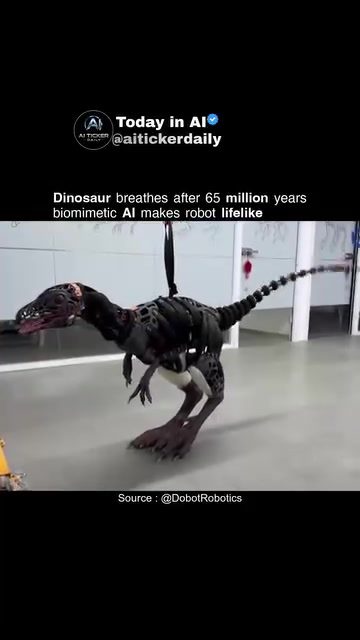
The Dobot Biomimetic Robot: A Step Toward Lifelike Lab Robots
Robotics is pushing the boundaries of what is possible, and Dobot Robotics' latest creation, a robotic dinosaur, showcases the cutting edge of biomimetic AI. The company's pitch, "First Breath," offers a glimpse into the future of lab robots, where lifelike motion and presence are crucial for various applications.
Why This Matters
The development of lifelike robots is a significant advancement in the field of robotics. Biomimetic AI, which mimics natural movements and behaviors, is at the heart of this innovation. This technology aims to create robots that are not just functional but also appear and behave in ways that closely resemble real-life creatures. Such advancements pave the way for more versatile and effective robots in various fields, including research, education, and entertainment.
The Dobot Biomimetic Robot
What is Biomimetic AI?
Biomimetic AI refers to the use of biological systems' principles and mechanisms in the design and operation of robots. By mimicking the movements and behaviors of living organisms, these robots can achieve more natural and fluid motions. This technology is particularly useful in creating robots that need to interact with their environment in a lifelike manner.
The Dobot Robot's Features
The robotic dinosaur created by Dobot Robotics demonstrates the potential of biomimetic AI. The robot is designed to mimic the movements and breathing patterns of a dinosaur, making it appear almost lifelike. This level of realism is achieved through advanced AI algorithms that control the robot's movements and responses. The close-up shots of the robot's head and tail highlight the intricate detail and precision of its design, emphasizing its lifelike qualities.
Realism in Robotics
The focus on realism in robotics is not just about aesthetics; it has practical implications. Lifelike robots can be more effective in various applications, such as research and education. For instance, a robotic dinosaur can be used to teach students about prehistoric creatures in a more engaging and interactive way. Additionally, lifelike robots can be more effective in research settings, where they can mimic the behavior of real animals to study their movements and interactions.
Practical Tips for Implementing Biomimetic AI
Creating a lifelike robot requires a combination of advanced AI algorithms, precise mechanical design, and a deep understanding of biological systems. Here are some practical tips for implementing biomimetic AI in robotics:
Choose the Right Biological Model
Select a biological model that closely matches the desired behavior of the robot. For instance, if the goal is to create a lifelike dinosaur, study the movements and behaviors of real dinosaurs to inform the design and operation of the robot.
Use Advanced AI Algorithms
Advanced AI algorithms are essential for controlling the robot's movements and responses. Machine learning and neural networks can be used to develop algorithms that enable the robot to mimic natural movements and behaviors.
Focus on Precision and Detail
Lifelike robots require precise mechanical design and attention to detail. Every aspect of the robot, from its structure to its movements, should be carefully designed to replicate the biological model accurately.
Test and Refine
Continuous testing and refinement are crucial for developing a lifelike robot. Regularly test the robot's performance and make necessary adjustments to improve its realism and functionality.
Important Takeaways
The Future of Robotics
The Dobot biomimetic robot represents a significant step forward in the field of robotics. As technology continues to advance, we can expect to see more lifelike robots in various applications, from research and education to entertainment and beyond.
The Potential of Biomimetic AI
Biomimetic AI has immense potential for creating more effective and versatile robots. By mimicking natural movements and behaviors, these robots can interact with their environment in a more lifelike manner, making them more effective in various applications.
The Importance of Realism
Realism is a critical aspect of modern robotics. Lifelike robots can be more engaging, effective, and practical, making them valuable tools in various fields. The Dobot robotic dinosaur is a prime example of how realism can enhance a robot's capabilities and applications.
Conclusion
The Dobot robotic dinosaur showcases the remarkable potential of biomimetic AI in creating lifelike robots. This technology opens up new possibilities for robotics, from research and education to entertainment. As we continue to push the boundaries of what is possible, lifelike robots will undoubtedly play a significant role in shaping the future of the field.
Questions readers ask
What is the Dobot Biomimetic Robot Dinosaur and why is it significant?
The Dobot Biomimetic Robot Dinosaur is an advanced robotic creation by Dobot Robotics that mimics the lifelike motion of a dinosaur. Its significance lies in its ability to set new standards for lab robots by combining functionality with realism, making it a notable advancement in the field of robotics.
How does biomimetic AI enhance the capabilities of lab robots?
Biomimetic AI enables lab robots to mimic natural movements and behaviors, making them more versatile and effective. This technology is crucial for creating robots that can interact more naturally with their environment, enhancing their performance in various research applications.
What are the potential applications of Dobot's biomimetic dinosaur in research labs?
Dobot's biomimetic dinosaur can be used in a variety of research applications, from conducting precise experiments to assisting in complex tasks that require lifelike motion. Its realistic dynamics make it ideal for simulations and studies that benefit from embodied intelligence.
How does the Dobot Biomimetic Robot Dinosaur contribute to the future of lab robotics?
By showcasing lifelike motion and presence, the Dobot Biomimetic Robot Dinosaur paves the way for more advanced and realistic lab robots. This innovation highlights the potential of biomimetic AI in creating robots that can seamlessly integrate into research environments, enhancing efficiency and effectiveness.
What sets Dobot Robotics' biomimetic dinosaur apart from traditional lab robots?
Traditional lab robots often focus solely on functionality, while Dobot Robotics' biomimetic dinosaur emphasizes both functionality and realism. Its lifelike motion and presence make it stand out, offering new possibilities for research and lab applications.
Can the Dobot Biomimetic Robot Dinosaur be used beyond research labs?
Yes, the versatility of the Dobot Biomimetic Robot Dinosaur extends beyond research labs. Its advanced capabilities make it suitable for various applications, including manufacturing, entertainment, and even medical fields where realistic dynamics and precise movements are beneficial.
What role does embodied intelligence play in the Dobot Biomimetic Robot Dinosaur?
Embodied intelligence in the Dobot Biomimetic Robot Dinosaur allows it to interact with its environment more naturally. This means the robot can perform tasks that require a deep understanding of its surroundings, making it a valuable tool for complex and dynamic research environments.
Related deep dives
Similar reads based on topic and creator.




Recent articles
Fresh deep dives from the latest Reels we unpacked.




Comments
Be the first to comment.