Color Palette Guide
Learning your best colors is a transformative experience. By understanding your personal color analysis, you can choose hues that enhance your natural beauty and make you feel confident every day. The 12-season color system is a comprehensive approach to analyzing skin undertones and determining the most flattering colors. Let’s explore the process of doing a DIY color analysis using artificial intelligence (AI) and a few simple tools.
Why This Matters
Choosing the right colors can dramatically influence your appearance, mood, and overall style. By using a color analysis, you can save money by avoiding clothes that don’t suit you, and you can reduce decision fatigue when shopping. Understanding your color palette can help you create a cohesive wardrobe, simplify your makeup routine, and even choose accessories that complement your natural features.
Main Discussion
Understanding the 12-Season Color System
The 12-season color system is an advanced method for determining the most flattering colors for an individual. This system goes beyond the basic four-season approach (spring, summer, winter, autumn) and includes nuanced categories like Deep Autumn, Soft Summer, and Bright Winter. Each season is associated with a specific set of colors that complement specific undertones in the skin.
Key Components of a Color Analysis
A comprehensive color analysis includes several key elements:
- Power Colors: These are the most flattering and vibrant colors that enhance your natural features.
- Neutrals: Neutral shades that complement your power colors and can be worn daily.
- Accent Colors: These are bright hues that add a pop of color to your outfits and can be used sparingly.
- Avoid Colors: These are the shades that can make you look washed out or dull.
- Metals: Knowing which metals (silver, gold, or a mix) suit you best can help in choosing jewelry and accessories.
Using AI for Color Analysis
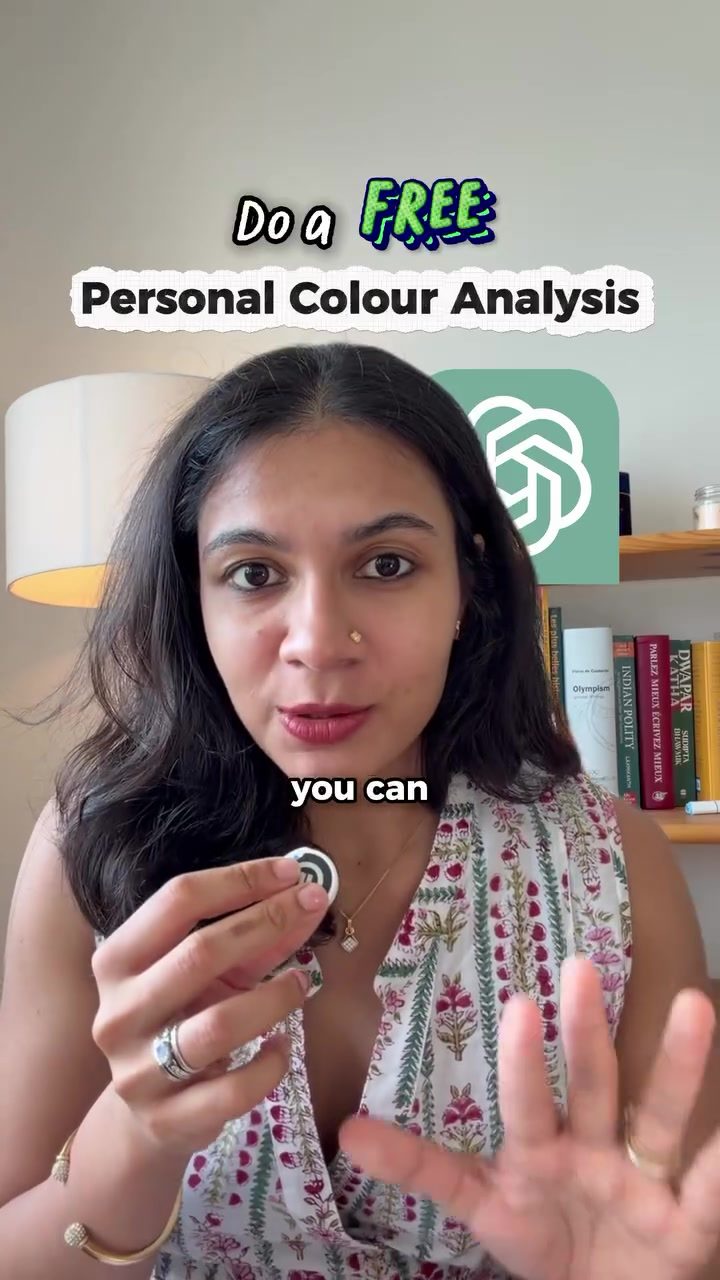
Using an AI tool like ChatGPT, you can achieve a personalized color analysis suitable for Indian skin tones. This method is cost-effective and convenient, allowing you to get detailed color guidance from the comfort of your home. Here’s how to do it:
- Take Three Selfies: Capture three different selfies. One with your hair tied up, one with your hair down, and another holding a plain white sheet of paper beside your face. Ensure all photos are taken in natural light.
- Upload the Photos to ChatGPT: Use a specific prompt to analyze the photos. The prompt should instruct the AI to use the white paper as a neutral reference for accurate color analysis.
- Select the GPT-4 Model: Ensure you are using the latest model for the most accurate results.
- Receive Detailed Color Analysis: The AI will provide a comprehensive report that includes your contrast levels, assigned season, power colors, neutrals, accent colors, and a list of colors to avoid. Additionally, it will suggest the best metals for you.
Taking the Selfies
Taking the right selfies is crucial for an accurate analysis. Here are some tips:
- Natural Light: Always take selfies in pure natural light for the most accurate color reading.
- White Paper: Hold a plain white sheet of paper next to your face. This acts as a neutral reference, helping the AI to accurately determine your natural undertones.
- Different Angles: Include photos with your hair tied up and down to ensure the AI can analyze various angles and lighting conditions.
Using the Analysis
Once you have your color analysis, you can apply it to various aspects of your life:
- Wardrobe: Choose clothing in your power colors to feel confident and look your best.
- Makeup: Select makeup shades that complement your skin tone and enhance your features.
- Accessories: Opt for jewelry and accessories in your recommended metals and accent colors.
Practical Tips
Simplify the Process with a Prompt
To get started quickly, use the following mini prompt:
"Act as a personal color analyst. Analyze my attached photos using the 12-season color system. Use the white paper in my photo as a neutral undertone reference, not my camera’s lighting. Commit to one season, no hedging. Give me my 10 best colors with hex codes, 5 neutrals, 3 colors to keep away from my face, and my best metals."
Fine-Tuning Your Analysis
To delve deeper, use the full prompt provided by the color analyst, which includes additional details on hair, makeup, and outfit formulas. This comprehensive guide will help you create a well-rounded color palette that suits your lifestyle and preferences.
Experiment and Adjust
Remember, color analysis is a guide, not a rule. Feel free to experiment with different shades and tones to see what makes you feel the most confident and comfortable. Adjustments can be made based on your personal preferences and the specific context of your outfits.
Utilize Online Tools
There are numerous online tools and apps that can help you visualize your color palette. Use these resources to create mood boards, virtual try-ons, and color swatches that can inspire your wardrobe choices.
Important Takeaways
Color analysis is a powerful tool for enhancing your appearance and simplifying your style. By understanding your undertones and the colors that flatter them, you can make informed decisions about your wardrobe, makeup, and accessories. Using AI for this process makes it accessible, affordable, and convenient, allowing you to achieve a personalized color palette from the comfort of your home.
Conclusion
A personalized color analysis is an invaluable resource for anyone looking to elevate their style. Whether you're a fashion enthusiast or someone who wants to simplify their wardrobe, understanding your best colors can make a significant difference. By following the steps outlined and using AI for a detailed analysis, you can unlock a world of flattering hues that enhance your natural beauty and make you feel confident every day.
Questions readers ask
How does AI assist in a DIY color analysis?
AI analyzes your skin undertones, hair color, and eye color to determine the most flattering hues. This is done by using AI color prompts, where you upload your photos, and the AI processes your data to provide an accurate color palette. It simplifies the process by identifying your seasonal color palette, whether it's warm or cool.
What is the 12-season color system mentioned in the article?
The 12-season color system is a detailed method of categorizing colors to complement a person's complexion. It takes your skin undertones and hair colors into account, giving you a comprehensive guide for choosing your best colors. It's based on the four main seasons, with each season having three subgroups, making it a deep color analysis.
Can AI help determine the best hair colors for me?
Yes, AI can help determine the best hair colors by analyzing your skin undertones and natural hair color. It can provide a list of hair colors that will complement your facial features, helping you make an informed decision for your next hair appointment.
How can a color analysis for skin help my shopping experience?
A color analysis for skin simplifies shopping by helping you choose clothes that complement your complexion. By knowing your color palette, you can quickly identify which items to try on and which to skip, saving time and reducing decision fatigue. This ensures that your wardrobe is full of colors designed to make you look and feel your best.
What tools do I need for a DIY color analysis using AI?
For a DIY color analysis using AI, you typically need a smartphone or camera to take clear photos of your face and skin. Additionally, you will need access to an AI color analysis app or tool where you can upload your photos and receive your personalized color palette. Some apps also allow you to use color analysis paper to get the most accurate results.
What should I do if I have warm or cool skin undertones?
If you have warm undertones, you should opt for a warm color palette that includes hues of yellow, orange, and red. On the other hand, if you have cool undertones, a cool color palette with shades of blue, green, and purple will be more suitable. Knowing your undertones helps you choose a palette that complements your skin and enhances your natural beauty.
Related deep dives
Similar reads based on topic and creator.




Recent articles
Fresh deep dives from the latest Reels we unpacked.




Comments
Be the first to comment.