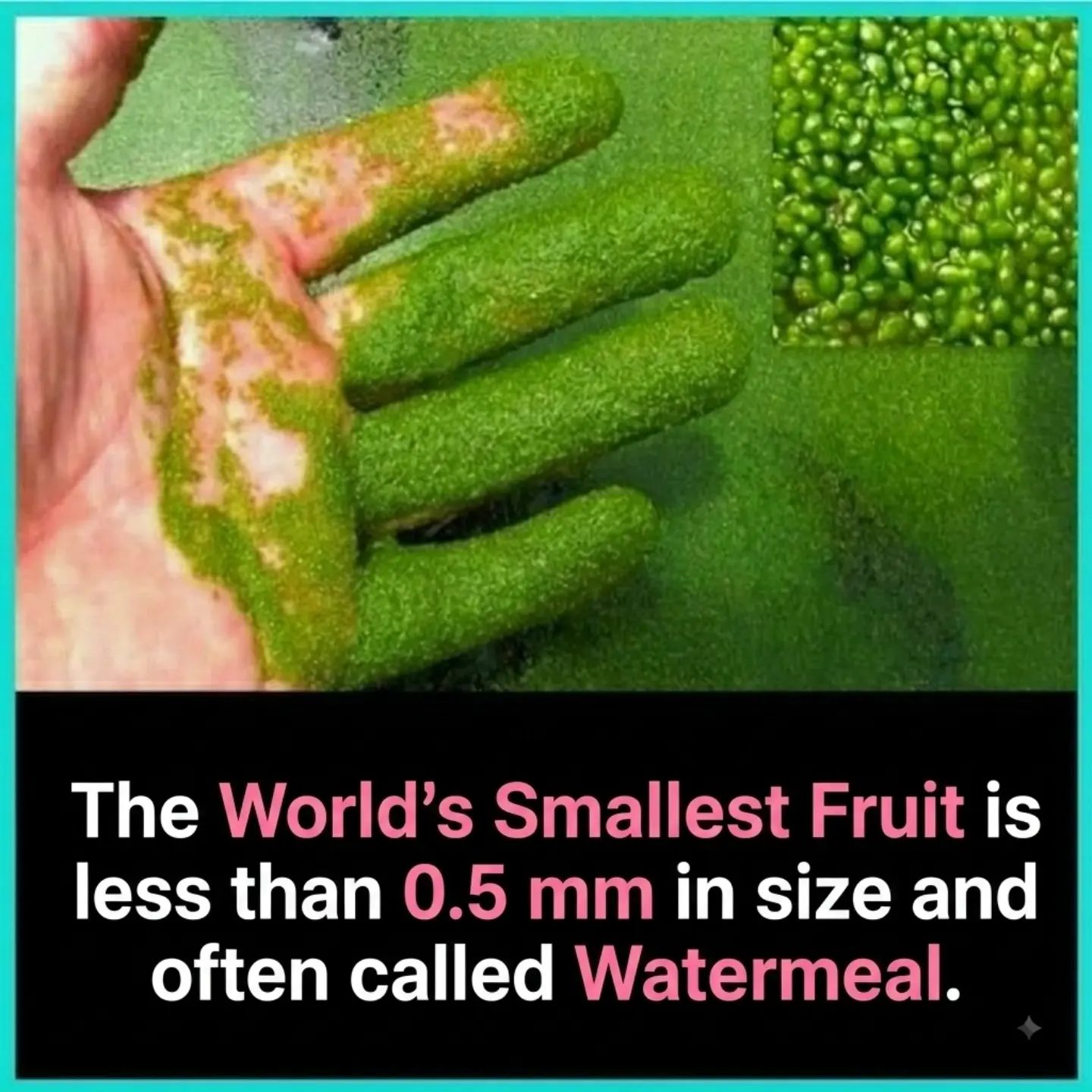
The World’s Smallest Fruit: Asian Watermeal
The world of botany is full of wonders, but few are as astonishing as the Asian Watermeal (Wolffia globosa). This tiny plant holds the distinction of being the world’s smallest flowering plant and also bears the world’s tiniest fruit. At less than 0.5 mm in size, these diminutive plants are so small that they can be easily mistaken for pond scum. Their minuscule size makes them a fascinating subject of study, and their unique characteristics offer insight into the diverse and often overlooked world of aquatic plants.
The Significance of Asian Watermeal
Asian Watermeal, scientifically known as Wolffia globosa, is more than just a curiosity. Its size and characteristics make it a valuable subject for various fields of study, including botany, ecology, and even agriculture. Understanding this tiny plant can provide insights into plant biology, adaptation, and the role of aquatic plants in ecosystems. Watermeal is particularly notable for its ability to thrive in diverse environments, making it a resilient and adaptable species.
The fact that individual plants are less than 0.5 mm in size, smaller than a grain of table salt, highlights the incredible diversity of life on Earth. The minuscule size of these plants and their fruits challenges our conventional understanding of what a plant and its fruit can look like. This revelation can help us appreciate the vast range of life forms that exist, often going unnoticed in our everyday surroundings.
The Anatomy of Asian Watermeal
Size and Structure
The most striking feature of Asian Watermeal is its size. Each plant is so tiny that it can be challenging to see with the naked eye. A single thimble can hold thousands of these plants, underscoring just how small they are. The fruit produced by these plants is even more minuscule, requiring a strong magnifying glass or a microscope to observe.
Adaptations for Survival
Given their size, Asian Watermeal has developed several unique adaptations to survive in aquatic environments. These plants are free-floating and lack roots, relying on their buoyant nature to stay afloat. They absorb nutrients directly from the water, which allows them to thrive in nutrient-poor environments. This adaptation makes them an essential component of some aquatic ecosystems, where they provide a food source for various small animals and insects.
The Role of Asian Watermeal in Ecosystems
Aquatic Ecosystems
Asian Watermeal plays a crucial role in aquatic ecosystems. As a free-floating plant, it helps to oxygenate the water and provides habitat and food for various small aquatic organisms. These plants also contribute to the overall health of the ecosystem by helping to control nutrient levels and prevent algal blooms. Their ability to absorb nutrients directly from the water makes them an effective natural filter, enhancing water quality.
Agricultural Potential
While Asian Watermeal is primarily studied for its ecological significance, it also holds potential for agricultural applications. Its ability to absorb nutrients from the water makes it a candidate for water purification and waste management. Researchers are exploring the use of aquatic plants like Asian Watermeal in constructed wetlands and other engineered systems to treat wastewater and remove pollutants.
Practical Tips for Observing Asian Watermeal
Observing Asian Watermeal can be a rewarding experience, but it requires some preparation. Here are a few practical tips to help you get a closer look at these tiny wonders:
Equipment Needed
To observe Asian Watermeal, you will need a magnifying glass or a microscope. A hand lens with at least 10x magnification can be useful for general observation. For more detailed study, a compound microscope with at least 40x magnification is recommended. Additionally, a collection net and a container for holding water and samples can be helpful for collecting and observing the plants in a controlled environment.
Where to Find Them
Asian Watermeal is typically found in still or slow-moving freshwater bodies, such as ponds, lakes, and quiet streams. Look for areas with calm water and abundant sunlight, as these conditions are ideal for the growth of these plants. Be cautious when collecting samples, as they can be easily disturbed and dispersed.
Observation Techniques
When observing Asian Watermeal, it’s essential to be patient and methodical. Start by carefully collecting a sample of water and letting it settle in a container. Use a magnifying glass or microscope to examine the water for the tiny plants. Look for green, round or oval-shaped objects that are less than 0.5 mm in size. Be sure to handle the samples gently to avoid damaging the delicate plants.
Important Takeaways
Unimaginable Smallness
The world of Asian Watermeal showcases the incredible diversity of plant life, with some species reaching sizes that are almost unimaginable. Yet, despite their size, these tiny plants play a significant role in their ecosystems and offer valuable insights into plant biology.
Ecosystem Contributions
Asian Watermeal is essential for aquatic ecosystems, providing habitat and food for various organisms. Their ability to absorb nutrients directly from the water makes them a natural filter, helping to maintain water quality and prevent algal blooms.
Agricultural Opportunities
The unique adaptations of Asian Watermeal offer potential applications in agriculture and environmental management. Their ability to absorb nutrients from water makes them a candidate for water purification and waste management, contributing to sustainable practices.
Conclusion
Asian Watermeal (Wolffia globosa) is a testament to the incredible diversity and resilience of plant life. Its minuscule size and adaptations make it a fascinating subject of study, offering insights into plant biology, ecology, and even agriculture. By appreciating and understanding these tiny wonders, we gain a deeper understanding of the natural world and its intricate web of life.
Questions readers ask
What makes Asian Watermeal unique among aquatic plants?
Asian Watermeal, or Wolffia globosa, stands out due to its incredibly small size, measuring less than 0.5 mm. This makes it the world's smallest flowering plant and the smallest known fruit-bearing plant. Its diminutive size allows it to thrive in various aquatic environments, making it a distinctive subject for botanical and ecological research.
How can I identify Asian Watermeal in a pond?
Asian Watermeal can be challenging to identify due to its tiny size. It often resembles pond scum to the untrained eye. Look for small, green, spherical or lentil-shaped plants that float on the water surface. They may form dense mats, especially in still or slow-moving water.
What is the significance of studying Asian Watermeal?
Studying Asian Watermeal provides valuable insights into plant biology and ecology. Its unique adaptations to aquatic life and minuscule size offer a better understanding of plant evolution, reproduction, and survival strategies. This knowledge can also contribute to broader ecological studies and conservation efforts.
Are there other plants as small as Asian Watermeal?
While there are other very small plants, Asian Watermeal is considered the smallest flowering plant and the smallest fruit-bearing plant in the world. Other tiny aquatic plants, such as certain types of algae and duckweed, can be similarly small, but they do not produce flowers or fruits.
What kind of environments do Asian Watermeal plants thrive in?
Asian Watermeal is highly adaptable and can thrive in a variety of aquatic environments. It is often found in still or slow-moving freshwater bodies, such as ponds, lakes, and marshes. These plants prefer calm waters with plenty of sunlight, where they can float freely.
How does Asian Watermeal reproduce?
Asian Watermeal reproduces primarily through asexual reproduction, where new plants develop from buds on the parent plant. This method allows for rapid reproduction and colonization of suitable environments. However, it can also reproduce sexually, producing tiny flowers that develop into even smaller fruits.
What role does Asian Watermeal play in its ecosystem?
Asian Watermeal plays a crucial role in its aquatic ecosystem. It provides habitat and food for various small organisms, contributing to the food web. Additionally, its dense mats can help control water quality by absorbing excess nutrients, and it offers shelter for small aquatic creatures.
Related deep dives
Similar reads based on topic and creator.




Recent articles
Fresh deep dives from the latest Reels we unpacked.




Comments
Be the first to comment.