Secret Bunkers Around the World
Hidden beneath the Earth's surface, secret bunkers serve as fortified havens designed to withstand and operate during the most catastrophic events. These underground structures play a crucial role in ensuring continuity of government operations, protecting military secrets, and safeguarding humanity's most valuable resources.
Context / Why this matters
The existence of these bunkers underscores the importance of preparedness in the face of global threats. From nuclear wars to government collapses, these facilities are engineered to maintain essential functions when the world above is in chaos. Understanding their designs, purposes, and advancements provides a unique perspective on global security measures and the steps taken to protect critical operations.
Main discussion
Design and Purpose
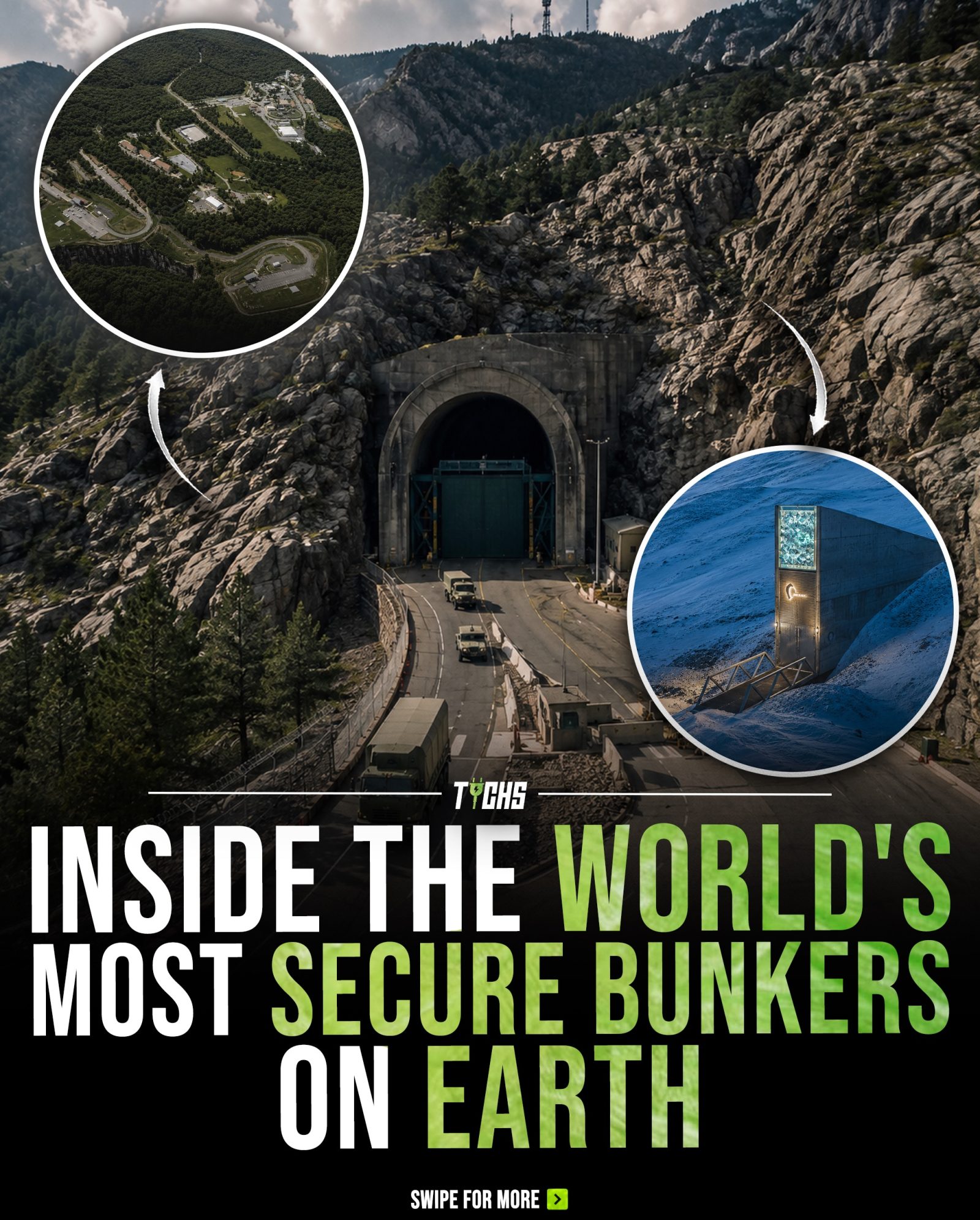
Secret bunkers are engineered with extreme durability in mind. The Cheyenne Mountain Complex and Raven Rock Mountain Complex in the United States are prime examples of such fortifications. These facilities were designed to withstand nuclear blasts and maintain communication and operational capabilities during national emergencies. Similarly, the Mount Weather Operations Center and the Cold War-era Burlington Bunker were constructed to ensure that the U.S. government could continue functioning even under the most dire circumstances.
Russia's Mount Yamantau Complex is another significant example. Believed to be one of the largest underground facilities, its exact purpose remains shrouded in secrecy. However, its massive scale and fortified design suggest it plays a critical role in Russia's defense and continuity plans. Despite the lack of detailed information, the complex is likely equipped with independent power systems, secure communications, and advanced cyber defenses to ensure operational continuity.
Military and Government Bunkers
Mount Weather Operations Center
Located in Virginia, the Mount Weather Operations Center was created to ensure the U.S. government could continue functioning during a national catastrophe. This facility is designed to house key government officials and maintain essential operations in times of crisis. Its robust design and strategic location make it a crucial part of the government's emergency preparedness strategy.
Mount Yamantau Complex
Mount Yamantau Complex, situated in the Ural Mountains of Russia, is one of the largest and most secretive underground facilities in the world. Its enormous size and heavily fortified design suggest it serves multiple purposes, including military defense and government continuity. The exact details of its operations and capabilities remain classified, adding to its mystique and importance in Russia's strategic planning.
Cold War-Era Facilities
The Cold War era saw the construction of numerous bunkers designed to protect governments and military operations during potential nuclear conflicts. Facilities like the Burlington Bunker exemplify this period's focus on survival and continuity. These bunkers were equipped with advanced technologies to ensure communication, power, and operational capabilities during crises.
Svalbard Global Seed Vault
Not all survival bunkers are military in nature. The Svalbard Global Seed Vault, located deep inside an Arctic mountain, is a unique example of a non-military bunker. This facility safeguards more than 1.3 million seed samples from around the world, serving as a crucial backup for humanity's food supply. The vault's remote location and robust design ensure the preservation of these vital genetic resources in case of global catastrophes.
Maintaining Operational Continuity
Independent Power Systems
Many of these bunkers are equipped with independent power systems to ensure continuous operation during emergencies. These systems often include backup generators and renewable energy sources like solar or wind power, allowing the facilities to operate off the grid for extended periods.
Secure Communications
Secure communication systems are essential for maintaining contact and coordination during crises. Bunkers often feature advanced communication technologies, including encrypted radio and satellite communication, to ensure that key personnel can stay connected.
Cyber Defenses
In today's digital age, cyber defenses are crucial for protecting the integrity and confidentiality of information. Modern bunkers are equipped with state-of-the-art cybersecurity measures to safeguard against cyberattacks, ensuring that sensitive information remains secure.
Long-Term Self-Sufficiency
To sustain long-term operations, these facilities are designed with self-sufficiency in mind. This includes advanced water purification systems, food storage solutions, and medical facilities to support the well-being of those inside. The goal is to create a self-contained environment capable of sustaining operations for extended periods.
Practical tips
Understanding the design and capabilities of these bunkers can provide valuable insights for anyone interested in emergency preparedness or survival planning. While access to these specific facilities is restricted, the principles behind their construction can be applied to smaller-scale emergency planning.
Assess Your Needs
Start by assessing your specific needs and potential risks. Determine the types of disasters you might face and the resources you would need to survive.
Choose the Right Location
Select a location for your bunker that offers natural protection and is easily defensible. Consider factors like proximity to water sources, access to essential supplies, and the terrain's suitability for construction.
Fortify the Structure
Ensure your bunker is well-fortified with reinforced walls, secure doors, and ventilation systems that can filter out harmful substances. Consider incorporating blast-resistant materials and shielding to protect against potential threats.
Equip with Essential Systems
Equip your bunker with independent power systems, secure communication devices, and advanced cyber defenses. Ensure you have long-term self-sufficiency capabilities, including water purification systems, food storage, and medical supplies.
Maintain Security
Implement robust security measures to protect your bunker from unauthorized access. This includes surveillance systems, alarms, and secure entry points.
Stay Informed
Stay updated on the latest advancements in bunker technology and emergency preparedness. Regularly review and update your plans to incorporate new information and technologies.
Important takeaways
Secret bunkers around the world serve as critical infrastructure designed to protect essential operations during catastrophic events. These facilities are engineered with durability, self-sufficiency, and advanced technologies to ensure continuity and security. Understanding their design, purpose, and advancements can provide valuable insights into emergency preparedness and global security measures.
Conclusion
The world's most secure bunkers are a testament to human ingenuity and the lengths we go to ensure survival and continuity in the face of global threats. From military facilities like the Mount Weather Operations Center and Mount Yamantau Complex to non-military sanctuaries like the Svalbard Global Seed Vault, these underground structures play a vital role in protecting critical operations and resources. Whether for government continuity, military defense, or safeguarding humanity's food supply, these bunkers embody the best of modern engineering and preparedness.
Questions readers ask
What are some of the most secure underground bunkers in the world?
Some of the world's most secure underground bunkers include the U.S.'s Cheyenne Mountain Complex and Russia's Mount Yamantau. These facilities are designed to withstand catastrophic events and maintain essential functions during global crises.
What is the purpose of underground bunkers?
Underground bunkers serve multiple purposes, including ensuring the continuity of government operations, protecting military secrets, and safeguarding valuable resources during catastrophic events such as nuclear wars or government collapses.
What makes a bunker design suitable for withstanding cataclysms?
Bunker designs suitable for withstanding cataclysms are engineered for extreme durability and equipped with advanced defenses to maintain essential functions. They often feature reinforced structures, advanced life support systems, and robust security measures.
Where are some of the government bunker locations around the world?
Government bunker locations are often kept secret for obvious reason, but known locations include the Cheyenne Mountain Complex in the United States, and Mount Yamantau in Russia. These locations are chosen for their strategic importance and ability to withstand various types of attacks.
What are some of the survival features found in military underground facilities?
Military underground facilities are equipped with survival features such as advanced life support systems, independent power supplies, and extensive communication networks. These features ensure that the facilities can operate autonomously for extended periods.
How do underground bunkers enhance global security?
Underground bunkers enhance global security by providing a secure environment for government and military operations during crises. They ensure that critical functions can continue even when the surface world is compromised, maintaining stability and continuity.
What advancements have been made in bunker security?
Advancements in bunker security include the use of advanced surveillance systems, enhanced physical barriers, and sophisticated cybersecurity measures. These improvements ensure that bunkers remain impenetrable and can operate securely under any circumstances.
Recent articles
Fresh deep dives from the latest Reels we unpacked.




Comments
Be the first to comment.