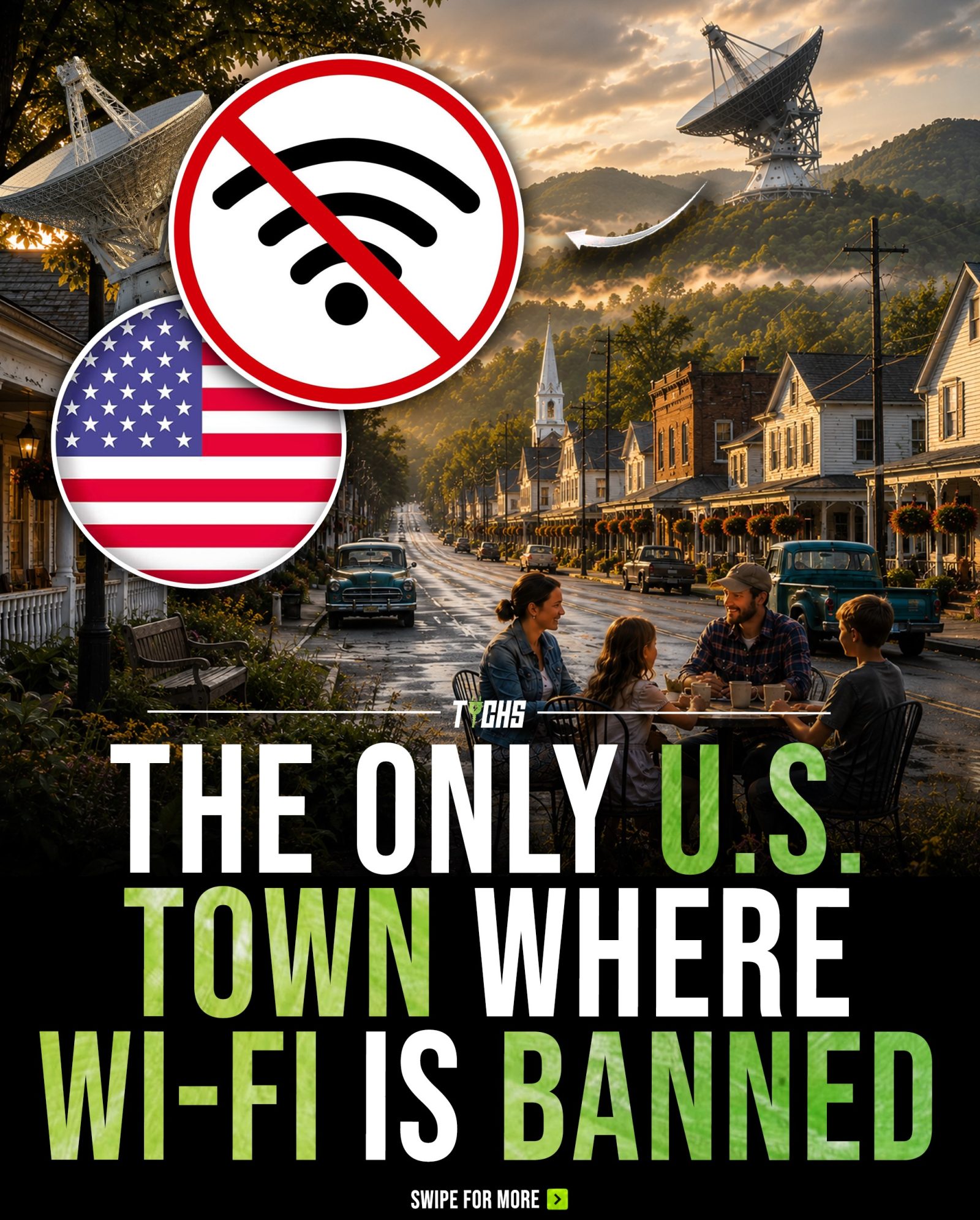
Green Bank: The Unique U.S. Town with Restricted Wireless Signals
Nestled within the National Radio Quiet Zone, Green Bank, West Virginia, is the only town in the United States where Wi-Fi and Bluetooth are heavily restricted. This unique environment is crucial for protecting one of the world's most sensitive radio astronomy research facilities, the Green Bank Telescope.
Context / Why this matters
The restrictions in Green Bank are not arbitrary but are carefully implemented to safeguard the Green Bank Telescope. This telescope is designed to detect extremely weak signals from deep space, making it one of the most powerful and sensitive instruments of its kind. Any interference from modern wireless technology can distort the data collected by the telescope, rendering the observations useless. This makes Green Bank an exceptionally quiet zone, both in terms of noise pollution and electromagnetic interference.
The Green Bank Telescope
The Green Bank Telescope is the world’s largest fully steerable radio telescope. It is situated within the National Radio Quiet Zone, a region where radio transmissions are heavily regulated to minimize interference. This telescope is instrumental in various fields of astronomy, including astrobiology, cosmology, and astrochemistry. Its sensitivity allows scientists to study phenomena that would otherwise be undetectable, such as the faint radio waves emitted by distant galaxies and the remnants of ancient stars.
The telescope's operation involves meticulous precision, and even the slightest electromagnetic interference can disrupt its observations. This is why the rules in Green Bank are so stringent. The town bans Wi-Fi and Bluetooth, and even older diesel trucks are popular because they have fewer electronic systems and create less radio interference around the observatory.
Location and Environment
Green Bank is located in a valley surrounded by mountains, which naturally shield the area from external radio interference. The town sits within the National Radio Quiet Zone, a 13,000-square-mile area where radio transmissions are heavily regulated. This region was established in 1958 to protect the Green Bank Observatory from electromagnetic interference.
The unique environment of Green Bank has several practical implications for its residents. Many wireless devices are limited, and older vehicles are common. This might seem inconvenient to some, but it is a necessary sacrifice to ensure the continued operation of the Green Bank Telescope.
Daily Life in Green Bank
Despite the restrictions, life in Green Bank is far from dull. The town attracts both scientists and people looking to escape the constant digital noise of modern cities. Residents have adapted to a life with fewer electronic conveniences, and the town has developed a unique charm that appeals to many. The quiet environment makes it an ideal place for those seeking a respite from the hustle and bustle of urban life.
One of the notable features of Green Bank is the presence of radio patrol trucks. These trucks monitor interference levels and help ensure that the town remains a quiet zone. The observatory also uses shielded appliances and reduced electronic activity to minimize interference. Life in Green Bank is a testament to how a community can adapt to unique circumstances for the greater good of scientific research.
Practical Tips for Visiting Green Bank
If you're planning a visit to Green Bank, here are a few tips to help you make the most of your experience:
-
Leave Your Electronics Behind: Most wireless devices are restricted, so prepare to disconnect. If you still want to stay connected, check with local services and rent a pre-2000s model.
-
Bring a Road Map: GPS and digital maps are unreliable in Green Bank, so consider using a physical map and compass.
-
Explore the Observatories: The Green Bank Observatory offers guided tours and public programs that provide a deeper insight into the world of radio astronomy. Plan your trip around one of these events for a more immersive experience.
-
Enjoy the Quiet: Although it might seem peculiar at first, the lack of digital noise can be incredibly soothing. Take some time to relax, enjoy the natural surroundings, and appreciate the quiet.
Important takeaways
Green Bank, West Virginia, stands as a unique town where Wi-Fi and Bluetooth are restricted to protect the sensitive radio astronomy research conducted at the Green Bank Telescope. This environment, nestled within the National Radio Quiet Zone, is essential for detecting weak signals from deep space. The town's adaptations, such as the prevalence of older vehicles and shielded appliances, highlight the community's commitment to scientific research. Visiting Green Bank offers a rare opportunity to experience a life less tethered to modern technology and to appreciate the natural beauty and scientific significance of the area.
Conclusion
Green Bank is a testament to the delicate balance between human activity and scientific exploration. The town's restrictions on wireless technology are not just regulations but a collective effort to preserve one of the world's most powerful astronomical instruments. For those seeking a reprieve from the constant digital noise, Green Bank offers a unique and enriching experience.
Questions readers ask
Why is Wi-Fi and Bluetooth restricted in Green Bank, West Virginia?
Green Bank is located within the National Radio Quiet Zone, and these restrictions are in place to protect the Green Bank Telescope, which is designed to detect extremely weak radio signals from deep space. Wi-Fi and Bluetooth can interfere with these signals, potentially distorting the data collected by the telescope.
What is the National Radio Quiet Zone?
The National Radio Quiet Zone is an area in the Eastern United States where radio transmissions are strictly regulated to minimize interference with the Green Bank Telescope. This zone helps to ensure that the telescope can operate optimally by reducing the amount of electronic noise from various sources.
How do the restrictions in Green Bank affect daily life for residents?
Residents of Green Bank have adapted to living without Wi-Fi and Bluetooth. They often rely on wired internet connections and other non-wireless technologies. While it may seem inconvenient, it is a necessary compromise to support the important astronomy research conducted in the area.
Can visitors use their electronic devices in Green Bank?
Visitors are generally advised to minimize the use of electronic devices that emit radio waves, such as smartphones and tablets, while in the area. Some devices can be used in limited capacity, but it is best to check with local guidelines or the Green Bank Observatory to ensure compliance with the regulations.
What kind of research is conducted at the Green Bank Observatory?
The Green Bank Observatory is involved in a variety of astronomy research projects, focusing on the detection of faint radio signals from space. These signals can provide insights into the formation of stars and galaxies, as well as the study of pulsars, quasars, and other celestial objects.
Are there any other towns with similar regulations to Green Bank?
Green Bank is unique in the United States for its comprehensive restrictions on wireless signals. However, there are other radio quiet zones around the world, such as those in Australia and China, where similar measures are taken to protect sensitive radio astronomy research.
What can I do if I need to use a device that emits radio signals in Green Bank?
If you need to use a device that emits radio signals, it is best to seek alternative solutions or locations. You might consider using wired connections or devices that operate on different frequencies that do not interfere with the telescope. Always consult with local authorities to understand the specific guidelines and available alternatives.
Related deep dives
Similar reads based on topic and creator.




Recent articles
Fresh deep dives from the latest Reels we unpacked.




Comments
Be the first to comment.