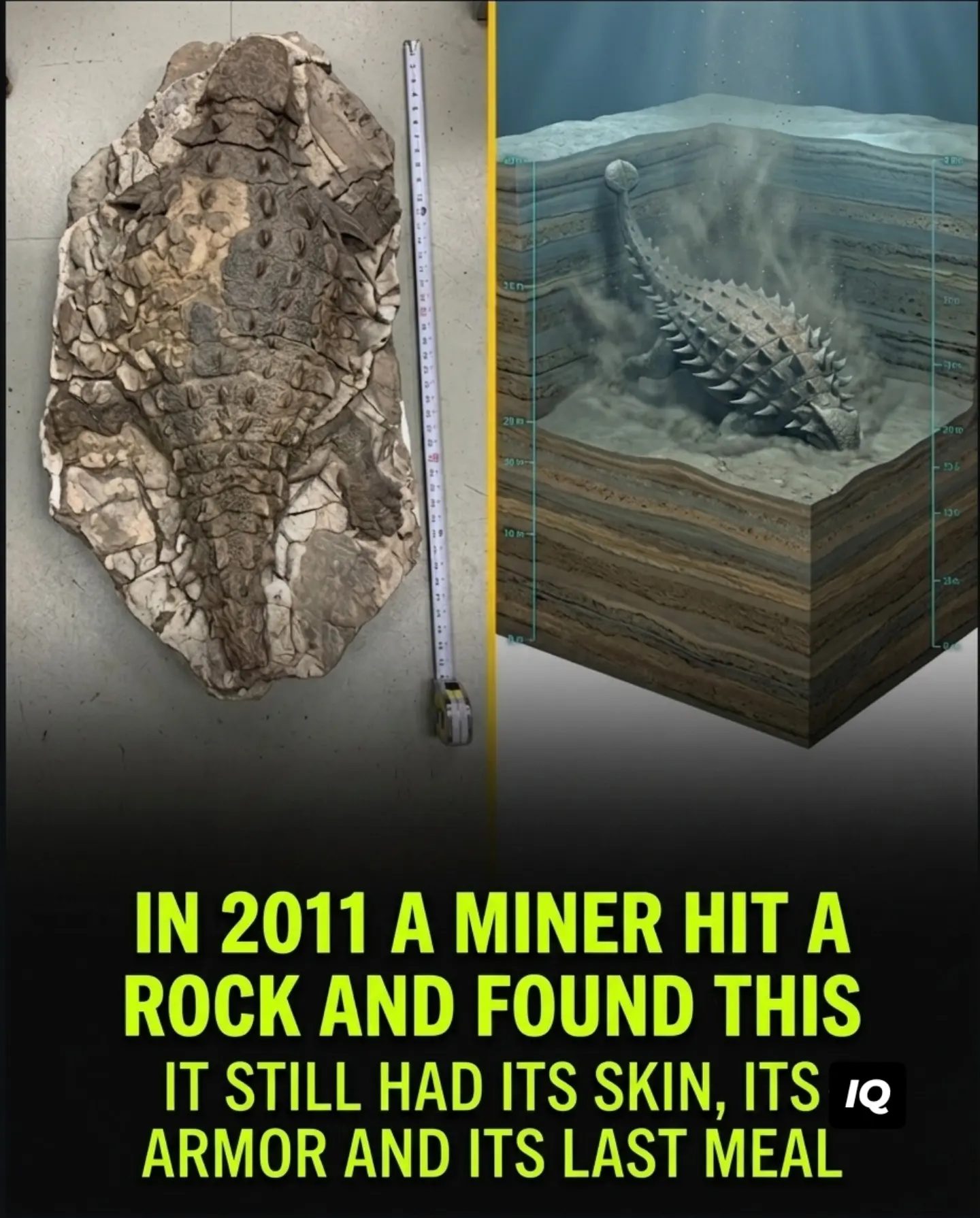
The Borealopelta: The Best Preserved Dinosaur in History
The intricate discovery of a 110-million-year-old dinosaur mummy in 2011 has captivated the scientific community. Unlike traditional fossil finds, this specimen, a Borealopelta, is astonishingly well-preserved, earning it the moniker "dinosaur Mona Lisa." Located in a Canadian mine, this remarkable find offers unparalleled insights into the lives of dinosaurs due to its remarkable state of preservation.
Context / Why This Matters
The Borealopelta fossil is more than just a skeleton; it is a near-complete mummified specimen. This level of preservation allows scientists to study the dinosaur's anatomy, skin texture, and even its last meal. The discovery provides a rare window into the past, allowing researchers to reconstruct the life and environment of this ancient creature with remarkable precision.
3D Preservation
One of the most extraordinary aspects of this fossil is its three-dimensional preservation. Typically, fossils are flattened by the pressure of sediment over millions of years. However, the Borealopelta retained its lifelike, three-dimensional shape. This preservation is crucial for understanding the dinosaur's original form and structure, providing a more accurate picture of its appearance and movement.
Real Skin and Armor
The fossil still retains its original scaly skin and bony armor plates, exactly where they were in life. This level of detail is unprecedented and offers valuable information about the protective mechanisms of armored dinosaurs. The armor plates, or osteoderms, are particularly well-preserved, showing how these structures were arranged and how they likely functioned in defense against predators.
Its Last Meal
An incredible aspect of this discovery is that scientists were able to examine the dinosaur's stomach contents. Within it, they found remnants of fossilized ferns and charcoal, providing a glimpse into the Borealopelta's last meal. This offers insights into the dinosaur's diet and the environment in which it lived.
Real Color
Researchers were able to determine the dinosaur's coloration by studying its skin cells. The Borealopelta had a reddish-brown camouflage pattern, which would have helped it blend into its surroundings and avoid detection by massive predators. This is a groundbreaking discovery, as it is rare to determine the color of extinct creatures based on direct evidence.
How the Fossil Got There
Despite being a terrestrial creature, it is believed that a massive flood swept the Borealopelta's body out to sea. The dinosaur's body bloated, floated, and eventually sank into the deep, soft ocean mud. This rapid burial away from scavengers helped to preserve the specimen so well, effectively freezing it in time. The unique conditions of its burial played a critical role in maintaining its remarkable state of preservation.
Practical Tips
While the general public may not have access to such extraordinary fossils, the discovery of the Borealopelta highlights the importance of careful observation and scientific inquiry. For anyone interested in paleontology, the following tips can enhance your understanding and appreciation of this field:
- Be Observant: Pay close attention to the details of fossils and their environment. Even small details can provide significant insights.
- Study the Context: Understand the geological and environmental context of a fossil find. This can provide clues about the creature's life and the conditions that led to its preservation.
- Engage with the Scientific Community: Participate in fossil hunts, visit museums, and engage with experts. Sharing knowledge and experiences can deepen your understanding and appreciation for paleontology.
Important Takeaways
The Borealopelta fossil represents a remarkable achievement in the field of paleontology. Its exceptional preservation offers a unique opportunity to study the anatomy, diet, and environment of a dinosaur in unprecedented detail. The discovery underscores the importance of careful observation, scientific inquiry, and the study of fossil context.
Conclusion
The Borealopelta fossil stands as a testament to the wonders of paleontological discovery. Its remarkable state of preservation provides a wealth of information about life in the Cretaceous period. This discovery not only expands our knowledge of armored dinosaurs but also highlights the importance of protecting and studying fossil sites. Whether you are a seasoned paleontologist or a curious enthusiast, the Borealopelta serves as an inspiration to explore the mysteries of the past.
Questions readers ask
What makes the Borealopelta fossil unique compared to other dinosaur fossils?
The Borealopelta is unique because it is remarkably well-preserved, retaining its three-dimensional shape, scaly skin, and even its last meal. Unlike typical fossils which are usually just bones, this specimen is a near-complete mummified dinosaur.
Where was the 110-million-year-old dinosaur mummy discovered?
The Borealopelta fossil was discovered in 2011 in a Canadian mine. The specific location has contributed to its exceptional state of preservation.
What can scientists learn from the Borealopelta fossil that they can't learn from other dinosaur fossils?
Scientists can study the Borealopelta's anatomy, skin texture, and stomach contents, providing insights into dinosaur physiology, diet, and behavior. This level of detail is rare in other fossil finds.
Why is the Borealopelta fossil referred to as the dinosaur 'Mona Lisa'?
The Borealopelta is called the 'dinosaur Mona Lisa' due to its extraordinary level of preservation, which is unparalleled in the fossil record. Its detailed features make it a remarkable and iconic specimen in dinosaur history.
What does the preservation of the Borealopelta's skin reveal about dinosaur anatomy?
The preserved skin of the Borealopelta shows the texture and pattern of dinosaur skin, including scales and armor. This information helps scientists understand the exterior anatomy of dinosaurs and their defense mechanisms.
How does the preservation of the Borealopelta's last meal contribute to our understanding of dinosaurs?
The preserved stomach contents of the Borealopelta offer a direct look into the diet of these ancient creatures. This can provide clues about their eating habits, feeding behaviors, and the environment they lived in.
What is the significance of the Borealopelta fossil in the study of dinosaur history?
The Borealopelta fossil provides a rare, detailed snapshot of a dinosaur's life, anatomy, and behavior. Its exceptional preservation allows scientists to reconstruct aspects of dinosaur biology and ecology, enhancing our understanding of these prehistoric creatures.
Related deep dives
Similar reads based on topic and creator.



Recent articles
Fresh deep dives from the latest Reels we unpacked.



Comments
Be the first to comment.