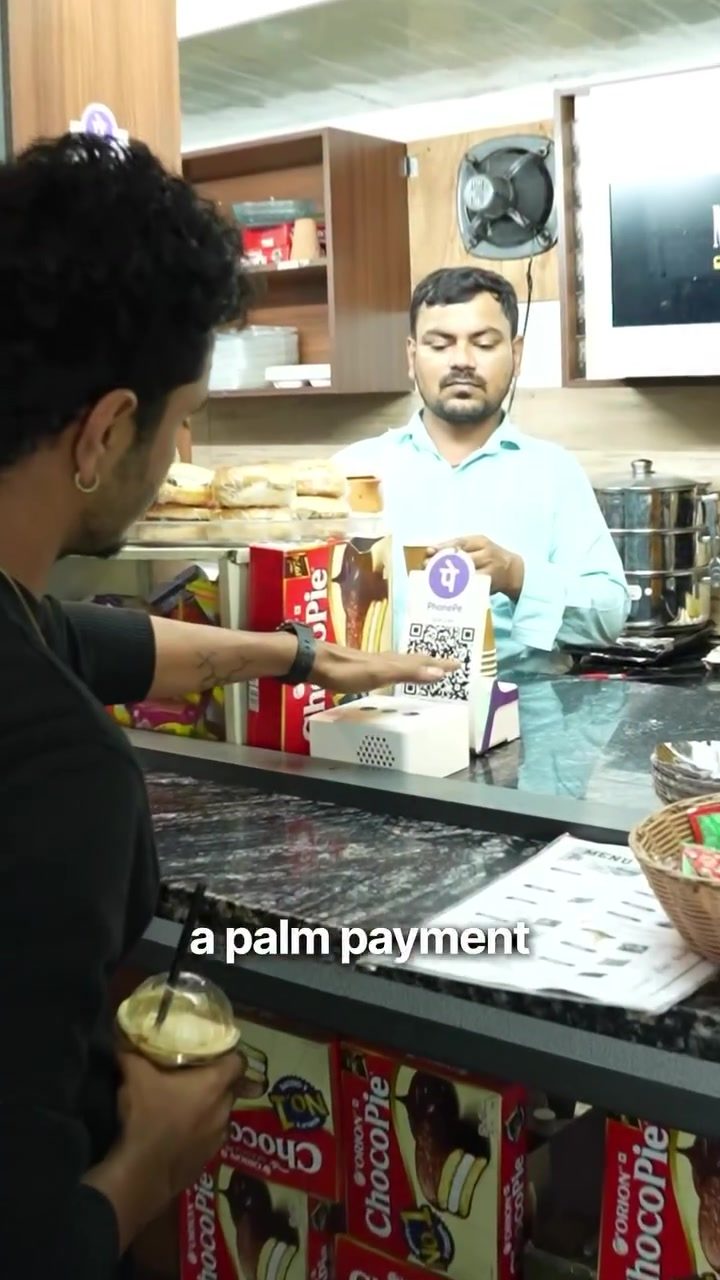
Palm Payment Technology: Revolutionizing Transactions in India
Palm payment technology, already popular in China, is making waves in India. This innovative method allows users to make payments by simply placing their hand over a device, eliminating the need for cash or digital wallets. The concept is not only convenient but also addresses the challenges faced by those who frequently forget their phones or run out of battery.
Why This Matters
The convenience and security of palm payment technology make it a game-changer in the Indian market. With the rise of digital transactions, palm payment technology offers a seamless and efficient way to pay, especially in scenarios where traditional methods may fall short. The technology leverages unique vein patterns in each individual's palm, ensuring secure and reliable transactions.
The Development Process
Inspiration and Initial Research
The journey of developing a palm payment device for India began with the observation of similar technologies in China. Frustrated with the hassle of opening UPI (Unified Payments Interface) every time and the inconvenience of not carrying cash, the team decided to bring this technology to India.
Understanding the Technology
The first step was to understand how the palm payment device works. The key component is an NOIR camera, which detects the unique vein patterns under the skin. Since each person has a distinct vein pattern, this method ensures high security.
Building the Prototype
Hardware Setup
To build the device, the team started by acquiring an NOIR camera and connecting it to a Raspberry Pi. However, they faced an issue with the camera picking up too much ambient light, making it difficult to detect the vein patterns. To resolve this, they added an 850nm filter, which blocks outside light and allows clear detection of the vein patterns.
3D Printing the Enclosure
The next step was to design a prototype. The team used a BambooLab P2S 3D printer to create the enclosure for the device. This step not only ensured the device's structural integrity but also made it aesthetically pleasing and user-friendly.
Software Development
User Registration
The software development phase involved writing code to register users. The system automatically captures 15 photos of the user's hand during the registration process. This comprehensive data collection ensures accurate vein pattern recognition during transactions.
Data Collection and Model Training
To train the model effectively, the team set up a small table in the campus lobby. They invited students to scan their hands, contributing to a diverse dataset of palm vein patterns. This data is crucial for training the model to recognize various vein patterns accurately.
Next Steps
The next phase involves training the model with the collected data and installing the device in a local shop. This real-world test will provide valuable insights into how people react to and use the palm payment device.
Practical Tips for Implementing Palm Payment Technology
Choosing the Right Hardware
Selecting the right hardware is crucial for the success of palm payment technology. An NOIR camera and a reliable microcomputer like a Raspberry Pi are essential components. Additionally, using filters to block ambient light ensures accurate vein pattern detection.
Designing User-Friendly Interfaces
The design of the device should prioritize user convenience. A well-designed enclosure not only makes the device durable but also enhances the user experience. Using 3D printing for the enclosure allows for customization and ensures structural integrity.
Ensuring Data Security
Data security is paramount in any payment technology. Collecting a comprehensive dataset of vein patterns and training the model effectively ensures high security. Additionally, implementing robust encryption methods protects user data from potential breaches.
Engaging the Community
Involving the community in the development process can provide valuable feedback and data. Setting up data collection points in public spaces like campus lobbies can help gather diverse datasets, which are essential for training the model accurately.
Important Takeaways
Palm payment technology represents a significant advancement in digital transactions. Its convenience, security, and efficiency make it a viable solution for the Indian market, where digital payments are increasingly popular. The development process involves careful consideration of hardware, software, and data security aspects. By involving the community and gathering diverse datasets, the technology can be refined to meet the needs of a wide user base.
Conclusion
The development of palm payment technology for India is a testament to innovation and practical problem-solving. By addressing the challenges faced in digital payments and leveraging unique vein patterns, this technology offers a secure and convenient way to transact. The journey from concept to prototype showcases the importance of careful planning, community involvement, and continuous refinement. As this technology evolves, it has the potential to revolutionize the way transactions are conducted in India.
Questions readers ask
How does palm payment technology work in India?
Palm payment technology in India uses unique vein patterns in an individual's hand to authorise transactions. Users simply place their hand over a device to complete a payment, making it a convenient and secure alternative to traditional payment methods.
What are the benefits of using palm payment technology in India?
Palm payment technology offers several benefits in India. It provides a convenient way to make transactions without the need for cash or digital wallets. Additionally, it addresses common issues like phone battery depletion or the inconvenience of forgetting one's phone. It also enhances security by using unique vein patterns.
Is palm payment technology secure?
Yes, palm payment technology is highly secure. It uses the unique vein patterns in each individual's palm, which are difficult to replicate, making it a reliable method for contactless payments. This biometric data ensures that only the authorized user can complete transactions.
How does palm payment technology address common issues with digital wallets in India?
Palm payment technology addresses issues like phone battery depletion and the inconvenience of forgetting one's phone. By using a device that only requires a hand to complete transactions, it provides a seamless and efficient payment solution. This makes it particularly useful in scenarios where traditional digital wallets may fall short.
What makes palm payment a game-changer in India's payment landscape?
Palm payment technology is a game-changer in India because it offers a seamless, efficient, and secure way to make transactions. It eliminates the need for physical cash or digital wallets, making it convenient for users who often face issues with traditional payment methods.
Is India the first country to adopt palm payment technology?
No, India is not the first country to adopt palm payment technology. This innovative method has already gained popularity in China and is now making significant strides in the Indian market, addressing unique payment challenges faced by Indian users.
Related deep dives
Similar reads based on topic and creator.




Recent articles
Fresh deep dives from the latest Reels we unpacked.




Comments
Be the first to comment.