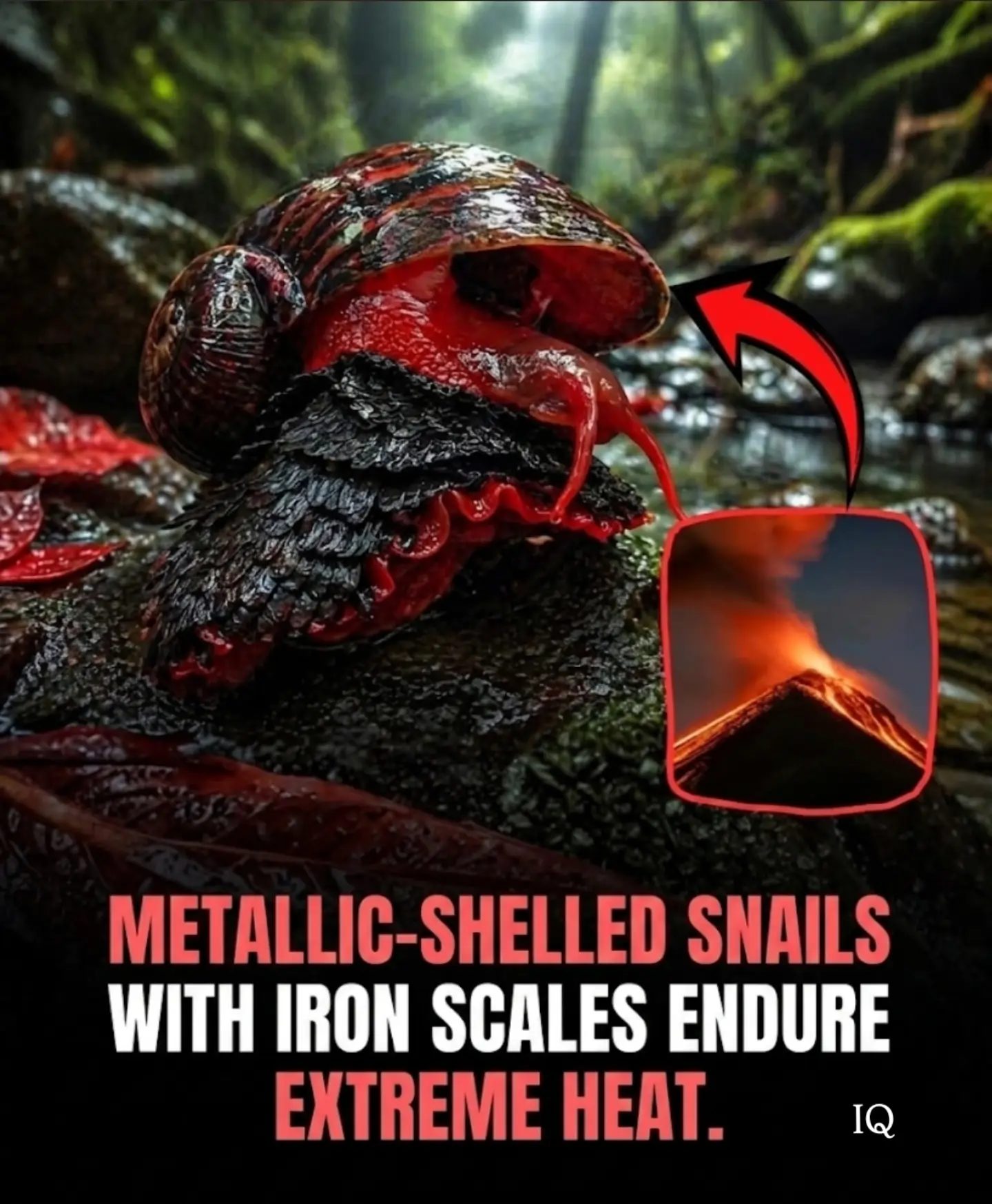
Metallic-Shelled Snails: Nature's Extreme Marvel
Deep within the Indian Ocean, over 1.5 miles underwater, lives one of the most extraordinary creatures on Earth: the scaly-foot snail (Chrysomallon squamiferum). Known for its unique metallic shell and ability to withstand extreme heat, this deep-sea marvel has captured the fascination of marine biologists and enthusiasts alike.
Why This Matters
The scaly-foot snail is a testament to nature's engineering marvels. Its unique adaptations allow it to thrive in environments that are inhospitable to most other forms of life. By understanding these adaptations, we can gain insights into the resilience of life on Earth and the potential for similar adaptations in synthetic or biological systems.
The Scaly-Foot Snail: An Ingenious Design
Iron Armor: A Multi-Layer Defense System
The scaly-foot snail's most striking feature is its metallic shell, which is composed of a multi-layer defense system. The outer layer is made entirely of iron sulfides, providing an unparalleled level of protection. The minerals in this layer also give the shell its distinctive metallic appearance, making this snail a novelty among its kind.
Scaly Defense: Iron-Mineralized Scales
Unlike regular snails, the scaly-foot snail has a soft foot covered in iron-mineralized scales. These scales offer additional protection against the harsh underwater environment. The combination of the metallic shell and the scaled foot makes the snail virtually impenetrable to predators and environmental hazards.
Extreme Heat: Surviving Hydrothermal Vents
The scaly-foot snail inhabits the vicinity of hydrothermal vents, where water temperatures can surge over 300°C (572°F). These vents are essentially underwater volcanoes, spewing out superheated water and toxic chemicals. The snail's ability to endure such extreme conditions is a marvel of biological adaptation.
Symbiotic Bacteria: A Unique Food Source
One of the most intriguing aspects of the scaly-foot snail is its unique method of obtaining energy. Unlike most animals, it does not eat in the traditional sense. Instead, it relies on symbiotic bacteria living inside its body. These bacteria convert toxic vent chemicals into energy, allowing the snail to thrive in an environment that would be deadly to most other organisms.
Practical Tips for Observing Deep-Sea Creatures
While the scaly-foot snail is a fascinating subject of study, observing deep-sea creatures like this is a challenge. Here are some practical tips for those interested in marine biology and deep-sea exploration:
Equipment and Technology
Exploring the deep sea requires specialized equipment. Submersibles and remotely operated vehicles (ROVs) are essential for reaching the depths where creatures like the scaly-foot snail reside. Advanced cameras and sensors are also necessary for capturing detailed images and data.
Safety Precautions
Deep-sea exploration is inherently risky. Researchers must be aware of the hazards posed by extreme pressures, toxic chemicals, and unpredictable underwater currents. Proper training and safety protocols are crucial for any expedition.
Conservation Efforts
The deep sea is a delicate ecosystem, and human intervention can have significant impacts. Conservation efforts are essential to protect creatures like the scaly-foot snail. This includes minimizing pollution, reducing carbon emissions, and promoting sustainable fishing practices.
Important Takeaways
The scaly-foot snail's unique adaptations provide valuable insights into the resilience and ingenuity of life on Earth. Its metallic shell, iron-mineralized scales, and symbiotic bacteria offer a blueprint for survival in extreme environments. Understanding these adaptations can inspire new technologies and conservation efforts, ensuring that future generations can appreciate the wonders of the deep sea.
Conclusion
The scaly-foot snail is more than just a novelty item; it is a living testament to nature's ingenuity. Its ability to thrive in one of the harshest environments on Earth offers a glimpse into the boundless potential of biological adaptation. Whether you are a marine biologist, an environmental scientist, or simply a curious observer, the scaly-foot snail's story is one of awe and inspiration.
Questions readers ask
What makes the scaly-foot snail unique among deep-sea creatures?
The scaly-foot snail is unique due to its metallic shell and iron-mineralized scales, which are not found in other deep-sea creatures. These features allow it to withstand the extreme heat and harsh conditions of hydrothermal vents, making it one of the most resilient deep-sea organisms.
How does the scaly-foot snail protect itself in such extreme environments?
The scaly-foot snail's metallic shell and iron scales provide a robust biological defense mechanism. The iron scales, in particular, are thought to offer protection against predators and the harsh, acidic environment around hydrothermal vents.
Is the scaly-foot snail the only organism living in hydrothermal vents?
No, but the scaly-foot snail is one of the few organisms that can withstand such extreme heat and acidic conditions. Other organisms, like extremophile bacteria and certain types of worms, also inhabit these environments, but the scaly-foot snail's adaptations make it particularly noteworthy.
How does the scaly-foot snail's shell help it survive in deep-sea hydrothermal vents?
The scaly-foot snail's shell is composed of iron sulfide and other minerals, which provide excellent heat resistance. This allows the snail to endure temperatures that would be lethal to most other organisms, including those found in similar deep-sea environments. Additionally, the shell's metallic composition aids in the snail's ability to withstand the corrosive effects of the vent's acidic waters.
What can we learn from the scaly-foot snail's adaptations?
Studying the scaly-foot snail's adaptations can provide valuable insights into how life can persist in extremely harsh conditions. This knowledge can inspire innovations in materials science and biology, potentially leading to new technologies and materials that mimic these natural defenses.
Can the scaly-foot snail survive contact with lava?
The scaly-foot snail has extraordinary resistance to heat, but it is highly unlikely that it can survive direct contact with lava. While the snail can withstand the extreme heat and chemicals near hydrothermal vents, the temperature of lava is significantly higher and would likely be fatal to the snail.
Related deep dives
Similar reads based on topic and creator.




Recent articles
Fresh deep dives from the latest Reels we unpacked.




Comments
Be the first to comment.