The Enigmatic Journey of Hase
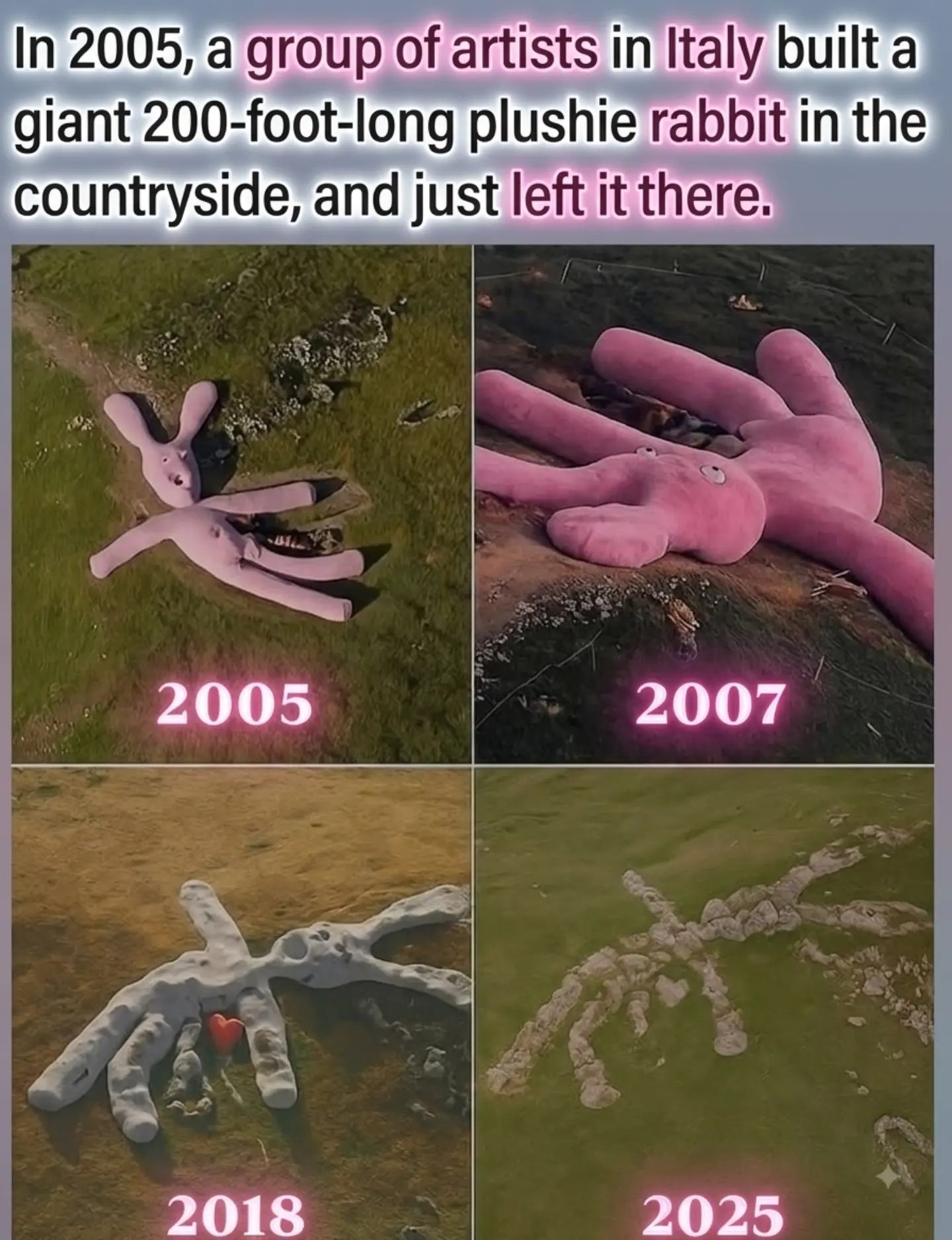
In 2005, an extraordinary art installation named Hase, which means "Hare" in German, was created by the art group Gelitin. This massive 200-foot-long (60-meter) plush rabbit was meticulously knitted and installed on Colletto Fava mountain in Piedmont, Italy. The installation was not meant to be permanent, but rather a commentary on the impermanence of life and the natural cycle of decay.
Why This Matters
Hase serves as a profound example of how art can interact with the natural world and the passage of time. The installation offers a unique perspective on the transient nature of human creations and the inevitability of decay. Its gradual deterioration highlights the power of natural elements and the passage of time, providing a poignant reflection on the ephemeral nature of existence.
The Evolution of Hase
The Initial Installation (2005)
The giant plush rabbit was initially a vibrant pink, making it a striking and whimsical sight. Its soft and inviting form was a marvel, attracting visitors who could climb and rest on it. The installation was a playful and captivating addition to the landscape, drawing attention and admiration from all who saw it.
Natural Decomposition (2007-2016)
Over the years, nature began to claim the art piece. The pink yarn gradually faded, and the stuffing inside started to decompose. The harsh mountain elements, including wind, rain, and sunlight, further hastened its decay. What was once a playful rabbit slowly transformed into a mysterious, slowly vanishing form, merging with the landscape and becoming an integral part of it.
Complete Decomposition (2018-2025)
By 2018, the materials used in the installation had almost completely decomposed. The rabbit, which once stood tall and proud, had reduced to a faint outline, almost indistinguishable from the surrounding earth. By 2025, it had almost entirely merged back into the ground, becoming a pile of organic material. The once-vibrant pink yarn had turned into a faint, almost unnoticeable trace, effectively disappearing from view.
The Artistic Vision
The creation of Hase was not merely about making a giant plush toy. It was a powerful statement on impermanence, the passage of time, and the natural cycle of life and decay. The artists, Gelitin, used this colossal plush rabbit to explore the theme of decay and how it influences our perception of time. The gradual disappearance of the installation served as a reminder of the transient nature of life, prompting viewers to reflect on their own mortality and the impermanence of human creations.
Practical Tips for Viewing Future Installations
While Hase is now gone, future art installations may offer similar reflections on time and decay. Here are some tips for appreciating such creations:
Be Present in the Moment
Art installations like Hase often change over time, so take the time to visit and observe them in their current state. This can offer a unique perspective on how art can evolve and interact with its surroundings.
Reflect on the Themes
Consider the themes the artist is exploring. Think about the materials used, how they interact with nature, and what messages the artist might be trying to convey. Reflect on how these elements contribute to your experience of the art.
Important Takeaways
The story of Hase underscores the profound impact that art can have when it engages with natural processes. The installation serves as a poignant reminder of the impermanence of life and the power of nature to transform and reabsorb human creations. It invites viewers to ponder the passage of time and the transient nature of existence, making it a thought-provoking and memorable piece of art.
Conclusion
The journey of Hase, from its vibrant beginning to its complete decomposition, is a testament to the power of art in exploring complex themes. This colossal plush rabbit, through its gradual deterioration, offered a unique and powerful reflection on the transient nature of life and the natural cycle of decay. Its story serves as a poignant reminder of the inevitability of change and the beauty that can emerge from impermanence.
Questions readers ask
What was the original purpose of the Hase rabbit installation in Italy?
The Hase rabbit installation, created by the art group Gelitin in 2005, was designed to be a transient artwork. Its purpose was to serve as a commentary on the impermanence of life and the natural cycle of decay, rather than a permanent fixture.
Where was the Hase rabbit art installation located?
The Hase rabbit art installation was located on Colletto Fava mountain in the Piedmont region of Italy. This location was chosen to emphasize the interaction between the artwork and the natural environment.
How long was the Hase rabbit installation?
The Hase rabbit installation was 200 feet long, or approximately 60 meters. This massive scale added to the striking visual impact of the artwork.
What materials were used to create the Hase rabbit installation?
The Hase rabbit was meticulously knitted using plush materials. This choice of materials was intentional, as it allowed the artwork to naturally decay and decompose over time, enhancing its thematic impact.
What can be learned from the decay process of the Hase rabbit installation?
The decay process of the Hase rabbit installation provides insight into the power of natural elements and the passage of time. It serves as a poignant reminder of the transient nature of human creations and the inevitability of change.
Are there any images or videos documenting the decay of the Hase rabbit installation?
Yes, there are numerous images and videos, including time-lapse footage, documenting the decay of the Hase rabbit installation. These visual records capture the gradual deterioration of the artwork over the years, from its vibrant beginning to its current state of disrepair.
What is the significance of the Hase rabbit installation's location in Piedmont?
The location of the Hase rabbit installation in Piedmont was significant as it placed the artwork in a natural setting where the forces of weather and time could act upon it. This setting amplified the installation's message about the transient nature of human creations and their interaction with the environment.
Related deep dives
Similar reads based on topic and creator.



Recent articles
Fresh deep dives from the latest Reels we unpacked.




Comments
Be the first to comment.