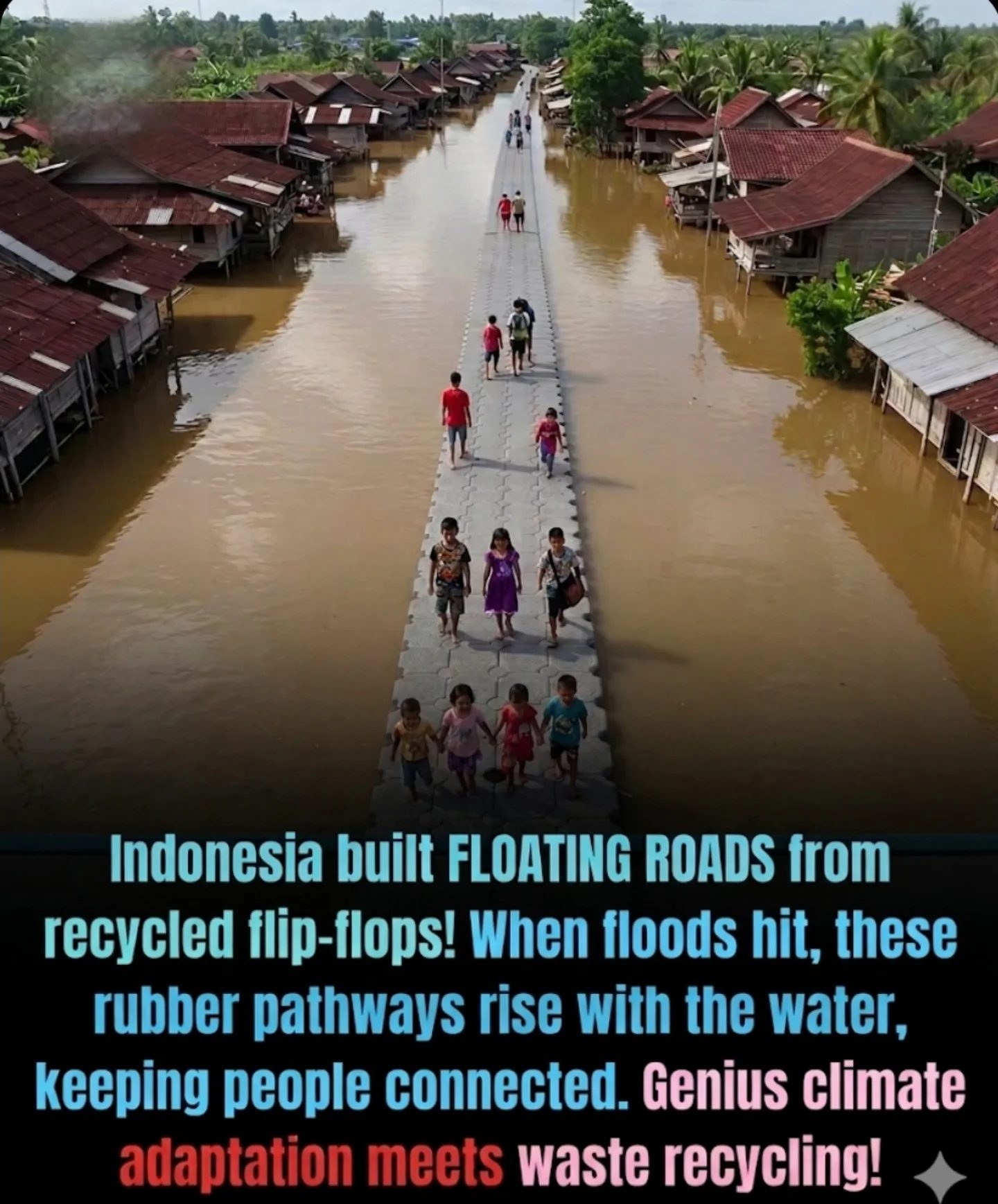
Floating Roads in Indonesia: Separating Fact from Fiction
Floating roads in Indonesia have gained significant attention, particularly through viral social media posts. These paths, purportedly made from recycled flip-flops, are said to rise with floodwaters, providing a lifeline for communities during extreme weather events. However, the claim that these roads are built specifically from recycled flip-flops is false.
Fact-Checking the Claims
The viral posts often showcase images of modular floating dock systems made from high-density polyethylene (HDPE) plastic. This material is chosen for its durability and buoyancy, not for its connection to recycled flip-flops. HDPE is a type of plastic known for its strength and resilience, making it an ideal choice for floating infrastructure.
While these images and descriptions may be compelling, they often originate from AI-generated imagery and misleading descriptions. The floating pathways shown in these posts are typically modular floating dock systems, not recycled flip-flop rubber. These systems are engineered to withstand harsh conditions and provide stable surfaces for various uses, including roads and walkways.
Recycling Initiatives in Indonesia
Indonesia does have innovative recycling initiatives. For example, the country turns plastic waste into asphalt for roads and creates beach fences from discarded sandals. These efforts highlight Indonesia's commitment to sustainable waste management and environmental conservation. However, there is no verified record of large-scale "flip-flop roads."
Local Solutions and Traditional Materials
In many Indonesian villages, floating infrastructure often relies on traditional materials like bamboo. Bamboo is naturally buoyant and locally available, making it a practical choice for constructing floating roads and bridges. This natural material has been used for centuries in various parts of Indonesia and continues to be a reliable solution for adapting to flood-prone environments.
Climate Adaptation and Waste Management
The concept of floating roads is a brilliant example of climate adaptation. As sea levels rise and extreme weather events become more frequent, communities need innovative solutions to stay connected and safe. Floating roads made from durable materials like HDPE or bamboo can provide essential links between isolated areas during floods, allowing people to move safely and efficiently.
Waste management is another critical aspect of these initiatives. By repurposing materials like plastic and bamboo, communities can reduce waste and promote sustainability. While the idea of using recycled flip-flops for roads is intriguing, it is not supported by current evidence. However, the use of other recycled materials and natural resources demonstrates Indonesia's proactive approach to environmental challenges.
The Role of Technology and Innovation
Technology plays a crucial role in developing these floating infrastructures. Modular floating dock systems, for instance, use advanced engineering and design principles to ensure stability and durability. These systems can be quickly assembled and disassembled, making them ideal for temporary or emergency use.
Innovative materials and construction techniques are essential for creating effective and sustainable solutions. While the idea of using recycled flip-flops for roads may be appealing, it is essential to focus on proven methods and materials that deliver reliable results.
Practical Tips for Sustainable Infrastructure
When considering sustainable infrastructure projects, it's important to:
- Choose the Right Materials: Opt for durable and environmentally friendly materials like HDPE or bamboo.
- Use Local Resources: Leverage locally available materials and labor to support the community and reduce costs.
- Innovate and Adapt: Continuously explore new technologies and methods to improve sustainability and resilience.
- Educate and Engage: Raise awareness about the importance of climate adaptation and waste management in local communities.
- Collaborate and Share: Work with other organizations and communities to share best practices and resources.
Important Takeaways
- Floating Roads: Floating roads, while innovative, are not made from recycled flip-flops. They are typically made from durable materials like HDPE plastic.
- Recycling Initiatives: Indonesia has creative recycling initiatives but does not have verified records of large-scale "flip-flop roads."
- Local Solutions: Traditional materials like bamboo are commonly used in Indonesian villages for floating infrastructure.
- Climate Adaptation: Floating roads and other similar solutions are essential for adapting to climate change and extreme weather events.
- Innovation and Sustainability: Technology and innovative materials play a crucial role in developing sustainable and resilient infrastructure.
Conclusion
Floating roads in Indonesia are a fascinating example of climate adaptation and waste management. While the specific claim about recycled flip-flops is false, the broader concept of using innovative materials and engineering to address environmental challenges is compelling and worthy of attention. By focusing on proven methods and technologies, communities can build resilient and sustainable infrastructure that meets the needs of future generations.
Questions readers ask
What material are the floating roads in Indonesia primarily made of?
The floating roads in Indonesia are primarily made of high-density polyethylene (HDPE) plastic, chosen for its durability and buoyancy, not from recycled flip-flops as often misreported.
Why are HDPE floating roads beneficial for Indonesia's infrastructure?
HDPE floating roads are beneficial due to their durability and ability to rise with floodwaters, providing crucial access during extreme weather events. They are designed for resilience in Indonesia’s flood-prone regions.
What is the purpose of the viral posts about 'flip-flop floating roads' in Indonesia?
The viral posts aim to highlight the innovative use of floating pathways in Indonesia. However, they often mislead by falsely claiming the roads are made from recycled flip-flops, when in reality, they are made from HDPE plastic.
How do modular floating roads support waste management in Indonesia?
While the roads are not made from recycled flip-flops, they do contribute to waste management by providing a durable and versatile solution. This reduces the need for constant reconstruction after flooding, thus minimizing waste associated with road maintenance.
What should communities know about recycling and road construction in Indonesia?
Communities should recognize that while the floating roads are made from HDPE, the country’s waste management strategies are diverse, and proper recycling programs are essential for sustainable development. The roads can still help in waste management efforts as they are durable.
Why is HDPE plastic used in the construction of floating roads in Indonesia?
HDPE plastic is used for its strength and resiliency, making it ideal for floating infrastructure that needs to withstand harsh conditions and fluctuating water levels. This material ensures that the roads are stable and long-lasting, despite being in flood prone regions.
How did the myth of 'flip-flop floating roads' originate and spread?
The myth likely originated from the viral nature of social media, where images and claims can spread rapidly without proper verification. The misconception that the roads are made from recycled flip-flops adds a compelling narrative, driving its widespread circulation.
Related deep dives
Similar reads based on topic and creator.




Recent articles
Fresh deep dives from the latest Reels we unpacked.




Comments
Be the first to comment.