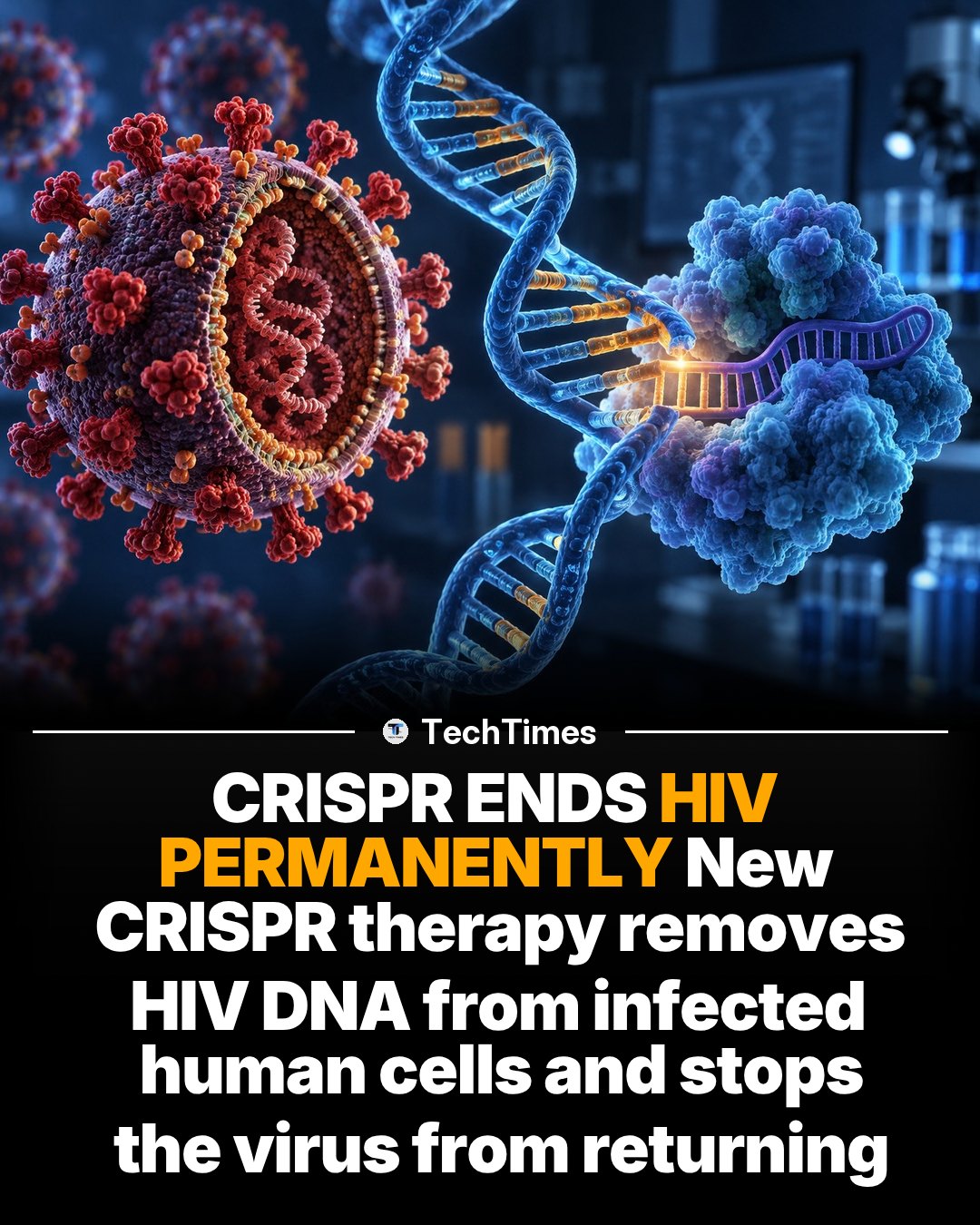
CRISPR technology is used to fight HIV. The viral disease that has taken millions of lives has no cure. CRISPR offers a solution. CRISPR removes HIV DNA from infected human cells, preventing the virus from returning.
CRISPR Therapy: The Promise of a Cure
CRISPR therapy is a revolutionary method of gene editing. It can target and remove specific sections of DNA. This is how it works: CRISPR uses an enzyme, Cas9, as a tiny pair of scissors, and a guide RNA as a map to find the exact location in the genome. The Cas9 enzyme cuts the target DNA, allowing scientists to make precise edits. In the world of HIV treatment, CRISPR offers an unparalleled promise as it targets the virus at the fundamental genetic level. HIV works by inserting a copy of its own DNA into the DNA of the infected cell. CRISPR could remove the inserted DNA from a person's cells, in effect curing this infectious disease. The technology has the potential to eradicate the latent viral DNA from the body, stopping the risk of viral rebound after stopping treatment. In other words, people taking antiviral medication every day may one day abandon permanent treatments. While traditional antiviral drugs help manage HIV by suppressing viral replication, CRISPR aims to eliminate the virus entirely. This is a big leap as CRISPR treatment not only prevents the virus from returning but also offers a more permanent solution to managing the disease.
Innovations in Disease Treatment
CRISPR therapy signals a significant advance in the realm of genetic treatment. Viruses like HIV are becoming harder to handle. The virus inserts its own DNA into the infected cells, making it hard to eliminate. CRISPR excludes the virus's DNA from the infected cells. This means that HIV cannot come back after the treatment. The CRISPR therapy comes at a time when the medical community is seeking more robust solutions to viral infections. Diseases like HIV have always posed a challenge to medical research. HIV is commonly transmitted, which complicates efforts to control it. Compared to other diseases, HIV can cause significant health problems, such as decreased body weight and persistent fatigue. This disease is not curable. CRISPR offers a powerful, never-before-seen weapon in the arsenal against HIV.
CRISPR's Cutting Edge
The Gene Editing Mechanism
CRISPR therapy is based on the gene editing process, which involves removing or modifying specific DNA sequences in the genome. CRISPR, which stands for Clustered Regularly Interspaced Short Palindromic Repeats, uses a molecular toolkit to find and cut these sequences. Cas9, an enzyme that works like a pair of scissors, cuts the target DNA. For Cas9 to navigate the DNA, the guide RNA acts as a roadmap. By using a molecular toolkit, the system finds and cuts the target sequence. This allows scientists to modify, substitute, or remove specific DNA sequences. The technology's inherent flexibility means it can be customised for different applications, such as treating various genetic disorders.
The Virus Targeted by CRISPR
HIV, commonly known as the human immunodeficiency virus, attacks the immune system. The virus multiplies and damages the body over time. It can develop into AIDS, the final stage of the disease. The drug's primary mechanism is to cut HIV DNA, so it can't replicate. CRISPR clears HIV DNA from the infected cells. CRISPR permits the removal of HIV DNA from the genome of human white blood cells. By modifying the DNA using CRISPR, infected cells can be cured of the virus. This means that the virus can't produce more copies, reducing its load.
CRISPR HIV Therapy Solutions
The Virus Targeted by CRISPR
CRISPR's unique selling point is its precision. The approach uses a sophisticated molecular machine that can be programmed to target any DNA sequence in the genome. Each custom guide RNA is designed to find the exact spot in the sequence, leading to successful removal or modification. This precision means that it targets only the specific sections of HIV DNA in the host's cells. Normal therapies available today have limitations and long-term side effects. Gene-editing technology effectively seeks and targets the HIV-1 virus in the genome and destroys it permanently. CRISPR is a human-made therapy that takes many years of research to develop. It doesn't involve the use of animal models, so it is safe for humans.
The Strain of HIV targeted by CRISPR
CRISPR targets the virus, which is commonly called HIV. The structure and the way it affects the cells of the human body have been extensively studied. The virus inserts itself into the human genome and integrates its own DNA into the infected cell. CRISPR's problem is being able to target and cleave the viral DNA. It doesn't do this indiscriminately but relies on a guide RNA to find the exact insertion point of the HIV DNA in the host's cells. CRISPR targets HIV-1, which is the most prevalent strain responsible for the majority of new infections worldwide. The virus is also the most aggressive strain and enhances the risk of transmission.
HIV and CRISPR in the Lab
The lab setting is where CRISPR does its job, but the results play out in the human body. CRISPR's ability to prevent HIV progression is crucial. CRISPR's ability to remove HIV DNA from infected cells is evidenced in lab experiments. The therapy stops viral replication, preventing infected cells from generating new viral particles. CRISPR's mechanism of action also prevents new infections from occurring. The technique is being tested in clinical trials to confirm its efficacy and safety. This groundbreaking technology is designed to remove the viral DNA from the infected cells, preventing the virus from replicating.
HIV Therapy: An Action Plan
CRISPR is an exciting development, but it isn't available in regular medical settings yet. The patient must wait for the treatment to mature in clinical trials. Gene-editing is still experimental in this case. The patient could take part in clinical trials if eligible to try an experimental therapy. It is best to get updated information from established organizations. For now, if you are interested in this groundbreaking HIV cure, you can stay updated on medical journals and research from organizations committed to fighting HIV.
Questions readers ask
What exactly is CRISPR and how does it work to fight HIV?
CRISPR, or Clustered Regularly Interspaced Short Palindromic Repeats, is a gene-editing tool that can target and remove specific sections of DNA. In the case of HIV, CRISPR uses an enzyme called Cas9 and a guide RNA to locate and cut out the viral DNA that HIV inserts into infected cells, potentially curing the infection by preventing the virus from replicating. CRISPER is like a pair of genetic scissors that can precisely edit the DNA.
How does CRISPR therapy differ from traditional antiviral drugs used to treat HIV?
Traditional antiviral drugs for HIV work by suppressing viral replication, which means they help manage the disease but don't eliminate it. In contrast, CRISPR therapy aims to remove the viral DNA from infected cells entirely, offering a more permanent solution. This means that, unlike traditional drugs, CRISPR could potentially cure HIV by stopping the risk of viral rebound after stopping treatment.
Is CRISPR therapy currently available for HIV patients, and if not, when can we expect it to be?
As of now, CRISPR therapy for HIV is still in the clinical trial phase. While the results are promising—with some participants showing no trace of HIV in their blood—it's not yet widely available. The timeline for broader availability depends on the success of ongoing trials and regulatory approvals, so it may still be some time before it becomes a standard treatment option.
What are the potential risks or side effects associated with CRISPR therapy for HIV?
While CRISPR therapy holds great promise, it's important to note that it's still a relatively new technology. Potential risks include off-target effects, where the CRISPR system accidentally edits the wrong parts of the genome, and immune reactions to the treatment. Additionally, the long-term effects of CRISPR therapy are not yet fully understood, as the technology is still in its early stages of development and clinical testing.
Can CRISPR therapy be used to treat other viruses besides HIV?
Yes, the principles behind CRISPR therapy could potentially be applied to other viruses as well. However, the specific implementation would depend on the unique characteristics of each virus. For instance, CRISPR could be used to target and remove the DNA of other viruses that integrate their genetic material into the host's DNA, similar to how HIV operates. However, more research is needed to determine the efficacy and safety of CRISPR for treating different types of viral infections.
Related deep dives
Similar reads based on topic and creator.

Recent articles
Fresh deep dives from the latest Reels we unpacked.




Comments
Be the first to comment.