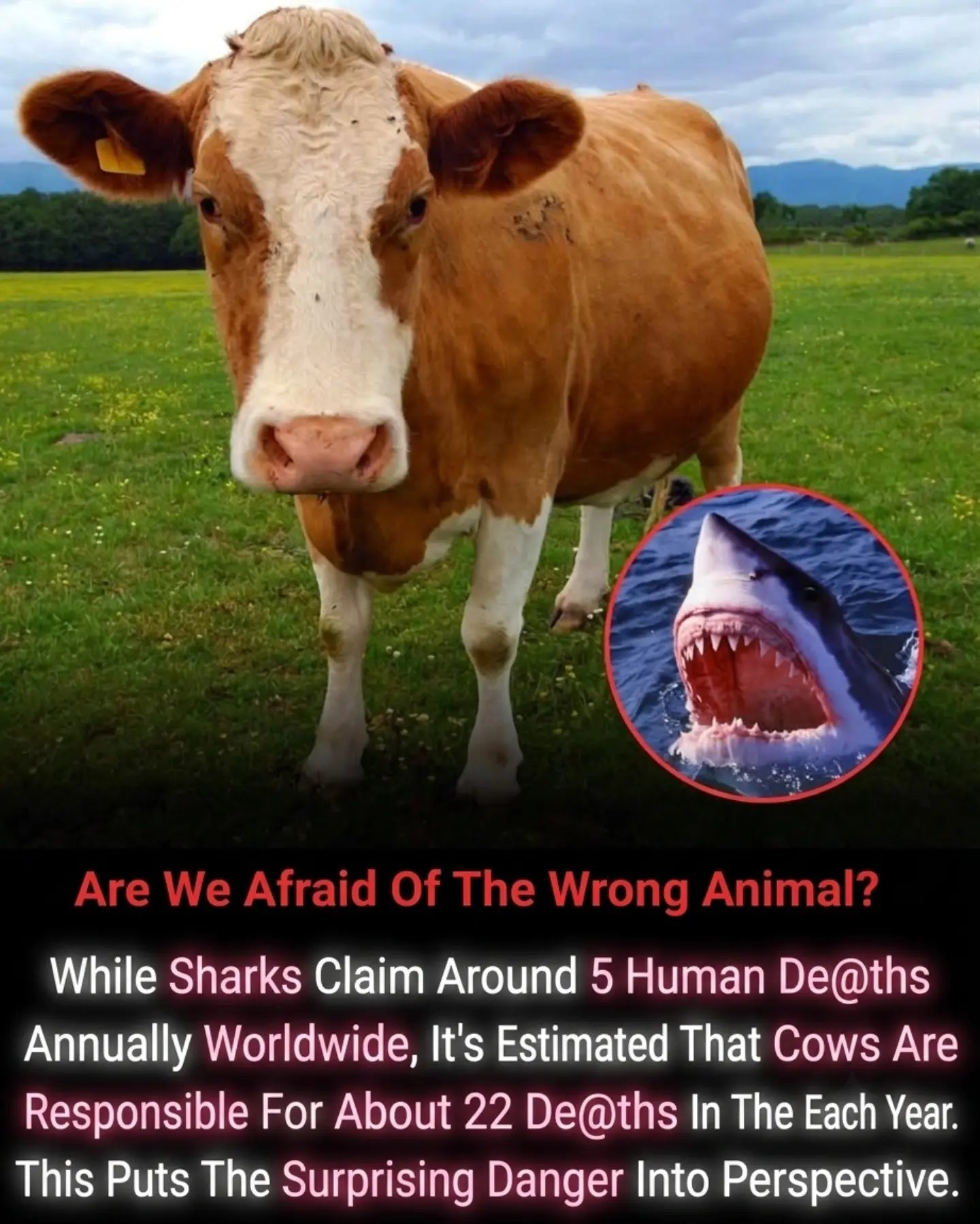
Cows vs. Sharks: The Surprising Dangers of Each
Modern understanding of animal dangers often skews towards dramatic encounters, like those with sharks. But when comparing the real risks, it's surprising to see the numbers. Cows hold the higher danger, causing more fatalities than sharks on an annual basis.
Context / Why This Matters
While movies like Jaws have conditioned many to fear sharks, the statistics tell a different story. Globally, unprovoked shark attacks lead to around five human deaths per year. In contrast, cows are responsible for about 22 deaths annually in the United States alone.
Notably, most incidents involving cows are not random acts of aggression. They typically occur due to humans interacting with large cattle, such as farm workers handling herds, bulls protecting their territory, or mother cows defending their calves. The sheer size and weight of cows make accidental encounters potentially fatal.
Deep Dive into the Numbers
Shark Danger: Myth vs. Reality
The perception of sharks as apex predators and human killers is largely fueled by popular culture. Movies and media often portray sharks as relentless, man-eating monsters. Globally, though, the data paints a different picture. Unprovoked shark attacks on humans are rare, with an estimated five fatalities per year worldwide. As shown in the comparison, people are statistically more likely to be struck by lightning than to die from a shark attack.
The Bovine Threat
Cows, on the other hand, pose a more significant threat to human life. Annually worldwide, cows are responsible for about 22 human deaths. These incidents often involve farm workers managing large herds or people encountering aggressive bulls or protective mother cows in close quarters.
Weighing up to 1,500 pounds, a cow's accidental step or sudden kick can cause serious injury or death. The nature of cow-related incidents emphasizes the importance of respecting these animals and understanding their behavior in various contexts.
Practical Tips for Safety
Around Sharks
While the risk of shark attacks is low, knowing basic safety protocols can further reduce the already minimal danger:
- Swim in Designated Areas: Always swim in areas monitored by lifeguards and follow their instructions.
- Avoid Dusk and Dawn: Sharks are more active during these times. Stick to swimming during daylight hours.
- Stay Close to Shore: Sharks generally prefer deeper waters. Swimming near the shore can reduce the risk of encountering a shark.
- Don't Swim Alone: It's safer to swim in groups. Sharks usually avoid larger groups of people.
Around Cows
Given the higher danger posed by cows, it's crucial to follow specific safety tips:
- Respect the Herd: Always maintain a safe distance from cattle, especially on farms and pastures.
- Avoid Sudden Movements: Sudden movements can startle cows, leading to defensive or aggressive behavior.
- Approach Calmly: If you must interact with cows, do so calmly and quietly.
- Be Aware of Bulls: Bulls can be particularly aggressive, especially when protecting their territory or calves.
- Farm Safety: For farm workers, wear appropriate protective gear and know how to handle large animals safely.
Important Takeaways
- Data Over Perception: Popular culture often exaggerates the dangers of sharks. The data show that cows pose a more significant risk.
- Safety Precautions: Understanding and respecting animal behavior can significantly reduce the risk of harmful encounters.
- Context Matters: The danger posed by cows is primarily related to human activities involving these animals, such as farm work and territorial behavior.
Conclusion
The surprising comparison between sharks and cows underscores the importance of data-driven understanding. While sharks may capture our imaginative fear, cows present a more tangible and significant risk. By acknowledging these statistics and following safety guidelines, we can better navigate our environments and respect the animals that share them.
Questions readers ask
Why are cows considered more dangerous than sharks?
Cows are considered more dangerous than sharks due to the higher number of human fatalities they cause annually. While sharks are often portrayed as dangerous in popular culture, cows are responsible for more deaths each year, particularly in environments where humans interact closely with them, such as on farms.
How many people die from shark attacks each year?
Globally, unprovoked shark attacks result in approximately five human deaths per year. This number is surprisingly low compared to the public's perception of shark danger, largely influenced by media and popular culture.
What are the main causes of cow-related deaths?
Most cow-related deaths do not stem from random acts of aggression. Instead, they typically occur during human interactions with large cattle, such as farm workers handling herds or dealing with bulls. These incidents often involve specific circumstances where humans are in close proximity to cows.
Are cow attacks on humans common?
Cow attacks on humans are more common than many people realize, especially in rural or farming communities. Unlike shark attacks, which are relatively rare, cow-related incidents happen more frequently due to the routine interactions between humans and cattle in various settings.
Why do cows cause more fatalities than sharks?
Cows cause more fatalities than sharks primarily because of the frequency and nature of human interactions with cows. In many parts of the world, people work closely with cattle, increasing the likelihood of incidents that can result in serious injuries or deaths.
How do the statistics on animal fatalities compare between cows and sharks?
The statistics on animal fatalities show a clear disparity between cows and sharks. Cows are responsible for about 22 deaths annually in the United States alone, while sharks cause around five deaths globally each year. This significant difference highlights the often-overlooked danger posed by cows.
Related deep dives
Similar reads based on topic and creator.

Recent articles
Fresh deep dives from the latest Reels we unpacked.




Comments
Be the first to comment.