AI Image Generation: A Comparative Look at Creative 3D Generation
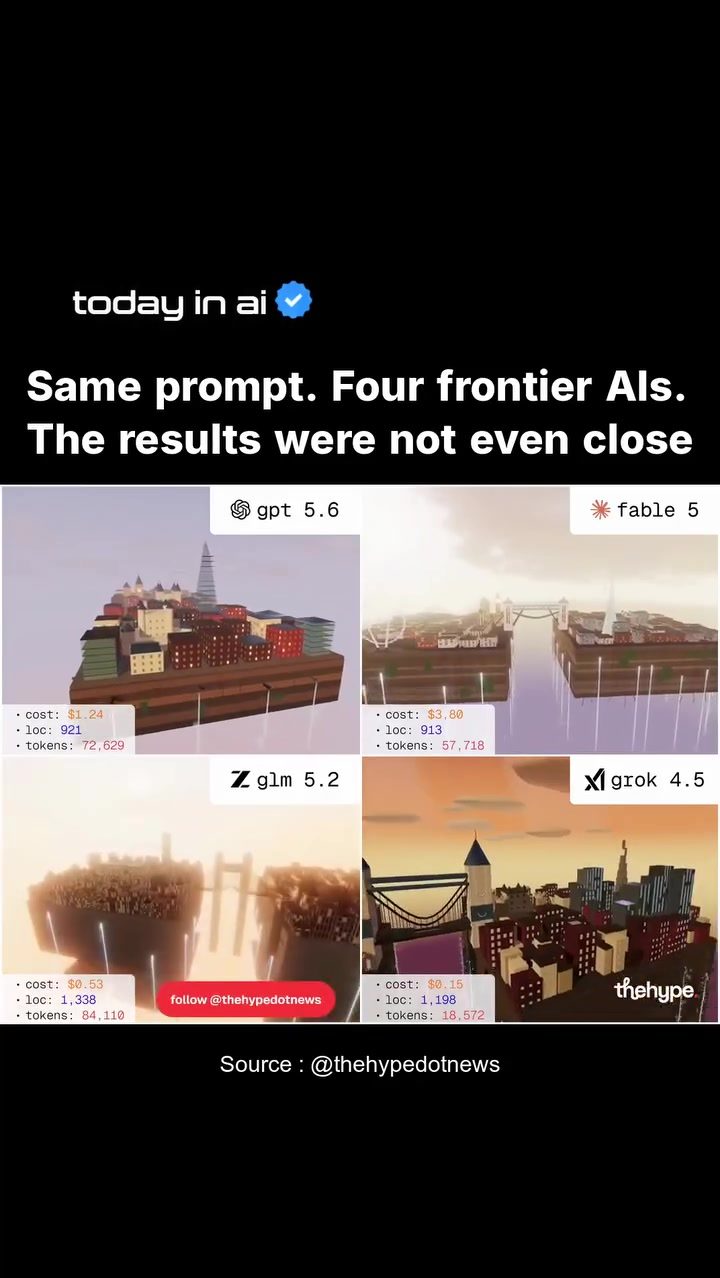
AI image generation has revolutionized the way we create and interact with digital art. This comparison of four frontier AI models—GPT-5.6, Claude Fable 5, Grok 4.5, and GLM 5.2—offers a clear view of how each model handles the same creative 3D generation task. The task at hand was to build floating island versions of Paris, London, and New York City entirely in the browser, from scratch. The results provide insightful comparisons of their capabilities and unique outputs.
Why This Matters
Understanding the strengths and weaknesses of different AI models is crucial for anyone involved in digital art, design, or even urban planning. By comparing these models, we can make better-informed decisions about which tools to use for specific projects. This comparison highlights the current state of AI in creative 3D generation, helping us gauge the direction of future advancements and applications.
Main Discussion
The Models in Comparison
GPT-5.6
GPT-5.6, known for its advanced language understanding, also delivers impressive results in image generation. When tasked with creating floating island versions of Paris, London, and NYC, GPT-5.6 produced highly detailed and visually appealing images. The model excels in capturing intricate architectural details and natural landscapes, making the floating islands look almost lifelike.
Claude Fable 5
Claude Fable 5 is another powerful AI model that stands out in this comparison. Its outputs are characterized by a unique artistic flair, blending realism with a touch of fantasy. The floating islands generated by this model feature imaginative structures and vibrant colors, giving them a whimsical and surreal atmosphere.
Grok 4.5
Grok 4.5 offers a more streamlined and efficient approach to image generation. Its outputs are clean and precise, focusing on the essential elements of the cityscapes. The floating islands created by Grok 4.5 are distinguished by their elegant simplicity and functional design, making them practical and visually pleasing.
GLM 5.2
GLM 5.2 brings a different style to the table, with a more abstract and conceptual approach. The floating islands generated by this model often feature abstract shapes and patterns, providing a unique and thought-provoking perspective. The outputs are visually striking, even if they deviate from realistic representations.
Variations in Output
The most notable aspect of this comparison is the significant variation in the outputs of each model. While all models were given the same prompt, their interpretations and execution differed greatly. This highlights the unique strengths and limitations of each model, showing that no single AI can be considered the best for all types of creative tasks.
Cost and Efficiency
Cost and efficiency are also crucial factors to consider when evaluating AI models. The comparison includes information on the cost and token usage for each model. For instance, GPT-5.6 and Claude Fable 5 have higher costs but deliver highly detailed and imaginative outputs. In contrast, Grok 4.5 and GLM 5.2 offer more cost-effective solutions, albeit with less intricate details. Understanding these trade-offs can help in choosing the right model for different projects and budgets.
Practical Tips
When working with AI image generation, it's important to consider the following:
-
Define Your Requirements: Clearly outline what you want to achieve with your AI-generated images. Whether it's detailed realism, abstract art, or functional design, different models excel in different areas.
-
Test Multiple Models: Don't settle for the first model you try. Experimenting with different models can help you find the one that best meets your needs.
-
Evaluate Costs: Consider the cost and efficiency of each model. Sometimes, a more cost-effective solution might be sufficient for your project, saving you resources in the long run.
-
Iterate and Refine: AI image generation is an iterative process. Don't be afraid to refine your prompts and parameters to get the best results.
-
Leverage Community Insights: Engage with communities and forums dedicated to AI image generation. Other users' experiences and tips can provide valuable insights.
Important Takeaways
The comparison of GPT-5.6, Claude Fable 5, Grok 4.5, and GLM 5.2 shows that each model has its unique strengths and limitations. The outputs vary significantly, highlighting the importance of choosing the right model for your specific needs. Additionally, cost and efficiency are crucial factors to consider when selecting an AI model for creative 3D generation.
Conclusion
The world of AI image generation is dynamic and ever-evolving. By understanding the capabilities and differences of various models, we can better leverage these tools to create stunning and innovative digital art. Whether you're a designer, artist, or urban planner, knowing which AI model to use for your project can make all the difference. This comparison of GPT-5.6, Claude Fable 5, Grok 4.5, and GLM 5.2 provides a valuable benchmark for understanding the current state of AI in creative 3D generation, helping you make informed decisions for your future projects.
Questions readers ask
What are the key differences between the 3D outputs of GPT-5.6, Fable 5, Grok 4.5, and GLM 5.2?
The key differences lie in their unique visual styles and capabilities. GPT-5.6 is known for its intricate details, while Fable 5 excels in creating dynamic and whimsical designs. Grok 4.5 is thought to produce more realistic and structured outputs, and GLM 5.2 is often praised for its innovative and sometimes surreal aesthetic.
How do these AI models handle the task of creating floating cityscapes for Paris, London, and New York?
Each model approaches the task with its own strengths. For instance, GPT-5.6 might focus on detailed architectural elements, Fable 5 could incorporate more organic and fantastical elements, Grok 4.5 might emphasize urban planning and structure, and GLM 5.2 could introduce unique, imaginative elements to the cityscapes.
What are the benefits of comparing these AI art models?
Comparing these models helps users understand which tool best fits their specific needs. Whether you're creating digital art, designing urban spaces, or simply exploring new creative possibilities, knowing the strengths and styles of each model allows for more informed decision-making and better results.
Which AI model is best for generating detailed and intricate floating cityscapes?
GPT-5.6 is often favored for generating highly detailed and intricate cityscapes. Its ability to focus on fine architectural details makes it a strong choice for projects that require a high level of precision and realism.
How does Fable 5 stand out in the realm of AI-generated floating cityscapes?
Fable 5 stands out for its dynamic and whimsical designs. It tends to incorporate more imaginative and fantastical elements, making it ideal for creative projects that benefit from a touch of magic and uniqueness.
Why is it important to understand the unique visual styles of different AI models?
Understanding the unique visual styles of different AI models helps artists and designers choose the right tool for their specific project. Whether you need realistic and structured outputs or imaginative and surreal designs, knowing the strengths of each model ensures you select the best fit for your creative vision.
Related deep dives
Similar reads based on topic and creator.




Recent articles
Fresh deep dives from the latest Reels we unpacked.




Comments
Be the first to comment.