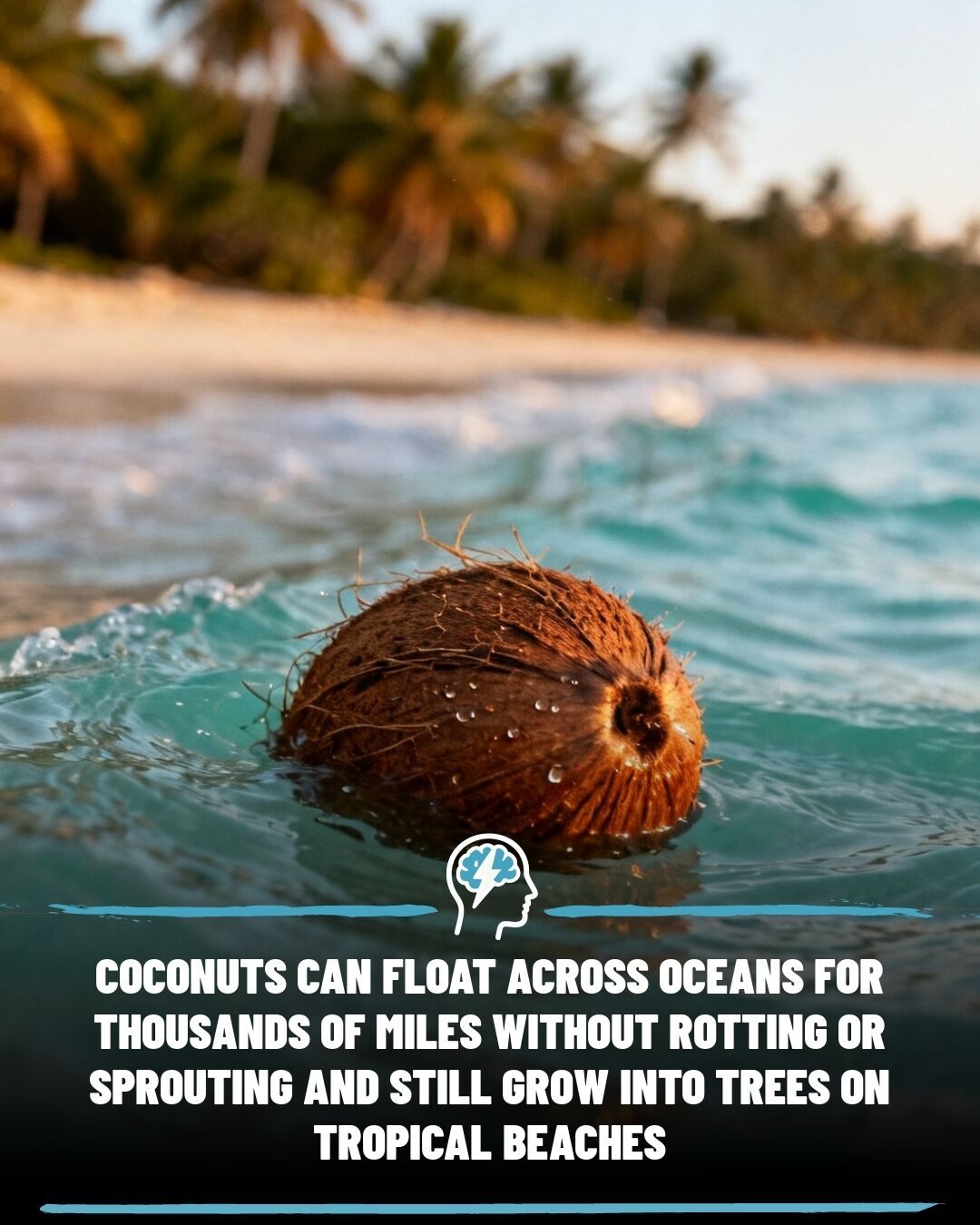
Coconut Floating
Coconuts are nature's remarkable voyagers, capable of drifting thousands of miles across open ocean and still sprouting into palm trees upon reaching shore. This natural phenomenon has facilitated the colonization of coastlines and remote islands throughout the tropics, showcasing the coconut's extraordinary survival strategies.
Why This Matters
The ability of coconuts to traverse vast ocean distances and still germinate is more than just a curious fact; it highlights the ingenious design of natural objects and their role in ecosystem dispersal. Understanding this process can offer insights into natural engineering, survival mechanisms, and the interconnectedness of ecosystems.
Main Discussion
The Journey of a Coconut
Imagine a coconut floating in turquoise water, bobbing with the waves as it journeys across the ocean. This journey is not just a serene sight; it is a testament to the coconut's resilience. Studies have shown that coconuts can remain viable for up to 110 days at sea, traveling approximately 4,800 kilometers while floating across the ocean. This remarkable endurance has allowed coconut palms to thrive on remote Pacific islands and other tropical regions, far from any mainland.
Natural Engineering of the Coconut
The structure of a coconut is a marvel of natural engineering. Several key features contribute to its ability to survive long ocean voyages:
-
Fibrous Husk: The thick, fibrous husk acts as a protective barrier, preventing saltwater from reaching the embryo inside. This layer is crucial for maintaining the integrity of the seed during its journey.
-
Hard Inner Shell: Beneath the husk, the hard inner shell provides additional protection against impacts and environmental stress. This shell ensures that the coconut can withstand the rigors of ocean travel.
-
Buoyant Cavity: An air-filled cavity within the nut keeps it buoyant, allowing it to float for extended periods without sinking. This buoyancy is essential for the coconut's long-distance travel.
-
Nutrient Reserves: Inside the coconut, the water and white meat serve as nutrient reserves for the developing seedling. These reserves are vital for germination once the coconut reaches shore.
Germination and Colonization
When a coconut finally washes ashore on a sandy beach or coral atoll, its internal resources fuel germination. Studies have shown that the seedling can establish roots even in challenging conditions, such as sterile coralline rocks just above sea level. This ability to germinate in harsh environments helps explain why coconut palms thrive on remote Pacific islands.
Practical Tips
For those interested in observing or utilizing this natural phenomenon, here are a few practical tips:
Observing Coconut Floating
- Beachcombing: Spend time on tropical beaches to spot coconuts that have washed ashore. Observe their condition and any signs of germination.
- Documentation: Take photographs or videos of coconuts in various stages of their journey, from floating in the ocean to sprouting on the beach.
Cultivating Coconut Palms
- Selection: Choose coconuts that show signs of viability, such as a firm husk and no visible damage.
- Planting: Plant the coconut in sandy soil or a well-draining pot. Ensure the coconut is partially buried with the pointed end up and the flat end down.
- Care: Keep the soil moist but not waterlogged. Coconut palms thrive in tropical climates with plenty of sunlight and warm temperatures.
Important Takeaways
Survival Strategies
The coconut's remarkable ability to survive long ocean voyages highlights several key survival strategies:
- Protective Barriers: The fibrous husk and hard inner shell protect the embryo from saltwater and environmental stress.
- Buoyancy: The air-filled cavity ensures the coconut can float for extended periods.
- Nutrient Reserves: The coconut water and white meat provide essential nutrients for germination.
- Adaptability: The seedling can establish roots in challenging conditions, such as sterile coralline rocks.
Ecological Significance
The ability of coconuts to colonize remote islands and coastlines underscores their ecological significance. Coconut palms play a vital role in shaping tropical ecosystems, providing habitat, food, and resources for various species. Their natural dispersal mechanisms contribute to biodiversity and ecosystem resilience.
Insights for Human Design
Nature's packaging solutions often outperform human designs. The coconut's structure and survival mechanisms offer valuable lessons for engineers and designers. By studying natural objects, we can gain inspiration for developing more efficient and sustainable technologies.
Conclusion
The journey of a coconut from the open ocean to a tropical beach is a testament to nature's ingenious design. Through its protective barriers, buoyancy, and nutrient reserves, the coconut can survive harsh conditions and germinate in remote locations. This natural phenomenon not only highlights the coconut's remarkable survival strategies but also underscores its ecological significance and the potential for human design inspiration. The next time you encounter a coconut, consider the epic voyage its ancestors may have taken to reach new shores, reminding us of the interconnectedness of our natural world.
Questions readers ask
How do coconuts travel such long distances at sea?
Coconuts travel long distances at sea by drifting on ocean currents. The fibrous husk of the coconut acts as a natural buoy, allowing it to float and withstand the rigors of saltwater and waves. This remarkable design has evolved to facilitate the coconut's journey across thousands of miles of ocean.
What happens when a coconut reaches the shore after drifting?
Upon reaching the shore, a coconut will begin to germinate if the conditions are right. The seed inside the coconut will sprout into a new palm tree, given the right balance of sunlight, water, and soil. This process has significantly contributed to the spread of coconut palms across tropical regions.
Can coconuts float indefinitely in seawater?
Coconuts can float for extended periods, but they won't last indefinitely. The husk, which is the fibrous outer layer, can remain buoyant for months, but it will eventually degrade. The viability of the seed inside can also decrease over time, especially if exposed to prolonged seawater immersion or extreme conditions. So while they have a remarkable ability to drift long distances, they do have limits.
How does the coconut's natural design aid in its ocean travel?
The coconut's natural design, including its fibrous husk and buoyant endocarp (inner shell), allows it to float and withstand the harsh conditions of the open ocean. The design also helps to protect the seed inside, ensuring it remains viable for germination once it reaches land. This design is a key factor in the coconut's ability to travel long distances and colonize new areas.
What role do coconuts play in the spread of tropical palm trees?
Coconuts play a crucial role in the spread of tropical palm trees by acting as natural dispersal agents. As they drift across the ocean, coconuts can reach remote islands and distant shores, where they can grow into new palm trees. This process, driven by the coconut's resilience and natural design, has facilitated the colonization of coastlines and the establishment of new palm tree populations in tropical regions.
How do coconuts survive the saltwater environment during their journey?
Coconuts survive the saltwater environment through their tough, fibrous husk, which provides buoyancy and protection. The inner layers of the coconut also help to safeguard the seed from saltwater damage, although prolonged exposure can eventually affect the seed's viability. This resilience allows coconuts to endure the challenges of ocean drift and still have the potential to grow into new trees upon reaching suitable land.
What are some of the challenges coconuts face during their ocean voyage?
During their ocean voyage, coconuts face several challenges, including degradation from seawater, exposure to extreme temperatures, and potential damage from marine life. The coconut's fibrous husk and robust shell help to mitigate some of these risks, but the journey can still be harsh and unpredictable, affecting the coconut's ability to germinate once it reaches shore.
Related deep dives
Similar reads based on topic and creator.




Recent articles
Fresh deep dives from the latest Reels we unpacked.




Comments
Be the first to comment.