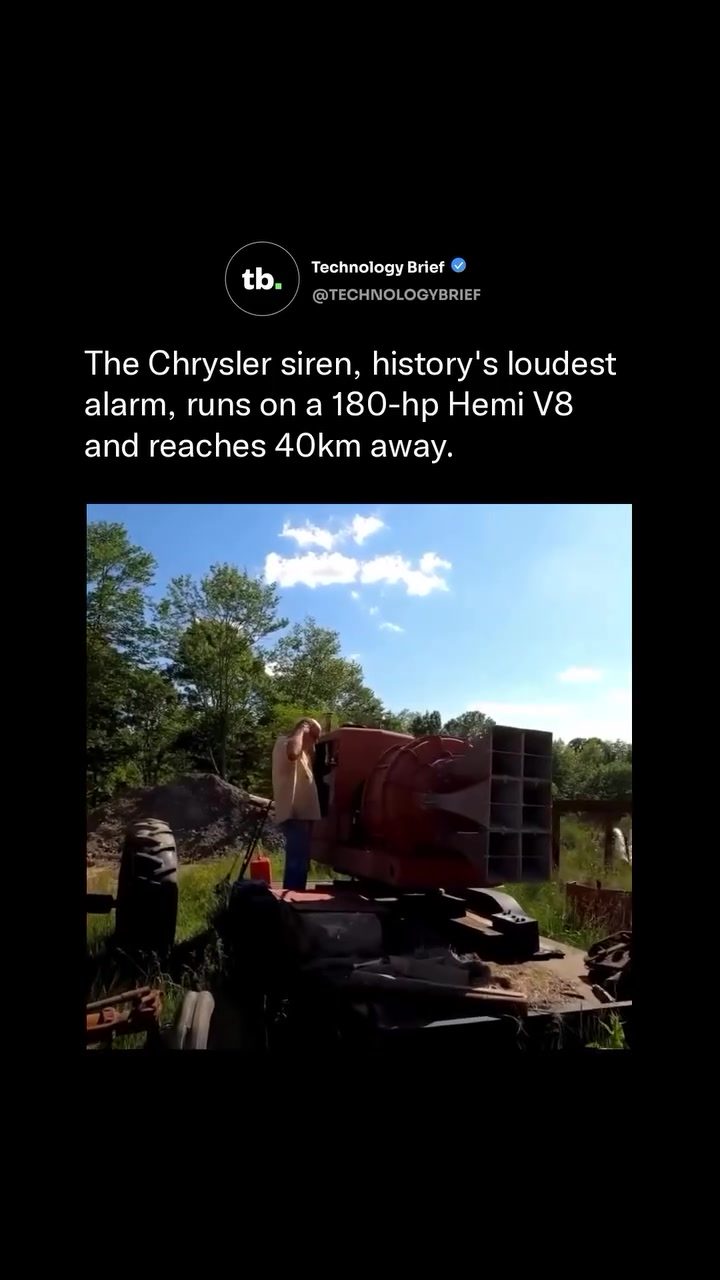
Chrysler Air Raid Siren: An Unmatched Historical Alarm
The Chrysler Air Raid Siren, known as the loudest siren ever built, is a remarkable feat of engineering developed during the Cold War. Produced between 1952 and 1957, this 12-foot-long, 3-ton behemoth was designed to warn entire cities of impending nuclear attacks. Powered by a 180-horsepower Hemi V8 engine, the same engine found in Chrysler’s cars at the time, the siren's capabilities are nothing short of astonishing.
Why This Matters
The Chrysler Air Raid Siren is more than just a piece of historical machinery; it's a testament to the ingenuity and innovation of its time. Understanding its design, functionality, and impact provides valuable insights into the technological advancements of the Cold War era and the measures taken to ensure public safety during an incredibly tense period.
The Engineering Marvel of the Chrysler Air Raid Siren
Specifications and Performance
The Chrysler Air Raid Siren is a marvel of engineering. Powered by a 180-horsepower Hemi V8 engine, the siren can produce a deafening 138 decibels at 100 feet, equivalent to the volume of a jet engine at that distance. Its sound can reportedly be heard up to 25 to 30 miles away on a clear day. The sheer power of the sound is said to be so intense that it could turn fog into rain and start fires through sheer vibration alone.
Historical Context
Developed during the Cold War, the siren was a critical component of the civil defense infrastructure in major U.S. cities. About 350 of these sirens were built and installed in cities such as New York, Chicago, and Los Angeles. They were intended to serve as an early warning system, giving residents precious time to seek shelter in the event of a nuclear attack. With the end of the Cold War, most of these sirens were decommissioned and torn down. However, a small number remain in museums, private collections, and a few original rooftop locations where the cost of removal outweighed the value of the scrap.
Impact on Public Safety and Civil Defense
The impact of the Chrysler Air Raid Siren on public safety and civil defense is undeniable. The siren's design and capabilities were a response to the very real threat of nuclear warfare, which loomed large over the world during the Cold War. Its deployment ensured that cities had a crucial warning system in place, potentially saving countless lives. Today, these sirens stand as a reminder of the technological advancements and public safety measures that were implemented during a period of global tension.
Demonstration and Testimonials
The demonstration of the Chrysler Air Raid Siren is a sight to behold. The activation of the siren sends shockwaves through the surrounding environment, with dust flying and machinery seemingly agitated by the intense sound. The reaction of the people nearby, described as 'not happy,' underscores the sheer power and intimidating nature of the siren. Testimonials from the era often highlight the effectiveness of the siren in alerting large populations quickly and efficiently.
Practical Tips for Understanding and Maintaining Industrial Siren Systems
Regular Maintenance and Safety Checks
While the Chrysler Air Raid Siren is a specific historical example, the principles of maintaining industrial sirens remain relevant. Regular maintenance and safety checks are crucial. Ensure that the siren's engine and mechanical components are in optimal condition. Regular inspections can prevent malfunction and ensure that the siren is ready to operate when needed.
Proper Installation and Placement
The effectiveness of an industrial siren depends heavily on its installation and placement. Sirens should be installed at strategic locations that maximize their reach and minimize obstructions. For optimal performance, consider the topography and surrounding structures when choosing a site for installation.
Upgrading and Modernizing Systems
As technology advances, so should the systems designed to protect the public. Consider upgrading older siren systems with modern technology. This can include integrating digital controls, enhancing sound quality, and incorporating advanced warning systems that can alert different demographics through multiple channels.
Important Takeaways
When examining the Chrysler Air Raid Siren, several important takeaways emerge:
-
Power and Reach: The siren’s capabilities, powered by a 180-horsepower Hemi V8 engine, are unmatched. It can produce 138 decibels at 100 feet and be heard up to 25-30 miles away.
-
Historical Significance: The siren played a pivotal role during the Cold War, serving as an essential warning system in major U.S. cities.
-
Technological Innovation: The engineering and design of the siren represent a high level of technological innovation for its time.
-
Public Safety: The siren's deployment ensured that cities had a crucial warning system, potentially saving countless lives.
-
Modern Relevance: While most sirens have been decommissioned, a small number remain, serving as historical artifacts and reminders of past technological advancements.
Conclusion
The Chrysler Air Raid Siren is a testament to human ingenuity and a stark reminder of the technological advancements and public safety measures implemented during the Cold War. Its design, capabilities, and impact on civil defense make it a fascinating subject for anyone interested in industrial engineering, historical technology, and public safety.
Questions readers ask
How loud was the Chrysler Air Raid Siren in comparison to other sounds?
The Chrysler Air Raid Siren was incredibly loud, producing 138 decibels at 100 feet. To put this into perspective, a typical conversation is around 60 decibels, and a jet engine at takeoff is about 140 decibels. The siren was designed so that people in cities could hear the sound from far away.
Why was the Chrysler Air Raid Siren so large and heavy?
The siren was 12 feet long and weighed 3 tons. Its size and weight were due to the powerful 180-horsepower Hemi V8 engine it was powered by. The engine was the same engine found in Chrysler’s cars at the time, but it was scaled up and adapted to power the siren and allow it to produce an incredibly loud sound.
How was the Chrysler Air Raid Siren used during the Cold War?
The Chrysler Air Raid Siren was a crucial part of the emergency alert systems during the Cold War. It was designed to warn entire cities of impending nuclear attacks, providing a clear and loud signal to alert civilians to seek shelter immediately. The siren was used to cover vast distances, ensuring that people in both urban and suburban areas could hear the alarm.
What made the Chrysler Air Raid Siren a remarkable engineering achievement?
The combination of a powerful 180-horsepower Hemi V8 engine and an innovative design made the Chrysler Air Raid Siren a remarkable feat of engineering. Its ability to produce a deafening 138 decibels at 100 feet and cover vast distances was unmatched by any other alarm system at the time. This achievement showcased the technological advancements of the Cold War era.
How did the Chrysler Air Raid Siren impact historical alarm systems?
The Chrysler Air Raid Siren set a new standard for alarm systems during its time. It demonstrated what could be achieved with powerful engines and innovative design. Its impact can still be seen in modern alarm systems, which continue to build on the principles and technological advancements pioneered by the Chrysler Air Raid Siren.
Why was the Hemi V8 engine chosen to power the Chrysler Air Raid Siren?
The 180-horsepower Hemi V8 engine was chosen because it was a reliable and powerful engine known for its performance. It was already being used in Chrysler’s cars, which made it a practical choice for powering the siren. The engine’s robustness and power output were essential for generating the incredibly loud sound needed for the siren to effectively warn entire cities.
Related deep dives
Similar reads based on topic and creator.




Recent articles
Fresh deep dives from the latest Reels we unpacked.




Comments
Be the first to comment.