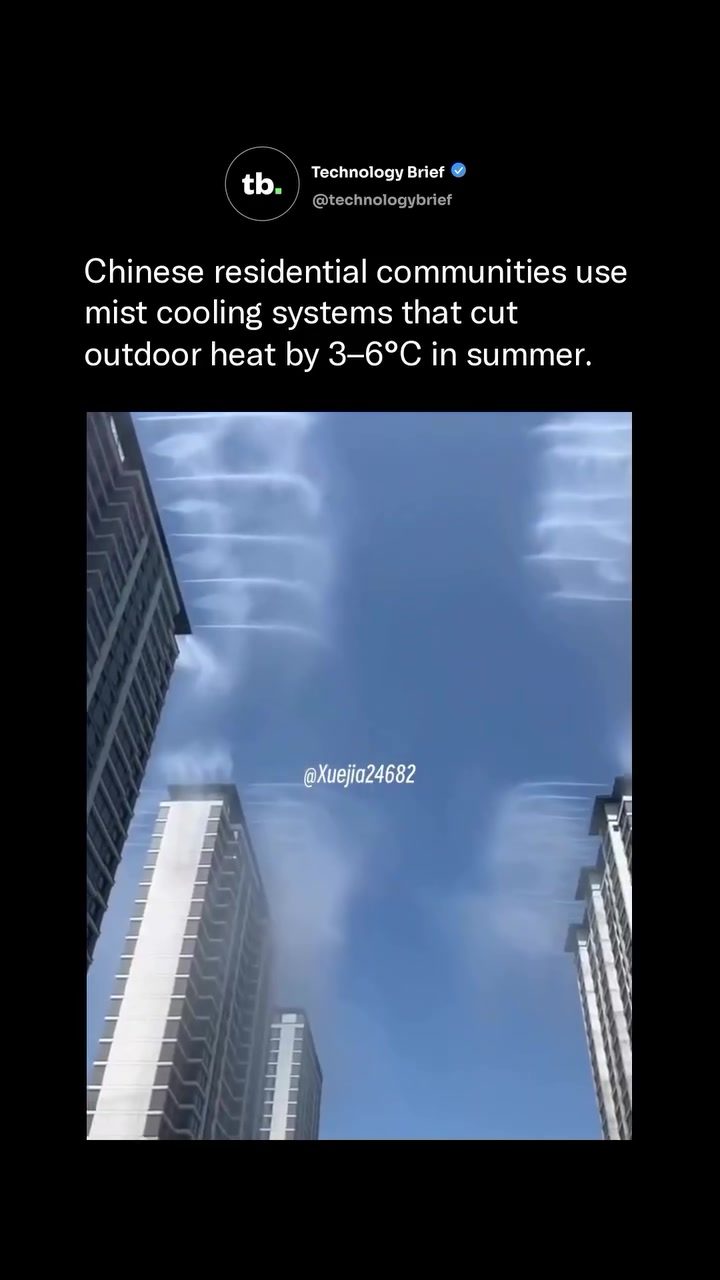
Mist Cooling Systems in Chinese Residential Communities
Mist cooling systems are becoming an increasingly popular solution in Chinese residential communities, offering a practical way to mitigate the intense summer heat. These systems, installed directly into rooftops, spray a fine mist of water that evaporates quickly, effectively pulling heat out of the surrounding air. This method can significantly reduce outdoor temperatures, making courtyards, walkways, and garden spaces more comfortable during the hottest months of the year.
Context / Why this matters
China has been experiencing increasingly intense summer heat, particularly in major cities like Shanghai, Chongqing, and Guangzhou, where temperatures often exceed 35°C. This rising heat poses significant challenges, not just for comfort, but also for public health and energy consumption. Traditional air conditioning, while effective, can exacerbate the urban heat island effect by releasing waste heat into the city streets. Mist cooling systems provide a lower-energy alternative, helping to cool outdoor spaces without contributing to this problem.
Main discussion
How Mist Cooling Systems Work
Mist cooling systems operate on the principle of evaporative cooling. Water absorbs a large amount of heat as it transitions from a liquid to a vapor. When high-pressure nozzles spray a fine mist of water, the water droplets evaporate rapidly, absorbing heat from the surrounding air.
This process can drop outdoor temperatures by 3 to 6 degrees Celsius in the immediate area. The fine mist creates a cooling effect that makes outdoor spaces more bearable during the summer.
Benefits of Mist Cooling Systems
One of the primary benefits of mist cooling systems is their energy efficiency. Unlike traditional air conditioning, which requires significant electrical power and can increase urban heat, mist cooling systems use a minimal amount of energy. The water mist evaporates quickly, absorbing heat without the need for complex machinery or extensive energy consumption.
Additionally, these systems can be integrated into the architecture of residential buildings, making them a practical and aesthetically pleasing solution. The misting systems can be installed on rooftops, where they are less obtrusive and can deliver a cooling effect directly to the areas where it is most needed.
Applications and Implementation
Residential communities are not the only beneficiaries of these systems. Mist cooling systems have shown promise in a variety of settings, including:
- Public Spaces: Parks, playgrounds, and pedestrian areas in urban centers benefit from mist cooling, making these spaces more accessible and comfortable for the public.
- Industrial Settings: Factories and warehouses can use mist cooling to cool down machinery and reduce the thermal load on workers.
- Agriculture: Greenhouses and farmland can utilize mist cooling to protect crops from extreme heat, ensuring a more stable yield.
Environmental and Economic Impact
The environmental impact of mist cooling systems is generally positive. They reduce the need for energy-intensive air conditioning, which in turn decreases greenhouse gas emissions. Moreover, these systems can lower water usage compared to other cooling methods, making them a sustainable choice.
Economically, mist cooling systems offer a cost-effective solution for both residential and commercial properties. The initial investment is relatively low, and the long-term savings in energy costs can be significant.
Practical tips
Installation and Maintenance
When considering mist cooling systems, it's important to factor in the installation and maintenance requirements. Professional installation is crucial to ensure that the nozzles are correctly positioned and that the water supply is adequately managed. Regular maintenance, including cleaning the nozzles and checking the water supply, can help ensure optimal performance.
Choosing the Right System
Before installing a mist cooling system, assess the specific needs of your space. Consider factors such as the area to be cooled, the climate, and the budget. Consulting with a professional can help determine the best system for your needs, ensuring you get the most out of your investment.
Maximizing Efficiency
To maximize the efficiency of a mist cooling system, consider the following tips:
- Positioning: Position the nozzles to cover the areas where cooling is most needed.
- Timing: Operate the system during the hottest parts of the day for maximum effectiveness.
- Water Quality: Ensure the water used in the system is clean and free from impurities to prevent clogging of the nozzles.
Important takeaways
Mist cooling systems are a highly effective and eco-friendly solution for cooling outdoor spaces in residential communities, particularly in regions with intense summer heat. These systems operate on the principle of evaporative cooling, which can significantly reduce outdoor temperatures and improve comfort in courtyards, walkways, and garden spaces.
The key benefits include energy efficiency, cost-effectiveness, and environmental sustainability. Proper installation and maintenance are crucial for optimal performance, and consulting with professionals can help ensure the best outcomes.
Conclusion
As China and other regions continue to grapple with rising summer temperatures, mist cooling systems offer a practical and sustainable solution. By reducing the need for energy-intensive air conditioning, these systems not only make outdoor spaces more comfortable but also contribute to a more sustainable urban environment.
Questions readers ask
How do rooftop mist cooling systems work to cool outdoor spaces in China?
Rooftop mist cooling systems work by spraying a fine mist of water that evaporates quickly. This evaporation process absorbs heat from the surrounding air, effectively lowering the temperature in outdoor spaces such as courtyards and walkways. This makes these areas significantly more comfortable during the intense summer heat.
Which cities in China are most benefiting from rooftop mist cooling systems?
Major cities in China, such as Shanghai, Chongqing, and Guangzhou, are particularly benefiting from rooftop mist cooling systems. These cities often experience temperatures exceeding 35°C during the summer, making effective cooling solutions crucial for outdoor comfort.
What is the urban heat island effect, and how do mist cooling systems help mitigate it?
The urban heat island effect refers to the phenomenon where urban areas are significantly warmer than their surrounding rural areas due to human activities and the lack of vegetation. Mist cooling systems help mitigate this effect by reducing outdoor temperatures, which can lower the overall heat in residential communities and improve the local environment.
Are mist cooling systems an energy-efficient solution for combating summer heat?
Yes, mist cooling systems are considered energy-efficient. Unlike traditional air conditioning, which requires significant electrical power, mist cooling systems use minimal energy to operate the pumps and nozzles that create the fine water mist. This makes them a cost-effective and eco-friendly solution for cooling outdoor spaces.
Can mist cooling systems be installed in any residential community?
Mist cooling systems can be installed in most residential communities, particularly in those with available rooftop space. The installation process is relatively straightforward, involving the setup of water pumps, nozzles, and a basic control system. Professional installation is recommended to ensure optimal performance and safety.
How effective are mist cooling systems in reducing temperatures during the summer?
Mist cooling systems can effectively reduce outdoor temperatures by several degrees, making them a practical solution for summer heat management. The fine mist evaporates rapidly, pulling heat out of the air and creating a cooler, more comfortable environment in residential courtyards, walkways, and garden spaces.
Are there any environmental benefits to using mist cooling systems?
Yes, mist cooling systems offer several environmental benefits. By reducing the need for traditional air conditioning, these systems help lower energy consumption and greenhouse gas emissions. Additionally, the rapid evaporation of the fine mist can contribute to local humidity, supporting the surrounding vegetation and improving the overall microclimate.
Related deep dives
Similar reads based on topic and creator.




Recent articles
Fresh deep dives from the latest Reels we unpacked.




Comments
Be the first to comment.