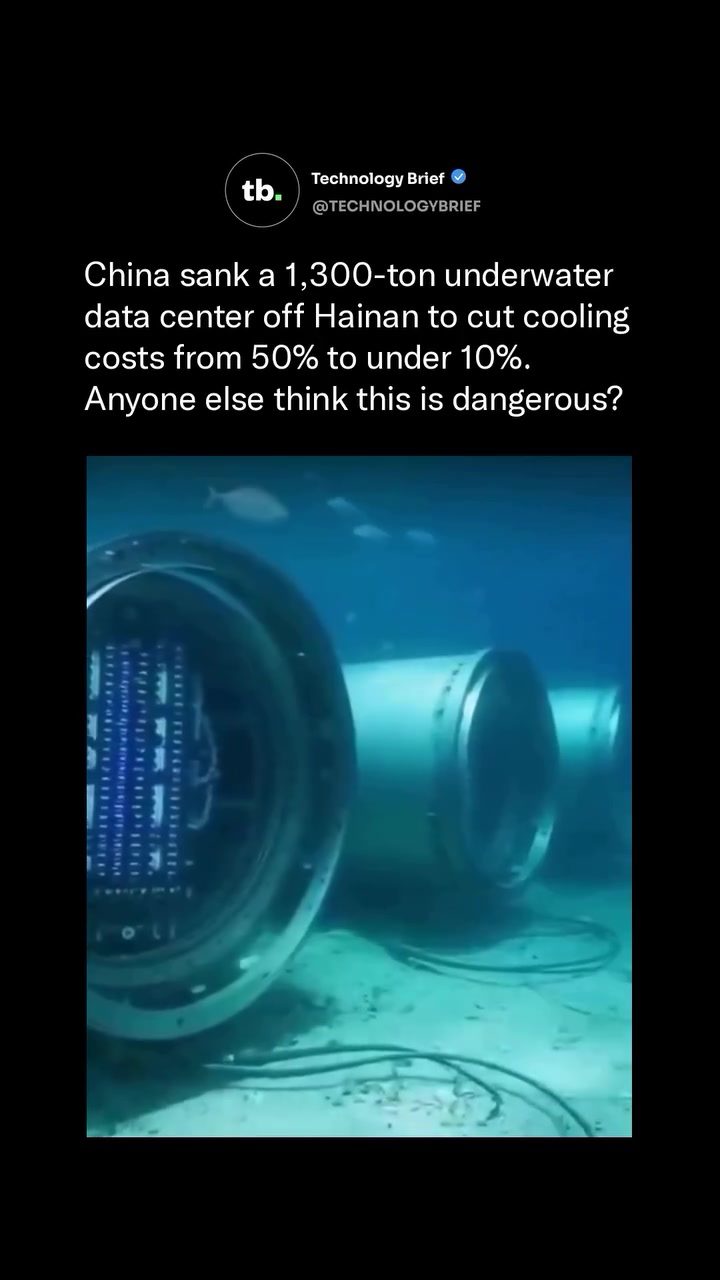
Submerged Data Center
China has launched the world's first commercial underwater data center off the coast of Lingshui, Hainan Island. This innovative project, operated by Shenzhen HiCloud Data Centre Technology, is a significant step in the evolution of data center design and operation. The cylindrical steel cabins, each weighing 1,300 tons and housing 24 server racks that can hold up to 500 servers, are submerged 35 meters below the surface of the South China Sea. Submarine cables connect these pods to a shore station, and the entire system is engineered to operate for 25 years.
Why This Matters
The primary motivation behind this underwater data center is energy efficiency. Traditional land-based data centers spend roughly half their energy on cooling to prevent servers from overheating, but the underwater design leverages the cold seawater for natural cooling, reducing that cooling cost to under 10%. This not only cuts operational costs but also has significant environmental benefits. The underwater data center is estimated to save 105,000 tons of freshwater and 122 million kilowatt-hours of electricity every year.
The Technical Underpinnings
Location and Design
Situated off the coast of Lingshui, Hainan Island, the underwater data center is strategically placed to take advantage of the cold waters of the South China Sea. The cylindrical design of the steel cabins is not arbitrary; it is chosen for its structural integrity and efficiency in withstanding underwater pressure. Each cabin is designed to withstand the harsh conditions of the ocean floor while ensuring the safety and functionality of the servers housed within.
Cooling Mechanism
The cooling mechanism is the heart of this innovation. Traditional data centers use complex and energy-intensive air conditioning systems to manage server temperatures. In contrast, the underwater design relies on the natural cooling properties of seawater. Seawater is pumped through heat exchangers, absorbing the heat generated by the servers and dissipating it into the surrounding water. This passive cooling method significantly reduces the energy required for cooling, making the underwater data center a more sustainable and cost-effective solution.
Connectivity and Data Transfer
Despite being submerged, the underwater data center is not isolated. Submarine cables connect the pods to a shore station, ensuring seamless data transfer and operation. This connection is crucial for maintaining the functionality of the data center, allowing it to handle large volumes of data and support high-demand applications. The system is designed to manage the equivalent of 7,000 DeepSeek AI conversations per second, showcasing its high processing capabilities.
Practical Tips for Future Submerged Data Centers
Environmental Considerations
When planning for future underwater data centers, it is essential to consider the environmental impact. While the cooling design is eco-friendly, the underwater environment itself must be protected. Ensuring that the data center does not disrupt marine life or the local ecosystem is crucial. Regular monitoring and maintenance can help mitigate any potential environmental risks.
Structural Integrity
The structural integrity of the data center is paramount. The cabins must be designed to withstand the pressures and conditions of the underwater environment. Regular inspections and advanced materials can ensure the longevity and safety of the structure. Innovations in materials science and engineering can further enhance the durability of these installations.
Connectivity and Maintenance
Seamless connectivity and ease of maintenance are key considerations. Submarine cables must be robust and reliable to ensure uninterrupted data transfer. Additionally, maintenance protocols should be in place to address any issues that may arise. Remote monitoring systems and periodic maintenance visits can help maintain the efficiency and reliability of the data center.
Important Takeaways
Sustainability and Efficiency
The underwater data center exemplifies a sustainable and efficient approach to data management. By leveraging natural cooling, it reduces energy consumption and operational costs. This model can serve as a blueprint for future data centers, promoting sustainability without compromising performance.
Technological Innovation
The project demonstrates the potential of technological innovation in addressing real-world challenges. The underwater design and connectivity solutions represent significant advancements in data center technology, paving the way for more efficient and environmentally friendly data management solutions.
Future Prospects
Hainan's government plans to build 100 of these underwater cabins as part of a broader push to grow China’s digital and ocean economy. This initiative highlights the potential for underwater data centers to become a cornerstone of future technological infrastructure, supporting digital transformation and economic growth.
Conclusion
The launch of the underwater data center off the coast of Hainan Island is a pioneering effort in the realm of data center design and operation. By harnessing the natural cooling properties of seawater, this innovative solution reduces energy consumption, operational costs, and environmental impact. As we move towards a more sustainable future, such technological advancements will play a crucial role in shaping the digital landscape. The underwater data center not only sets a new standard for efficiency and sustainability but also opens up exciting possibilities for future technological developments in data management.
Questions readers ask
Why did China choose to build an underwater data center?
China's underwater data center is built to harness the benefits of seawater for cooling, which reduces energy consumption compared to traditional land-based centers.
How does the underwater data center utilize seawater?
The submerged data center uses the natural cooling properties of the surrounding seawater to regulate the temperature of the server units, eliminating the need for traditional, energy-intensive cooling systems.
How many servers can the underwater data center house?
Each cylindrical steel cabin in the underwater data center can hold up to 24 server racks, accommodating a total of up to 500 servers.
What are the environmental benefits of this underwater data center?
By utilizing seawater for cooling, the underwater data center significantly reduces its carbon footprint and energy demands, contributing to a more sustainable approach to data management.
How long is the underwater data center designed to operate?
The entire underwater data center system is designed and engineered to operate continuously for 25 years, showcasing its durability and long-term viability.
Related deep dives
Similar reads based on topic and creator.




Recent articles
Fresh deep dives from the latest Reels we unpacked.




Comments
Be the first to comment.