Hypersonic Plane Development: Revolutionizing Global Travel
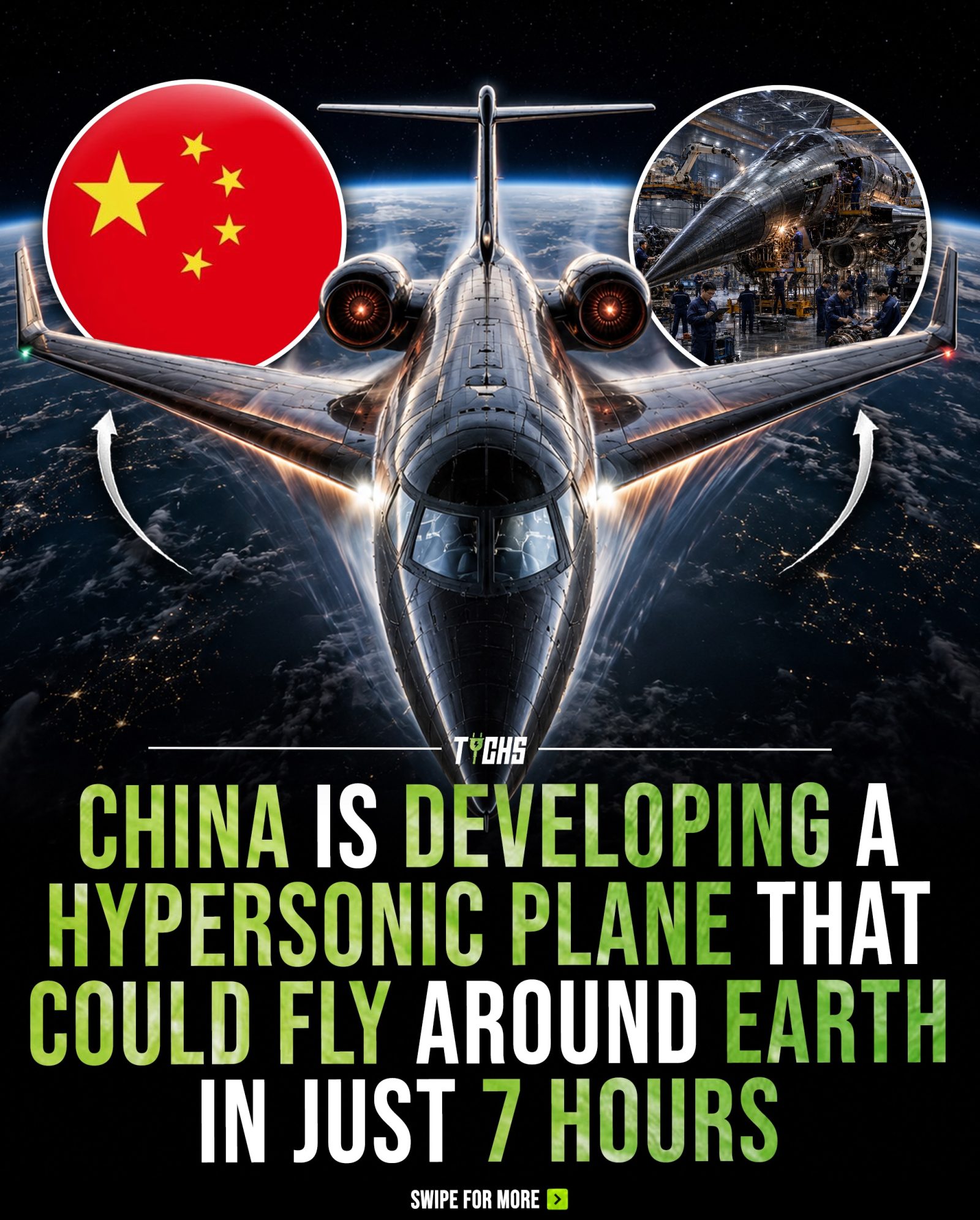
China is paving the way for a new era of global travel with the development of a hypersonic passenger aircraft. This innovative project, led by the company Space Transportation, aims to revolutionize intercontinental travel by dramatically reducing flight times. The aircraft is designed to fly at Mach 4, making it more than twice as fast as the legendary Concorde and setting the stage for ultra-fast global travel.
Context / Why this matters
The development of a hypersonic plane in China represents a significant leap forward in aerospace technology. The ability to fly around the Earth in just 7 hours could transform the way we think about long-distance travel. This advancement is not just about speed; it's about efficiency, sustainability, and global connectivity. As the world becomes more interconnected, the demand for faster and more efficient travel solutions continues to grow. Hypersonic travel could make distant destinations more accessible, facilitate quicker emergency response, and open up new possibilities for global trade and business.
Main discussion
The Technology Behind Hypersonic Planes
Hypersonic planes operate at speeds exceeding Mach 5, or five times the speed of sound. This incredible speed is achieved through advanced propulsion systems and aerodynamic designs that reduce drag and improve efficiency. The hypersonic plane being developed in China is designed to fly at Mach 4, which is significantly faster than conventional commercial jets. This speed is made possible by operating in near-space, where the air is thinner and resistance is lower. The aircraft is also designed to operate at extremely high altitudes, above 60,000 feet, which reduces the impact of turbulence and weather conditions.
The Role of Space Transportation
Space Transportation, also known as Lingkong Tianxing, is at the forefront of this groundbreaking project. The company is focused on developing near-space technology, which involves operating at the edge of space, where the air is thin enough to significantly reduce drag but still within the Earth's atmosphere. This approach allows for faster and more efficient travel, making it possible to cover long distances in a fraction of the time required by conventional aircraft. By leveraging this technology, Space Transportation aims to create a new standard for global air travel.
The Future of Global Air Travel
The potential impact of hypersonic planes on global air travel is immense. Imagine being able to travel from Beijing to New York in just two hours, instead of the current half-day journey. This transformation would not only save time but also open up new opportunities for business, tourism, and emergency response. Hypersonic travel could make it possible to conduct business across continents in a single day, enabling faster decision-making and more efficient operations.
The development of a hypersonic aircraft represents a significant advancement for China and the global aerospace industry. The aircraft's speed and efficiency could lead to new opportunities for tourism, business, and emergency response. However, there are still challenges to overcome. The development of hypersonic technology requires significant investment in research and development, as well as regulatory approval and infrastructure development. Moreover, ensuring the safety and reliability of hypersonic planes is a complex task that will require extensive testing and validation.
The Potential Benefits and Challenges
Hypersonic planes offer numerous potential benefits, including faster travel times, reduced environmental impact, and increased global connectivity. However, there are also challenges to consider. Hypersonic travel requires advanced materials and propulsion systems, which are still in the early stages of development. Safety and regulation are also major concerns, as hypersonic planes will need to meet rigorous standards before they can be commercially deployed. Additionally, the high speeds and extreme conditions associated with hypersonic travel could pose challenges for passenger comfort and safety.
Practical tips
For potential travelers
-
Stay Informed: Keep an eye on updates from Space Transportation and other aerospace companies working on hypersonic technology. As the technology advances, more information will become available on its potential benefits and risks.
-
Consider Sustainability: Look at the environmental impact of hypersonic travel. Hypersonic planes could potentially reduce emissions by reducing travel times and operating at higher altitudes, but this will require careful consideration of their overall environmental impact.
For industry professionals
-
Explore Partnerships: Aerospace companies and investors should consider partnering with Space Transportation and other innovators in the field. Collaboration can accelerate the development and deployment of hypersonic technology.
-
Invest in Research: Continued investment in research and development is crucial for overcoming the technical challenges associated with hypersonic travel. This includes advancing materials science, propulsion technologies, and safety measures.
Important takeaways
- Hypersonic planes offer the potential to revolutionize global travel by dramatically reducing flight times.
- The development of a hypersonic plane by China, led by Space Transportation, represents a significant advancement in aerospace technology.
- The ability to fly at Mach 4 and operate in near-space could transform the way we think about long-distance travel, making it faster, more efficient, and more sustainable.
- While there are significant benefits to hypersonic travel, there are also challenges to overcome, including technical, safety, and regulatory considerations.
Conclusion
The development of a hypersonic plane by China could reshape the future of aviation and global travel. With the ability to fly around the Earth in just 7 hours, this innovative project has the potential to transform the way we think about long-distance travel. As the technology continues to advance, it will be crucial to address the challenges associated with hypersonic travel, including safety, regulatory, and environmental considerations. However, the potential benefits are immense, and the development of hypersonic planes could pave the way for a new era of global connectivity and efficiency.
Questions readers ask
What is the speed of the hypersonic plane being developed in China?
The hypersonic plane being developed in China is designed to fly at Mach 4, which is approximately 3,000 miles per hour, or four times the speed of sound.
How does the speed of this hypersonic plane compare to the Concorde?
The hypersonic plane is designed to fly more than twice as fast as the Concorde, which had a maximum speed of Mach 2.04. This significant increase in speed will dramatically reduce intercontinental travel times.
What are the potential benefits of hypersonic travel for global connectivity?
Hypersonic travel could enhance global connectivity by making it possible to reach destinations on the other side of the world in just a fraction of the time currently required. This could open up new opportunities for business, tourism, and cultural exchange.
What is the significance of the Mach 4 aircraft being developed in China?
The Mach 4 aircraft represents a major advancement in aviation technology, as it is significantly faster than any current commercial aircraft. The ability to fly around the Earth in just 7 hours could transform the way we think about long-distance travel and set new standards for efficiency and sustainability in aviation.
How does hypersonic flight differ from supersonic flight?
Hypersonic flight is defined as speeds exceeding Mach 5, while supersonic flight refers to speeds exceeding Mach 1 but less than Mach 5. The hypersonic plane being developed in China flies at Mach 4, which is technically still supersonic, but it is often grouped with hypersonic technologies due to its extremely high speed and unique engineering challenges.
What is the role of near space flight in the development of this hypersonic plane?
The hypersonic plane is designed to operate in the lower layers of the atmosphere, near space, where the air is thin. This allows it to achieve high speeds while minimizing aerodynamic heating and improving fuel efficiency, a key factor in making hypersonic travel more sustainable.
What company is leading the development of this hypersonic plane in China?
The company leading the development of this hypersonic plane in China is Space Transportation. Based in Beijing, this private spaceflight company has been working on developing cutting-edge aviation technologies, including this Mach 4 passenger aircraft.
Related deep dives
Similar reads based on topic and creator.




Recent articles
Fresh deep dives from the latest Reels we unpacked.




Comments
Be the first to comment.