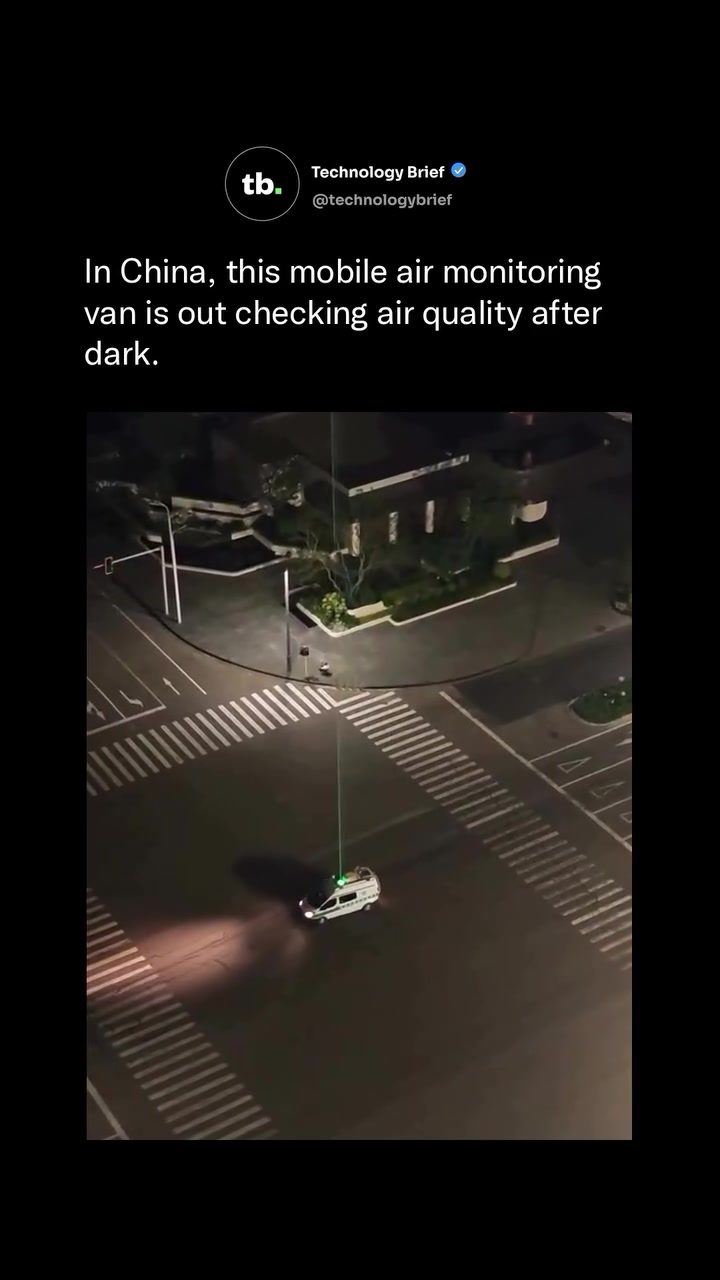
Mobile Air Monitoring Vans: Revolutionizing Urban Air Quality Assessment
China has been pioneering innovative methods to monitor urban air quality, particularly at night when industrial polluters are more elusive. One of the key technologies being used is mobile LIDAR vans. These vans are equipped with advanced LIDAR (Light Detection and Ranging) systems that fire a green laser beam straight up into the sky. Sensors on the van measure how the light scatters as it bounces off dust, smog, and fine particles in the atmosphere. This method provides scientists with a detailed vertical picture of exactly where pollution is concentrated, layer by layer, up to several kilometers high.
Context / Why this matters
Air pollution is a significant health concern, especially in densely populated urban areas. Traditional air quality monitors are typically fixed in one spot, which makes it difficult to track how pollution spreads across a city. This limitation means that identifying pollution hotspots and tracing them back to their sources can be challenging. Mobile air monitoring vans address this issue by providing a dynamic and comprehensive view of air quality.
Main discussion
The Technology Behind Mobile LIDAR Vans
Mobile LIDAR vans use laser technology to map out pollution in three dimensions. The green laser beam emitted by the van creates a vertical profile of the atmosphere, revealing how pollutants are distributed at different altitudes. This vertical mapping is crucial for understanding how pollution moves and accumulates in the air.
The sensors on these vans measure the scattering of the laser light, which provides detailed information about the composition and density of airborne particles. This data is combined with GPS information to create a 3D map of pollution hotspots. This real-time mapping helps authorities pinpoint the exact locations of pollution sources and take necessary actions to mitigate them.
Advantages of Mobile Air Monitoring
One of the primary advantages of mobile air monitoring vans is their mobility. Traditional stationary monitors can only provide data from a single location, limiting their effectiveness in tracking pollution that moves across a city. Mobile vans, on the other hand, can drive through different neighborhoods, collecting data from various locations and building a comprehensive map of airborne particles.
Another significant advantage is the ability to operate at night. Industrial polluters often have stricter emissions controls during the day but may relax these controls at night. By operating after dark, mobile air monitoring vans can catch these nighttime violations, helping authorities enforce regulations more effectively.
Applications and Deployment
China has been deploying these mobile LIDAR systems across major cities, including Suzhou, Shenzhen, and Chengdu. These vans are equipped to detect fine particles known as PM2.5, which are small enough to enter the lungs and are linked to serious health problems. By identifying and monitoring PM2.5 levels, authorities can take targeted actions to reduce health risks for residents.
How Mobile LIDAR Vans Improve Air Quality Monitoring
Mobile LIDAR vans offer several improvements over traditional air quality monitoring methods:
- Dynamic Data Collection: Unlike fixed monitors, mobile vans can collect data from multiple locations, providing a more comprehensive view of air quality across a city.
- Vertical Profiling: The vertical profiling capability of LIDAR technology allows for a detailed understanding of how pollution is distributed at different altitudes.
- Real-Time Mapping: The combination of laser readings and GPS data enables real-time mapping of pollution hotspots, making it easier to identify and address sources of pollution.
- Nighttime Operations: Operating at night helps catch polluters who may only operate their pollution controls during the day, enhancing enforcement efforts.
Practical tips
If you're involved in air quality management or interested in understanding how mobile LIDAR vans can improve urban air quality monitoring, consider the following tips:
- Invest in Mobile LIDAR Technology: If you're a city authority or environmental agency, investing in mobile LIDAR vans can significantly enhance your air quality monitoring capabilities.
- Combine with Other Monitoring Methods: Use mobile LIDAR vans in conjunction with fixed monitors and other monitoring methods to get a comprehensive view of air quality.
- Analyze Data in Real-Time: Ensure that the data collected by mobile LIDAR vans is analyzed in real-time to quickly identify and address pollution hotspots.
- Enforce Regulations: Use the data collected by mobile LIDAR vans to enforce environmental regulations more effectively, especially during times when polluters may be more likely to violate emissions controls.
- Public Awareness: Share the data collected by mobile LIDAR vans with the public to raise awareness about air quality issues and the steps being taken to address them.
Important takeaways
Mobile LIDAR vans represent a significant advancement in urban air quality monitoring. Their ability to collect data dynamically, profile pollution vertically, and operate at night makes them a valuable tool for identifying and addressing pollution hotspots. By deploying these vans across major cities, China is setting a new standard for air quality management, demonstrating the importance of innovative technology in environmental protection.
Conclusion
Mobile air monitoring vans are transforming the way urban air quality is monitored and managed. With their advanced LIDAR technology, real-time mapping capabilities, and ability to operate at night, these vans provide a dynamic and comprehensive view of air quality. By identifying and addressing pollution hotspots, mobile LIDAR vans help authorities enforce regulations more effectively, improving air quality and public health.
Questions readers ask
How do mobile LIDAR vans help in tracking nighttime air pollution in urban areas?
Mobile LIDAR vans use Light Detection and Ranging technology to emit a green laser beam and measure the scattering of light as it hits pollutants. This enables the creation of detailed vertical maps of pollution layers, helping to pinpoint sources and distribution of contaminants, especially at night when traditional monitors may fall short.
What advantages do mobile LIDAR vans have over traditional, fixed air quality monitors?
Mobile LIDAR vans offer dynamic monitoring capabilities, allowing for real-time tracking of air pollution as it moves throughout the city. Unlike fixed monitors, which provide static data from specific locations, these vans can cover larger areas and track pollution sources more effectively, especially after dark.
What type of pollutants can mobile LIDAR vans detect?
Mobile LIDAR vans are equipped to detect a variety of pollutants, including dust, smog, and fine particles. By measuring how the laser light scatters off these contaminants, the vans can provide a comprehensive picture of the pollutants present in the atmosphere.
How do LIDAR vans create detailed vertical maps of pollution?
LIDAR vans emit a laser beam vertically into the sky and measure the backscatter of light at different heights. This data is used to construct vertical profiles of pollution, showing the concentration and distribution of pollutants at various altitudes, up to several kilometers high.
Why is tracking nighttime air pollution important in urban areas?
Nighttime is when many industrial polluters operate, making it a critical period for monitoring. By tracking nighttime air pollution, cities can better understand and address the sources of contamination, thereby improving overall air quality and public health.
What role do mobile LIDAR vans play in addressing health concerns related to air pollution?
By providing detailed and dynamic data on pollution distribution, mobile LIDAR vans help identify hotspots and sources of contamination. This information is crucial for implementing effective measures to reduce exposure and protect public health, especially in densely populated areas.
Related deep dives
Similar reads based on topic and creator.




Recent articles
Fresh deep dives from the latest Reels we unpacked.




Comments
Be the first to comment.