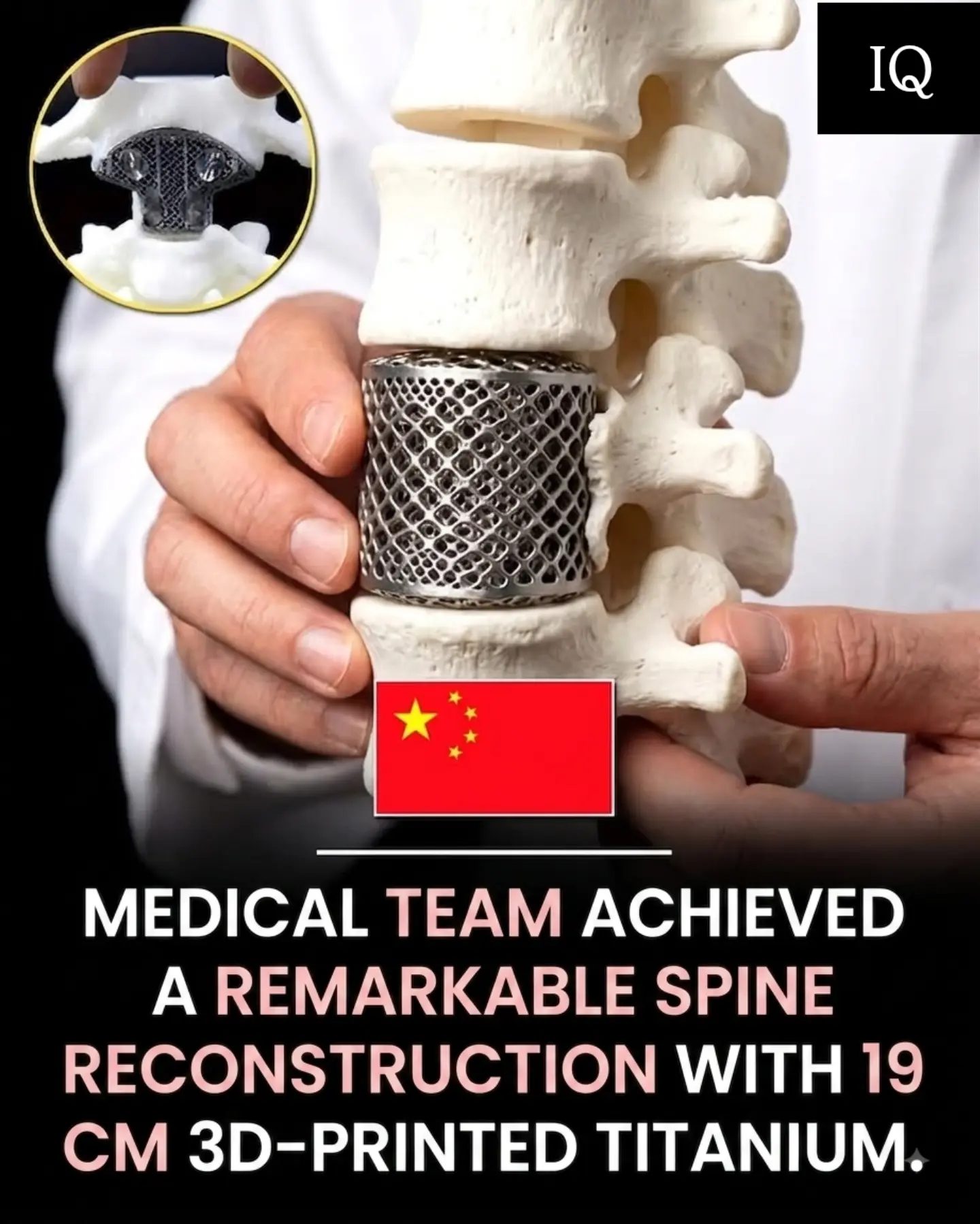
3D-Printed Spine Reconstruction
3D-printed medical implants are revolutionizing orthopedic surgery, particularly in complex spinal reconstructions. These implants, crafted from materials like titanium, offer a level of customization and durability that traditional methods often cannot match.
Why This Matters
The development of 3D-printed spinal implants represents a significant advancement in medical technology. For patients with conditions like bone cancer, these implants provide a lifeline through custom-designed solutions. This technology enhances surgical outcomes by providing implants that are uniquely tailored to the patient’s anatomy, ensuring a more stable and effective reconstruction.
The Process of 3D-Printed Spine Reconstruction
Design and Customization
Customization is the cornerstone of 3D-printed spine implants. These implants are meticulously designed using advanced software that translates medical imaging data into precise 3D models. This process ensures that the implant fits the patient's anatomy perfectly, reducing the risk of complications and improving the overall success of the surgery.
Materials and Structure
Titanium is commonly used in these implants due to its biocompatibility and strength. The intricate lattice structure of the implant allows for bone ingrowth, which is critical for a strong and durable fusion. This structure enhances the integration of the implant with the patient's natural bone, creating a robust and stable support system.
The Surgical Procedure
The implantation process involves several steps. First, the surgeon removes the affected part of the spine, often due to a tumor or severe degeneration. The 3D-printed implant is then precisely inserted to replace the damaged section. This complex procedure requires a highly skilled surgical team, and the precision of the 3D-printed implant significantly reduces the risk of complications and ensures a successful outcome.
Practical Tips for Medical Professionals
-
Detailed Imaging: High-resolution imaging is crucial for obtaining accurate data for 3D modeling. CT scans and MRIs provide the necessary details for designing a precise implant.
-
Collaboration with Engineers: Working closely with biomedical engineers ensures that the implant's design is both biomechanically sound and surgically feasible.
-
Patient Education: Patients should be well-informed about the benefits and potential risks of the procedure. Clear communication helps manage expectations and improves patient satisfaction.
-
Post-Operative Care: Following surgery, patients require rigorous rehabilitation to ensure proper bone integration and overall recovery. Regular follow-ups and imaging are essential to monitor the implant's integration and the patient's recovery progress.
-
Continuous Advancement: Staying updated with the latest advancements in 3D printing technology, materials, and surgical techniques is vital for delivering the best possible care to patients.
Important Takeaways
- 3D-printed titanium implants offer a highly customized and durable solution for spinal reconstruction.
- The intricate lattice structure of these implants facilitates bone ingrowth, leading to a stronger and more stable fusion.
- The precision of 3D printing reduces the risk of surgical complications and enhances patient outcomes.
- Collaboration between medical professionals and biomedical engineers is crucial for successful patient care.
- Patients should be well-informed and involved in their treatment plan, and rigorous post-operative care is essential.
Conclusion
3D-printed spine reconstruction represents a groundbreaking advancement in medical technology. This innovative approach offers a tailored solution for patients, significantly improving the outcomes of complex spinal surgeries. By leveraging the precision of 3D printing and the strength of titanium, medical professionals can provide a new standard of care for those in need. The future of spinal reconstruction looks promising, with ongoing advancements in 3D printing technology set to further enhance patient care and surgical outcomes.
Questions readers ask
What are the benefits of using 3D-printed titanium for spine implants?
3D-printed titanium spine implants offer several advantages, including high durability, biocompatibility, and the ability to be precisely tailored to the patient's unique anatomy. This customization leads to better surgical outcomes and improved patient recovery.
How does the process of 3D-printed spine reconstruction work?
The process begins with detailed medical imaging of the patient's spine. This data is used to design a custom implant that matches the patient's anatomy. The implant is then 3D-printed using titanium, ensuring a precise fit and durability.
What types of spinal conditions can benefit from 3D-printed titanium implants?
Patients with severe spinal conditions, such as those resulting from bone cancer, spinal tumors, or complex spinal deformities, can greatly benefit from 3D-printed titanium implants. These implants provide a stable and effective solution for reconstruction.
What makes 3D-printed titanium implants superior to traditional spinal implants?
Traditional spinal implants often come in standard sizes and shapes, which may not fit the patient's unique anatomy perfectly. In contrast, 3D-printed titanium implants are custom-made to match the patient's specific needs, resulting in a more precise fit and better long-term results.
What is the significance of China's advancements in 3D-printed titanium spine implants?
China's advancements in 3D-printed titanium spine implants highlight the country's role as a leader in medical innovation. These implants offer patients around the world access to state-of-the-art, customized solutions for complex spinal conditions.
What role does technology play in the future of spinal surgery?
Technology, particularly 3D printing, is set to play a pivotal role in the future of spinal surgery. As this technology continues to advance, it will enable even more precise and personalized treatments, leading to improved patient outcomes and enhanced quality of life.
How can patients access 3D-printed titanium spine implants?
Patients can access 3D-printed titanium spine implants through specialized medical centers and orthopedic surgeons who have experience with this technology. It's important for patients to consult with their healthcare providers to determine if this advanced treatment option is suitable for their specific condition.
Related deep dives
Similar reads based on topic and creator.




Recent articles
Fresh deep dives from the latest Reels we unpacked.




Comments
Be the first to comment.