ChatGPT vs. Perplexity: Understanding the Differences
In the evolving landscape of AI tools, ChatGPT and Perplexity have emerged as powerful contenders, each with unique strengths and use cases. Understanding the distinctions between these two tools can help users choose the right one for their specific needs.
Context / Why This Matters
AI-driven tools like ChatGPT and Perplexity are transforming how we approach creative tasks, research, and strategic decision-making. Whether you’re a marketer, a researcher, or a content creator, knowing the nuances of these tools can significantly enhance your productivity and the quality of your outputs.
Main Discussion
Core Functions and Strengths
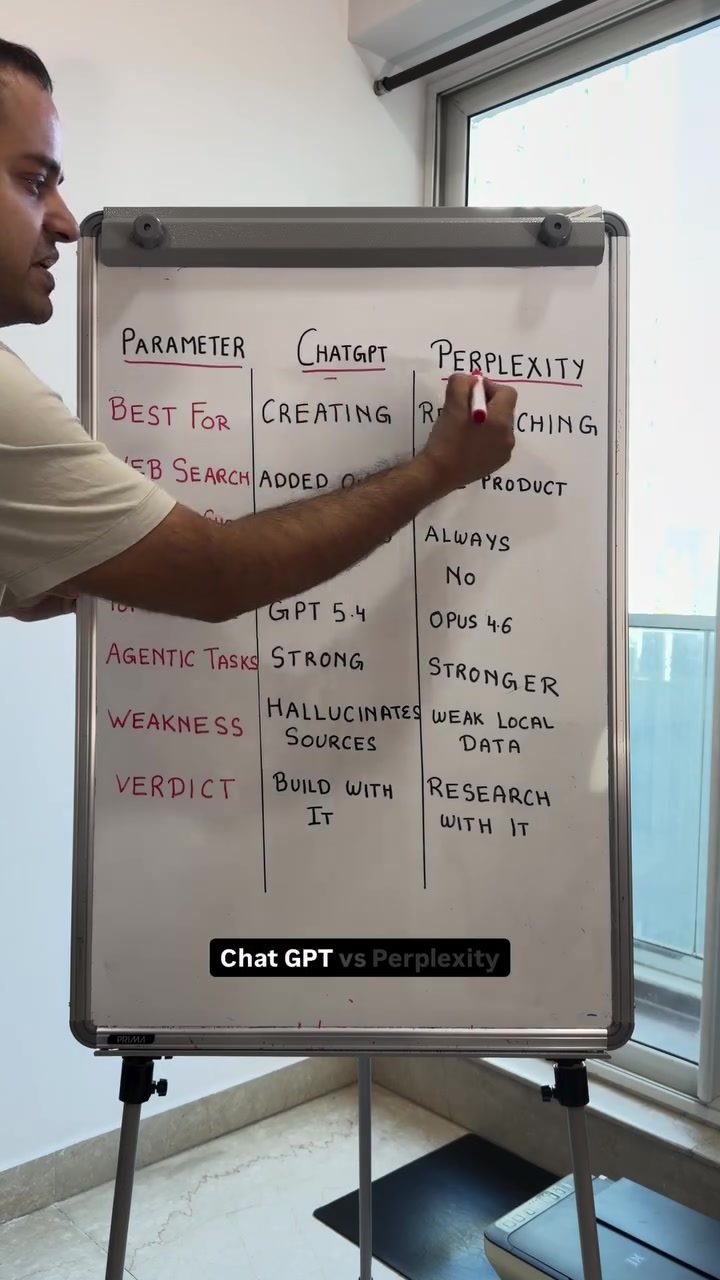
ChatGPT and Perplexity are tailored for different purposes. ChatGPT excels as a creative engine, generating content, ideas, and solutions. It’s built to assist in tasks that require imagination and innovation. Perplexity, on the other hand, is an intelligence engine designed for research and information gathering. It’s optimized to deliver accurate, source-verified information.
Web Search Capabilities
One of the key differences lies in their approach to web search. ChatGPT integrates web search as an add-on feature, enhancing its generation capabilities by pulling in relevant information from the web. In contrast, web search is the core function of Perplexity. This means that Perplexity’s search capabilities are more robust and reliable, often resulting in better answer quality for research tasks.
Source Transparency
Transparency in sourcing information is crucial, especially for strategic decisions. ChatGPT sometimes shares the sources of its answers, but it’s not consistent. Perplexity, however, always shows the sources of its information. This reliability can be a game-changer when you need to verify the accuracy and authenticity of the data you’re working with.
Ad Integration
Advertisements can impact user experience and data integrity. ChatGPT has introduced ads, which was a notable change introduced in 2026. Perplexity, however, has yet to incorporate ads, maintaining a cleaner user interface. While this might not be a dealbreaker for some, it’s an important consideration for those who prefer an ad-free experience.
Top Models and Agentic Tasks
Both tools leverage advanced models to perform tasks. ChatGPT runs on GPT-5.4, while Perplexity uses Claude Opus 4.6. This means that users are often benefiting from the reasoning capabilities of Claude's model without even realizing it. Both tools can execute multi-step tasks autonomously, but Perplexity’s Computer feature is particularly notable. It orchestrates 19 different models to handle complex, multi-step tasks, making it a powerful tool for intricate research and analysis.
Memory and User Experience
Both ChatGPT and Perplexity remember user sessions, which can be beneficial for continuity. However, ChatGPT uses this memory to serve users ads, which might affect the user experience. This is worth considering, especially for those who prioritize a seamless, uninterrupted workflow.
Weaknesses and Limitations
No tool is perfect, and understanding the limitations of each can help users make more informed decisions. ChatGPT’s main weakness is its tendency to hallucinate sources, meaning it can confidently provide incorrect information. Perplexity, on the other hand, can only be as good as the data available on the web, limiting its effectiveness for tasks that require local data or specialized knowledge.
Practical Tips
-
Build with ChatGPT: When you need creative content, turn to ChatGPT. Its generative capabilities are unparalleled, making it an ideal tool for brainstorming, content creation, and idea generation.
-
Research with Perplexity: For tasks that require deep research and reliable information, Perplexity is the go-to tool. Its robust search capabilities and transparent sourcing make it a trusted source for research tasks.
-
Think with Claude: When you need advanced reasoning and complex task orchestration, consider using Perplexity. Its integration with Claude’s reasoning can provide deeper insights and more refined analysis.
-
Explore Both: For comprehensive workflows, use both tools. Each has unique strengths that can complement one another. For instance, you can use ChatGPT to generate ideas and then use Perplexity to validate and expand on those ideas.
Important Takeaways
- ChatGPT and Perplexity are designed for different purposes. Use ChatGPT for creative tasks and Perplexity for research.
- Web search is a core feature of Perplexity, offering more robust and reliable information.
- Perplexity consistently shows sources, enhancing transparency and reliability.
- Choose your tool based on your specific needs and the limitations you can work around.
Conclusion
Navigating the AI tool landscape can be daunting, but understanding the unique strengths and weaknesses of ChatGPT and Perplexity can make the process more straightforward. Whether you’re a marketer, researcher, or content creator, these tools offer powerful capabilities that can enhance your workflow and output. By leveraging the right tool for the right task, you can maximize productivity and achieve better results.
Questions readers ask
What are the primary differences between ChatGPT and Perplexity?
ChatGPT is designed for generating creative content and innovative ideas, making it ideal for tasks that require imagination and originality. Perplexity, on the other hand, focuses on providing accurate, transparent information for research purposes. It verifies its sources and provide insights that are backed by credible data.
Which AI tool is better for generating creative content?
ChatGPT is the better choice for generating creative content. It excels in producing unique, imaginative, and engaging content such as stories, poems, and innovative ideas. Perplexity is more suited for research-based tasks, so it will not be ideal for creative content.
How does Perplexity ensure the accuracy of its information?
Perplexity ensures the accuracy of its information by providing transparent sourcing. It not only delivers verified information but also shows where the information comes from. This makes it a reliable tool for users who need accurate and trustworthy data.
Can ChatGPT be used for research purposes?
While ChatGPT can provide information and generate text, it is not specifically designed for research. It lacks the transparent sourcing and verified information that Perplexity offers, making it less suitable for tasks that require accurate, citable data. ChatGPT is best for creative writing and ideation.
Which tool is more suitable for tasks requiring transparent sourcing?
Perplexity is more suitable for tasks requiring transparent sourcing. It not only provides accurate information but also shows where the information comes from, making it a valuable tool for research and tasks that need credible, verifiable data.
How does ChatGPT assist in content creation?
ChatGPT assists in content creation by generating innovative and engaging content. It can create unique ideas, write compelling stories, and produce engaging content which makes it a valuable asset for creators who need to generate original material.
What are the key strengths of Perplexity as a research tool?
Perplexity's key strengths as a research tool include its ability to provide accurate, verified information with transparent sourcing. It allows users to track down the original sources of the information, enhancing the reliability and trustworthiness of the data obtained.
Related deep dives
Similar reads based on topic and creator.




Recent articles
Fresh deep dives from the latest Reels we unpacked.




Comments
Be the first to comment.