AI and Brain Connectivity
Researchers from eluna.ai and MIT Media Lab have been investigating how frequently using AI tools like ChatGPT affects brain activity. Their findings reveal intriguing insights into how our brains respond to AI assistance, particularly when it comes to cognitive tasks like writing.
Why This Matters
Understanding how AI tools impact brain function is crucial as these technologies become more integrated into daily life. As tools like ChatGPT become ubiquitous, it's important to grasp how they influence our cognitive processes, especially in tasks that require significant mental effort.
Cognitive Offloading and Neural Connectivity
The Study
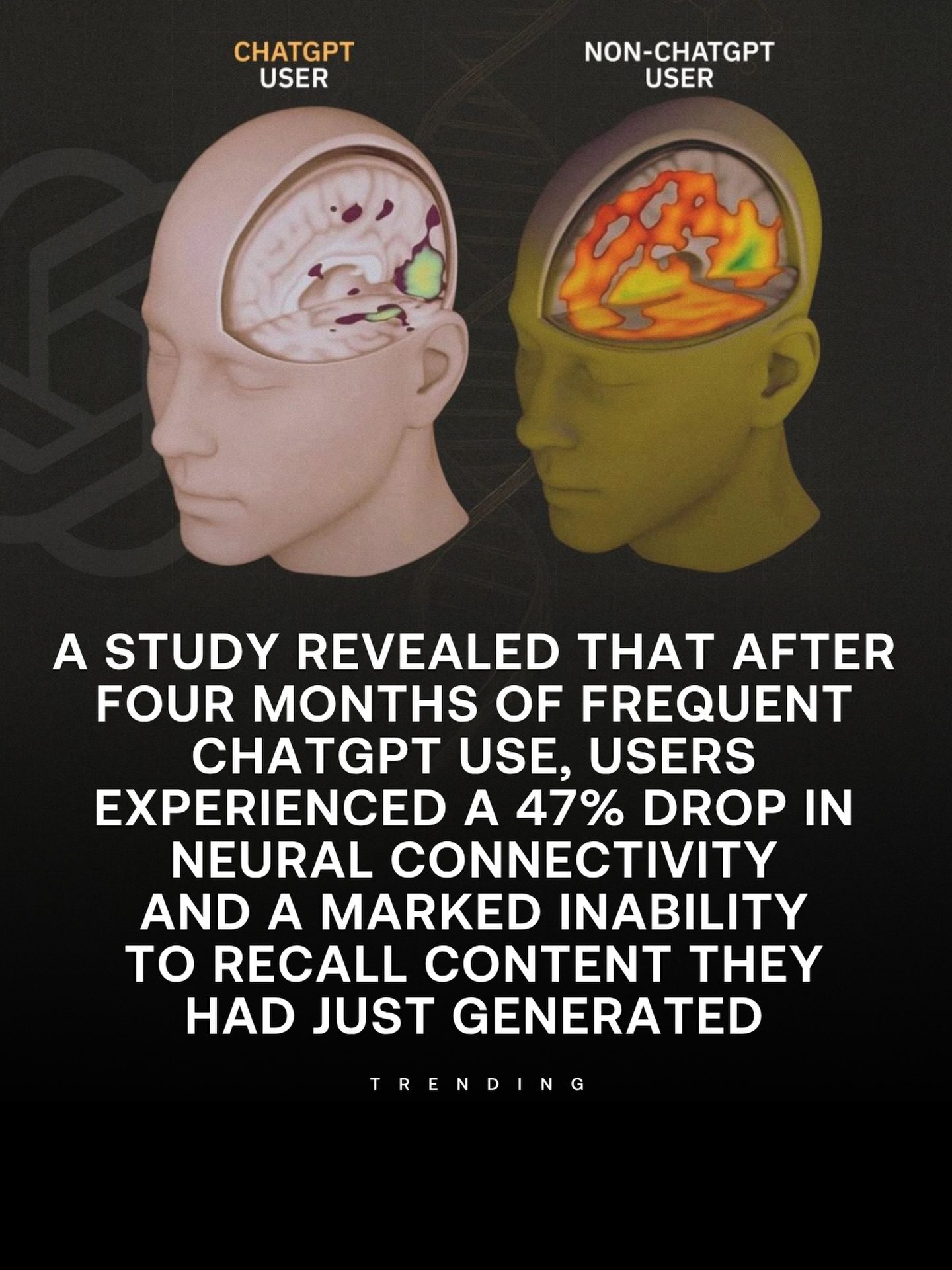
The study involved 54 participants who wore EEG headsets while completing writing tasks. Some used ChatGPT for assistance, while others relied on search engines or completed the tasks without any digital help. The group using ChatGPT showed noticeable differences in brain activity. Specifically, after four months of frequent ChatGPT use, participants experienced a 47% drop in neural connectivity and had trouble recalling content they had just generated. This suggests that prolonged use of AI tools might affect how our brains engage with tasks that require significant cognitive effort.
Cognitive Offloading
The term "cognitive offloading" refers to the phenomenon where tasks that typically require mental effort, such as planning, reasoning, and idea generation, are increasingly delegated to external tools. In this context, ChatGPT acts as a tool that helps generate ideas and complete tasks, reducing the cognitive load on the user. However, this offloading might come with unintended consequences. Researchers noted that while ChatGPT facilitated task completion, it also led to lower brain engagement and impaired recall of the generated content.
Neural Connectivity and Recall Ability
Impact on Brain Function
The study's findings highlight the delicate balance between assistance and over-reliance. While AI tools can enhance productivity and efficiency, they might also diminish the brain's natural engagement in cognitive tasks. The decrease in neural connectivity observed in the ChatGPT group indicates that prolonged use of these tools could alter how our brains process information, potentially leading to a decline in cognitive abilities over time.
Implications for Learning
The study does not suggest that AI tools damage the brain. Instead, it points to a potential trade-off: while AI can streamline tasks, it might also reduce the cognitive effort required to complete them. This could impact learning and memory retention, especially in educational settings. When AI tools handle a significant portion of the thinking process, it might leave less room for the brain to engage fully in the task, potentially hindering the learning process. Although a drop in recall ability was noted, it should be recognized that this could vary based on individual reliance on the tool and the task complexity. Therefore, balancing AI assistance with independent thought is essential to maintain cognitive health.
Practical Tips
If the potential impacts of AI tools on brain function concern you, consider the following tips to maintain a healthy balance:
1. Use AI Tools Judiciously
AI tools are powerful, but they should be used as a supplement to, rather than a replacement for, your cognitive processes. Try to think through tasks independently before seeking assistance from AI tools.
2. Engage in Cognitive Exercises
Regularly engage in activities that require mental effort, such as puzzles, reading, or learning a new skill. This helps keep your brain active and engaged, counteracting any potential decline in cognitive function due to AI assistance.
3. Limit AI Dependence
Avoid becoming overly reliant on AI tools. While they can be helpful, overuse might lead to decreased neural connectivity and impaired recall. Try to strike a balance between AI assistance and independent thought.
4. Monitor Brain Engagement
Pay attention to how you feel when using AI tools. If you notice a decline in your ability to recall information or feel less engaged in tasks, it might be a sign to reduce your dependence on these tools.
5. Practice Mindful Use
Be mindful of when and how you use AI tools. Use them to enhance your abilities rather than as a crutch. For example, use AI to generate ideas, but then refine and develop them independently.
Important Takeaways
The study by eluna.ai and MIT Media Lab provides valuable insights into how AI tools like ChatGPT affect brain function. Key takeaways include:
- Frequent use of AI tools for tasks like writing can lead to decreased neural connectivity and impaired recall.
- Cognitive offloading, where tasks are delegated to AI, might reduce mental engagement and hinder learning.
- Balancing AI assistance with independent thought is crucial for maintaining cognitive health.
- Regular cognitive exercises and mindful use of AI tools can help mitigate potential negative effects.
Conclusion
As AI tools become more integrated into our daily lives, it's essential to understand their impact on our cognitive processes. The study by eluna.ai and MIT Media Lab sheds light on how tools like ChatGPT can affect brain function, particularly in tasks that require significant mental effort. By being mindful of our reliance on these tools and balancing their use with independent thought, we can maintain cognitive health and ensure that AI enhances, rather than replaces, our abilities.
Questions readers ask
How does frequent use of ChatGPT affect neural connectivity?
Frequent use of ChatGPT has been linked to a 47% drop in neural connectivity. This decline is particularly noticeable in tasks that typically require substantial mental effort, suggesting that over-reliance on AI tools may lead to reduced brain activity in these areas.
What does the study by eluna.ai and MIT Media Lab reveal about AI tool usage?
The study found that using ChatGPT for tasks like writing can alter brain function and decrease recall ability. The research highlights the need to be mindful of the cognitive impact of these tools, especially when they become a regular part of daily routines.
How does cognitive offloading through AI tools affect mental effort?
Cognitive offloading through AI tools like ChatGPT can reduce the mental effort required for tasks. However, it also means that the brain may not engage as actively in these tasks, potentially leading to a decrease in neural connectivity over time. This is particularly relevant for tasks that previously required significant mental effort.
What are the long-term cognitive effects of using AI tools like ChatGPT?
Long-term use of AI tools like ChatGPT could potentially lead to a decline in brain function and neural connectivity. This is because the brain may become less active in tasks that are increasingly handled by AI, which could impact recall ability and overall cognitive health.
How does AI integration into daily routines impact brain function?
As AI tools become more integrated into daily routines, they can alter brain function by reducing the mental effort required for various tasks. This shift in cognitive processes may lead to changes in neural connectivity, emphasizing the importance of understanding the broader impact of AI on our cognitive health.
What is the significance of the study involving 54 participants and EEG headsets?
The study aimed to measure how AI tools impact brain activity by tracking neural responses during writing tasks. By using EEG headsets, researchers could observe changes in brain function and neural connectivity, providing valuable insights into the cognitive effects of relying on AI for tasks that require substantial mental effort.
Related deep dives
Similar reads based on topic and creator.




Recent articles
Fresh deep dives from the latest Reels we unpacked.




Comments
Be the first to comment.