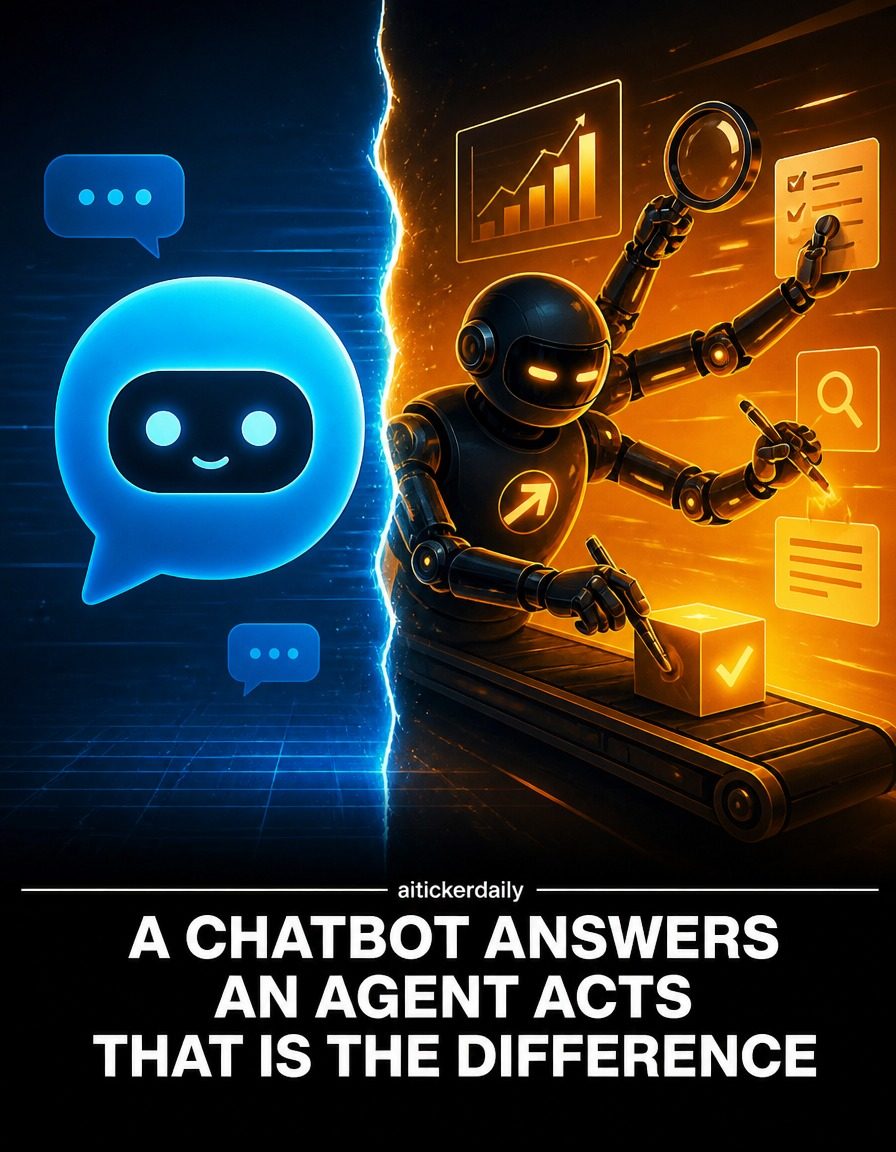
Chatbots vs. AI Agents: Tools, Loops, and Autonomy
Chatbots and AI agents are two powerful tools in the realm of artificial intelligence, each with its unique strengths and use cases. Understanding the differences between them can help you make informed decisions about when to use each tool and how to evaluate their effectiveness.
Context and Relevance
In an ever-evolving digital landscape, AI-driven solutions have become essential for automating tasks, enhancing user experiences, and optimizing workflows. Whether you're a business looking to streamline customer service or an individual seeking to automate personal tasks, understanding the nuances between chatbots and AI agents is crucial. This knowledge can help you leverage these tools more effectively to achieve your goals.
Differences Between Chatbots and AI Agents
Basic Functionality
Chatbots are designed to receive input once and produce a single output in response. They are typically programmed to handle specific tasks or provide information within a predefined scope. In contrast, AI agents operate in a continuous loop, observing, deciding, and acting repeatedly. This loop allows agents to adapt to changing conditions and make decisions based on ongoing data.
Tools and Capabilities
Chatbots are generally simpler and more straightforward, making them ideal for tasks that require quick, predictable responses. They can handle a wide range of queries, from answering FAQs to providing product information. On the other hand, AI agents are more complex and capable of handling more intricate tasks. They can interact with various systems, make real-time decisions, and even learn from their interactions to improve performance over time.
Autonomy and Flexibility
One of the key differences between chatbots and AI agents is their level of autonomy. Chatbots are typically more bounded in their autonomy, operating within specific parameters and rules. They are less flexible and may struggle with tasks that fall outside their predefined scope. AI agents, however, offer greater autonomy and flexibility. They can adapt to new situations, learn from experience, and make independent decisions, making them more suitable for dynamic and unpredictable environments.
When to Use Each
Chatbots
Chatbots are ideal for informational and bounded tasks. They excel at providing quick, accurate responses to common queries, making them perfect for customer service, technical support, and FAQ sections. If your goal is to handle a large volume of predictable questions efficiently, a chatbot is often the better choice.
AI Agents
AI agents are better suited for tasks that require continuous observation, decision-making, and action. They are effective in scenarios where the environment is dynamic and unpredictable, such as autonomous vehicles, smart home systems, and complex workflow automation. If you need a solution that can adapt to changing conditions and make real-time decisions, an AI agent is likely the more appropriate tool.
Practical Tips for Effective Utilization
Defining Objectives
Before choosing between a chatbot and an AI agent, clearly define your objectives. Identify the specific tasks you want to automate and the outcomes you aim to achieve. This will help you determine which tool is better suited to your needs.
Evaluating Usefulness
When evaluating the usefulness of an AI agent, consider its ability to adapt and learn. Look for agents that can handle a wide range of scenarios and make independent decisions. If the agent struggles to adapt to new situations or requires constant oversight, it may not be as effective as a chatbot for your specific use case.
Cost and Complexity
Chatbots are generally cheaper, faster, and more predictable than AI agents. If cost and implementation time are key factors, a chatbot may be the more practical choice. However, if you require a more robust and adaptable solution, be prepared to invest in the development and maintenance of an AI agent.
Important Takeaways
- Choose the Right Tool: Understand the specific capabilities and limitations of chatbots and AI agents to select the right tool for your needs.
- Define Clear Objectives: Clearly outline your goals and the tasks you want to automate to make an informed decision.
- Evaluate Adaptability: Assess the ability of an AI agent to adapt and learn from experience, especially in dynamic environments.
- Consider Cost and Complexity: Balance the benefits of each tool against the associated costs and implementation challenges.
Conclusion
Chatbots and AI agents are both valuable tools in the AI landscape, each with its strengths and ideal use cases. By understanding the differences between these technologies, you can make more informed decisions about when and how to use them. Whether you opt for the simplicity and predictability of a chatbot or the adaptability and autonomy of an AI agent, leveraging these tools effectively can significantly enhance your productivity and efficiency.
Questions readers ask
What are the main differences between chatbots and AI agents?
The primary differences lie in their functionality and complexity. Chatbots are designed for quick, predictable responses and are best for handling simple, well-defined tasks and queries. In contrast, AI agents are more complex, adaptable, and capable of interacting with multiple systems to make real-time decisions.
When should I use a chatbot over an AI agent?
Use a chatbot when you need a solution for handling repetitive, straightforward tasks or queries. Chatbots excel in scenarios where responses can be predefined, such as answering FAQs, scheduling appointments, or providing basic customer support.
What makes AI agents suitable for complex tasks?
AI agents are suitable for complex tasks due to their advanced capabilities. They can adapt to new information, interact with various systems, and make real-time decisions, making them ideal for tasks that require a higher level of autonomy and decision-making, such as personalized recommendations or managing dynamic workflows.
Can chatbots handle real-time decision-making?
Chatbots are generally not equipped for real-time decision-making as they operate based on predefined responses and rules. For tasks that require real-time decisions, AI agents are a better fit due to their ability to process and respond to new information dynamically.
How do AI agents interact with multiple systems?
AI agents are designed to integrate with various systems and databases, allowing them to access and process information from multiple sources. This capability enables them to provide more comprehensive and contextual responses, making them highly effective in environments where data from different systems needs to be consolidated and analyzed.
What are the key use cases for AI agents?
Key use cases for AI agents include personalized customer interactions, dynamic content generation, and managing complex workflows. They are particularly useful in industries that require high levels of adaptability and real-time decision-making, such as finance, healthcare, and logistics.
Why are chatbots predictable and AI agents more adaptable?
Chatbots are predictable because they rely on predefined rules and scripts to respond to user inputs, making them suitable for simple, repetitive tasks. On the other hand, AI agents are more adaptable as they can learn from interactions, process new information, and adjust their responses accordingly, making them versatile for a wide range of applications.
Related deep dives
Similar reads based on topic and creator.




Recent articles
Fresh deep dives from the latest Reels we unpacked.




Comments
Be the first to comment.