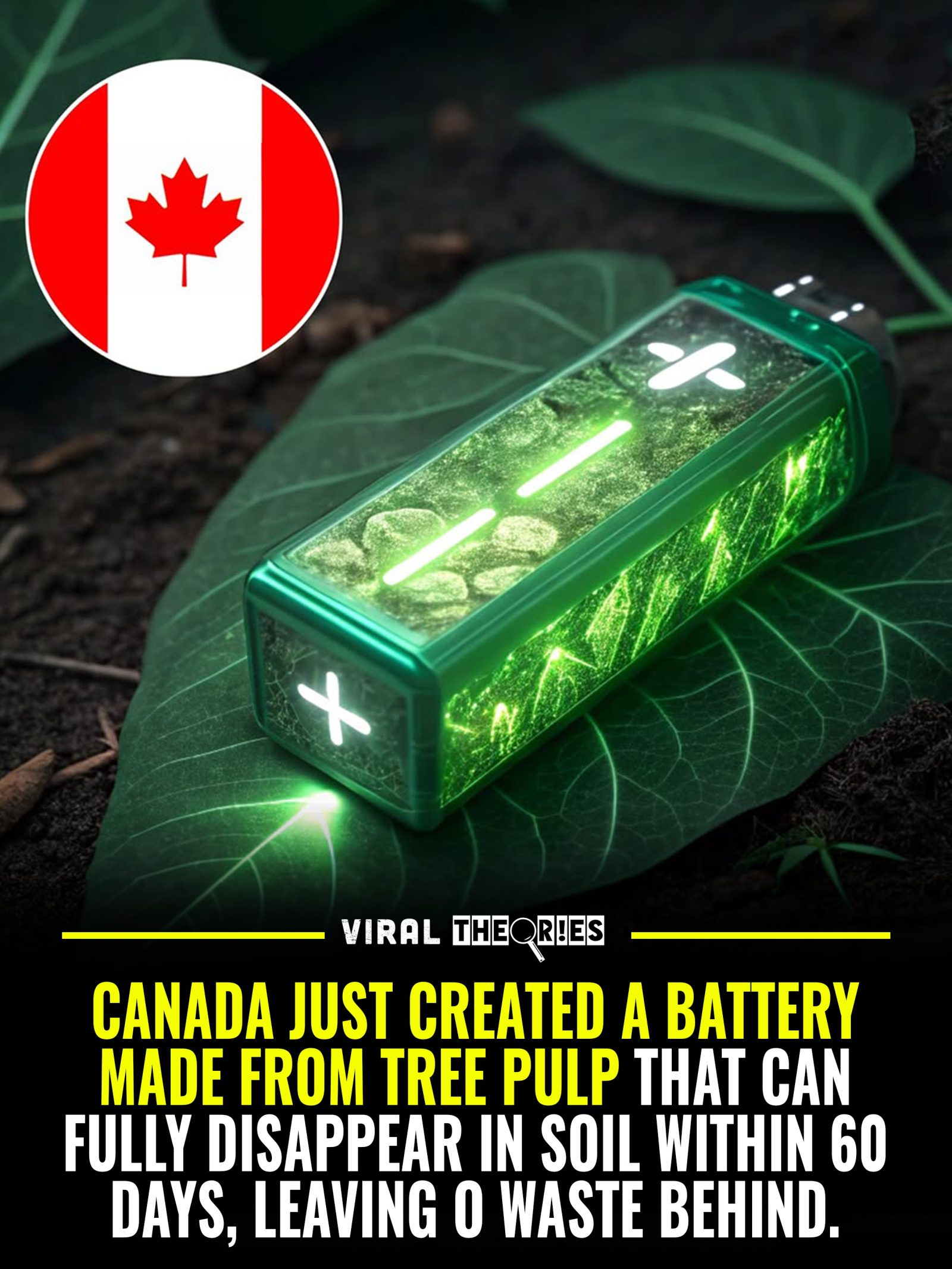
Biodegradable Battery
Canadian researchers have developed a groundbreaking battery made from tree pulp. This eco-friendly invention fully degrades in soil within 60 days, leaving no toxic waste behind. It's a remarkable advancement in green energy technology. The battery is designed to power low-energy devices like medical sensors, smart labels, and environmental monitors. The innovation aligns well with global efforts to combat electronic waste.
Context / Why this matters
Electronic waste, or e-waste, is a growing global problem. Traditional batteries contribute significantly to this issue, as they contain harmful chemicals that can leach into the environment. The environmental impact of e-waste is staggering. It includes soil and water contamination, air pollution, and even health risks for those exposed to the hazardous materials. The Canadian-made biodegradable battery addresses these concerns head-on. By using natural wood fibers, it offers a safer, more sustainable alternative. The biodegradable battery could potentially revolutionize various industries, from healthcare to environmental monitoring.
Main discussion
Design and composition
The battery's design is a crucial aspect of its innovation. It is constructed from tree pulp, which is a natural and renewable resource. The pulp is composed of wood fibers that are biocompatible and biodegradable. This makes the battery safe for the environment.
The structure is also flexible, allowing it to be molded into various shapes and sizes. This adaptability is particularly useful for powering devices that require unique form factors, such as medical sensors and smart labels. The flexibility also contributes to the battery's eco-friendliness. It can be easily integrated into products without the need for additional packaging or protective materials.
The battery's leaf-like design is a nod to its natural composition. It creates a visual connection to the environment, emphasizing the product's eco-friendly nature. The design is not only aesthetically pleasing but also practical, as it allows the battery to decompose naturally in soil.
Biodegradability
The battery's biodegradability is its standout feature. Once used, it can be disposed of in soil, where it will fully decompose within 60 days. This is a significant improvement over traditional batteries, which can take centuries to degrade and leave behind harmful chemicals. The biodegradability process is aided by the battery's natural composition. The wood fibers break down naturally, leaving no toxic waste behind.
The biodegradability of the battery makes it an ideal solution for powering low-energy devices. These devices are often used in environments where waste disposal is challenging, such as remote monitoring stations or medical implants. Being able to dispose of the battery safely and easily in soil is a significant advantage.
Energy efficiency
In addition to being eco-friendly, the battery is also energy efficient. It is designed to power low-energy devices, making it ideal for applications where power requirements are minimal. The battery's energy efficiency is a result of its natural composition and design. The wood fibers used in its construction have a low energy density, which means they require less energy to operate.
The efficiency of the battery makes it a practical choice for a wide range of applications. From powering medical sensors and smart labels to environmental monitors, the battery's energy efficiency ensures that devices can operate reliably and for extended periods. The battery's efficiency also contributes to its eco-friendliness. By requiring less energy to operate, it helps reduce the overall energy consumption of the device it powers.
Sustainability benefits
The biodegradable battery offers numerous sustainability benefits. Firstly, it reduces e-waste. Traditional batteries contribute to landfills, which are already overflowing with electronic waste. The biodegradable battery, on the other hand, can be disposed of in soil, where it will fully decompose, leaving no waste behind. This helps reduce the volume of e-waste and minimizes the environmental impact of electronic devices.
Secondly, the battery's natural composition reduces the need for harmful chemicals. Traditional batteries use chemicals like lead, cadmium, and lithium, which are harmful to the environment. The biodegradable battery, however, uses natural wood fibers, making it a safer and more sustainable choice.
Thirdly, the battery's biodegradability reduces the risk of soil and water contamination. Traditional batteries can leak harmful chemicals into the soil and water, causing environmental damage. The biodegradable battery, however, decomposes naturally in soil, leaving no toxic waste behind. This helps protect the environment and maintains the integrity of soil and water systems.
Practical tips
Starting to use biodegradable batteries, especially in various low energy devices? Here are some practical tips to get the most out of this innovation:
How to dispose of biodegradable batteries
Dispose of these batteries, even the used ones, in soil. The materials used in their construction are biodegradable. They'll decompose within 60 days, leaving no harmful waste behind. This makes them an ideal choice for use in remote or environmentally sensitive locations.
Ideal applications
The biodegradable battery is ideal for powering a range of low-energy devices. Here are some applications to consider:
- Medical sensors: The battery's flexibility and eco-friendliness make it an ideal power source for medical sensors. It can be integrated into the sensor's design, reducing the need for additional packaging or protective materials. Its biodegradability also makes it a safe choice for medical implants, as it can be disposed of safely in soil.
- Smart labels: Smart labels are increasingly used in supply chain management, retail, and logistics. The biodegradable battery is an ideal power source for these labels, as it can be easily integrated into the design and disposed of safely in soil.
- Environmental monitors: Environmental monitors are used to track various environmental parameters, such as temperature, humidity, and air quality. The biodegradable battery is an ideal power source for these devices, as it is energy-efficient and can be disposed of safely in soil, minimizing environmental impact.
How to integrate into current systems
Integrating biodegradable batteries into current systems is a straightforward process. The process involves replacing the existing power source with the biodegradable battery. The battery's flexibility and adaptability make it easy to integrate into a wide range of devices and systems. The battery's natural composition also makes it a safer and more sustainable choice, as it does not contain harmful chemicals.
Important takeaways
Biodegradable batteries have the potential to revolutionize various industries and contribute to global sustainability efforts. Biodegradable batteries offer a sustainable and eco-friendly alternative to traditional batteries. They reduce e-waste and the need for harmful chemicals, and they minimize the risk of soil and water contamination. The battery's energy efficiency and flexibility make it an ideal power source for a wide range of low-energy devices. By integrating these batteries into current systems, industries can take a significant step towards sustainability and reduce their environmental impact.
Conclusion
The Canadian-made biodegradable battery is a remarkable innovation in green energy technology. It offers a sustainable, eco-friendly, and energy-efficient alternative to traditional batteries. Its biodegradability and natural composition make it an ideal power source for a wide range of low-energy devices. By adopting these batteries, industries can contribute to global sustainability efforts and reduce their environmental impact. As we move towards a more eco-friendly future, the biodegradable battery is a significant step in the right direction. The future of green energy technology is indeed looking greener with these batteries.
Questions readers ask
What are biodegradable batteries made from tree pulp?
Biodegradable batteries made from tree pulp are a sustainable battery technology developed in Canada. These batteries are designed to degrade completely in soil within 60 days, with no harmful residues. They are meant for powering low-energy devices, like medical sensors, smart labels, and environmental monitors.
How do tree pulp batteries address the issue of electronic waste?
Tree pulp batteries offer a solution to electronic waste by providing a biodegradable alternative to traditional batteries. Unlike conventional batteries, which contain chemicals that can harm the environment, tree pulp batteries completely degrade in soil, leaving no toxic waste behind. This makes them a more sustainable choice for powering disposable devices.
What are the benefits of using tree pulp batteries for medical sensors?
Using tree pulp batteries for medical sensors provides several benefits. These batteries are eco-friendly and can be safely disposed of in soil. This makes them ideal for medical devices that are used for monitoring and diagnostics. They are designed to power low-energy devices, ensuring reliable functionality while minimizing environmental impact.
Can tree pulp batteries be used for more than just medical sensors?
Yes, tree pulp batteries are versatile and can be used for various low-energy devices. In addition to medical sensors, they are suitable for powering smart labels and environmental monitors. Their biodegradable nature makes them an excellent choice for any application where minimizing environmental impact is a priority.
What makes the tree pulp battery a green energy innovation?
The tree pulp battery is considered a green energy innovation due to its biodegradable design. It is made from sustainable materials, and it completely degrades in soil within 60 days. This feature sets it apart from traditional batteries, which often contain harmful chemicals that contribute to environmental pollution.
Why is Canada's development of biodegradable tree pulp batteries significant?
Canada's development of biodegradable tree pulp batteries is significant because it addresses the global issue of electronic waste. By providing a sustainable alternative to traditional batteries, Canada is contributing to a reduction in environmental pollution. This innovation could inspire similar developments worldwide, promoting a greener and more sustainable approach to powering low-energy devices.
Related deep dives
Similar reads based on topic and creator.




Recent articles
Fresh deep dives from the latest Reels we unpacked.




Comments
Be the first to comment.