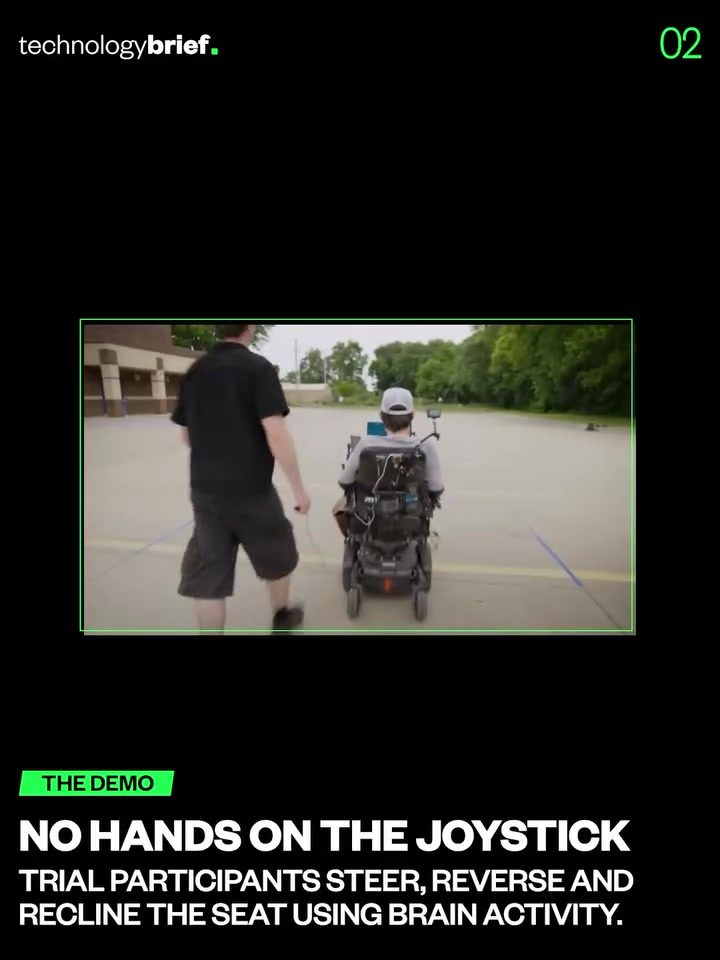
Brain-Controlled Wheelchairs: Revolutionizing Mobility
Brain-computer interface (BCI) technology is transforming how people with physical disabilities interact with the world. Through extensive clinical trials, scientists have developed a groundbreaking brain-controlled wheelchair system designed to empower individuals with mobility challenges. This innovative technology translates neural signals into precise movements, allowing users to control their wheelchairs with their minds.
Why This Matters
For many individuals with paralysis or other mobility impairments, controlling a wheelchair can be a significant challenge. Traditional wheelchair controls require physical dexterity, which is often lacking in those with severe motor disabilities. The brain-controlled wheelchair represents a major leap forward, offering a new level of independence and freedom.
The Mechanics of Brain-Controlled Wheelchairs
The brain-controlled wheelchair system is a marvel of modern technology, relying on a combination of neural interfaces, custom electronics, and intuitive software.
Neural Interface and Signal Translation
The core of this technology is the brain-computer interface, which decodes neural signals to control the wheelchair. Participants in clinical trials have been using a special implant, the N1, which sits in the motor cortex and contains 1,024 electrodes distributed across more than a hundred threads. These electrodes are finer than a human hair, allowing for precise detection of neural activity.
The implant translates movement intentions into the position of a cursor on a screen. The wheelchair software reads the cursor's position relative to the center and converts it into steering and acceleration commands. Essentially, thinking about moving in a specific direction becomes a coordinate, and this coordinate is translated into a corresponding movement of the wheelchair.
Custom Electronics and User Interface
The system includes a set of custom electronics designed to take cursor movements from a participant's imagined motions and translate them into analog signals. These signals are then used to directly drive and control all functionalities of the wheelchair, including steering, reversing, and adjusting the seat and backrest.
A specially designed user interface (UI) further enhances the user experience. The UI is built to be intuitive, ensuring that users can quickly learn to control the wheelchair without extensive training. This is crucial for making the technology accessible to a wide range of individuals.
Safety Features
Safety is a top priority in the design of this system. The wheelchair is equipped with a fail-safe mechanism. If the user loses consciousness or becomes incapacitated, the cursor automatically returns to the center, stopping the wheelchair. This ensures that the wheelchair does not move uncontrollably, providing a layer of security for the user.
Practical Tips for Using a Brain-Controlled Wheelchair
While the technology is cutting-edge, it is also designed to be user-friendly. Here are some practical tips for getting the most out of a brain-controlled wheelchair:
Getting Started
-
Consult with a Healthcare Provider: Before using the brain-controlled wheelchair, it is essential to consult with a healthcare provider to ensure it is suitable for your needs. They can provide guidance and support throughout the process.
-
Training and Practice: Although the interface is designed to be intuitive, some practice may be necessary. Spend time training with the system to become comfortable with its operation.
-
Customization: Take advantage of the customizable features. Adjust the settings to best suit your comfort and control preferences.
Maintenance and Care
-
Regular Check-Ups: Regular check-ups with the implant and associated electronics are crucial to ensure the system functions correctly.
-
Keep the Implant Clean: Maintain good hygiene practices to keep the implant and surrounding area clean. This helps prevent infections and ensures the longevity of the device.
-
Follow Safety Protocols: Always follow the safety protocols provided by the manufacturer. This includes proper usage and troubleshooting steps.
Important Takeaways
- Independence: Brain-controlled wheelchairs offer a new level of independence for individuals with mobility impairments.
- Innovation: The technology represents a significant advancement in BCI and assistive devices.
- Safety: The system includes fail-safe mechanisms to ensure user safety.
- Customization: The interface and settings can be customized to meet individual needs.
Conclusion
The brain-controlled wheelchair is a game-changer in the world of assistive technology. By translating neural signals into precise movements, it offers a new level of independence and mobility for individuals with physical disabilities. The system's advanced technology, intuitive interface, and safety features make it a promising solution for those in need. As research and development continue, the potential for brain-controlled wheelchairs to improve the lives of many is immense.
Questions readers ask
How do brain-controlled wheelchairs work?
Brain-controlled wheelchairs use a brain-computer interface (BCI) to translate neural signals into precise movements. Users think specific thoughts, and the system interprets these signals to move the wheelchair in the desired direction, providing a hands-free mobility solution.
Who can benefit from brain-controlled wheelchairs?
Individuals with severe physical disabilities, such as those with paralysis or other mobility impairments, can benefit from this technology. It empowers them to control their wheelchairs without relying on physical dexterity, offering a new level of independence.
What are the benefits of using a brain-controlled wheelchair over traditional models?
Brain-controlled wheelchairs allow users to navigate their environment with thought, eliminating the need for manual controls. This provides greater autonomy and convenience, especially for those who struggle with hand or arm mobility.
Is the technology for brain-controlled wheelchairs safe and reliable?
Brain-controlled wheelchair technology has undergone extensive clinical trials to ensure safety and reliability. While advancements continue, the current systems are designed to be user-friendly and dependable for everyday use.
How is the brain-to-wheelchair interface established?
The brain-to-wheelchair interface typically involves a non-invasive or minimally invasive sensor that detects neural activity. This data is then processed by an algorithm to translate thoughts into specific commands for the wheelchair.
Related deep dives
Similar reads based on topic and creator.




Recent articles
Fresh deep dives from the latest Reels we unpacked.




Comments
Be the first to comment.